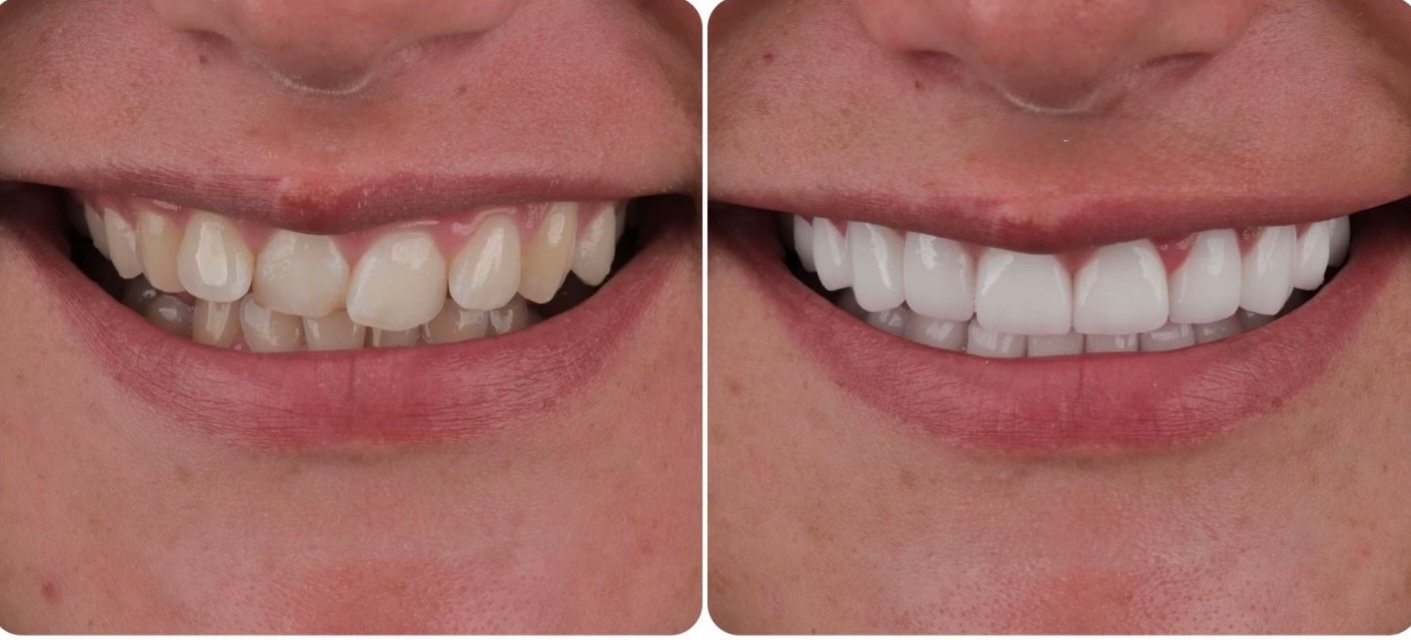
Teeth whitening is a common cosmetic dental procedure that promises a brighter, more confident smile. Many people undergo whitening treatments at home or at the dentist’s office to enhance the appearance of their teeth. However, with this desire for a whiter smile often comes a big concern: Does teeth whitening damage enamel?
Understanding the safety of whitening treatments is crucial, especially since enamel, the outer protective layer of your teeth, is essential for your oral health. We will tell you the science behind teeth whitening, explore the potential risks to enamel, and discuss the steps you can take to protect your teeth during the whitening process.
What Is Tooth Enamel and Why Is It Important?
Tooth enamel is the hard, outer layer of your teeth that protects the underlying layers of dentin and pulp from damage. It’s the hardest tissue in the human body, harder than bone, but it is also non-regenerative. This means that once enamel is damaged, it cannot regenerate or repair itself. It serves as a barrier against acids, plaque, and bacteria, helping to maintain the strength and structure of your teeth. Enamel also plays a vital role in the appearance of your teeth, as it gives them their smooth, shiny finish.
Enamel erosion can lead to increased tooth sensitivity, discoloration, and even cavities, making it important to protect this valuable layer. Any procedure or product that potentially weakens enamel can have long-term consequences on your dental health.
Why Enamel is Irreplaceable
Since enamel doesn’t regenerate, it’s essential to take good care of it. Losing enamel can leave your teeth vulnerable to decay and sensitivity. Protecting it should be a top priority, especially when using whitening products.
How Teeth Whitening Works: The Science Behind It
Whitening treatments aim to remove stains from the surface of the teeth, usually by using peroxide-based compounds like hydrogen peroxide or carbamide peroxide. These agents work by breaking down stain molecules in the enamel, effectively “bleaching” the teeth to restore their natural whiteness. However, the effectiveness of teeth whitening depends largely on the concentration of these whitening agents and the method used.
Peroxide-Based Whitening Mechanisms
When you apply whitening gel or strips, the peroxide in the product breaks through the enamel and penetrates the underlying dentin layer to target stains. The chemical reaction that occurs helps lighten discoloration caused by food, drinks, and smoking. The whitening effect is often temporary as the enamel can rehydrate within 24-48 hours, returning to its normal state.
Temporary Effects on Enamel
One of the side effects of the whitening process is temporary enamel dehydration. During the whitening process, peroxide agents cause enamel to lose some of its moisture. This temporary dryness makes the enamel more susceptible to damage, but it typically restores itself within a day or two. While this effect is reversible, it is important to follow professional guidance to ensure that whitening does not lead to permanent damage.
Types of Teeth Whitening Treatments: Professional vs. At-Home
There are two main types of teeth whitening treatments: professional in-office whitening and at-home whitening. Understanding the differences between these two options can help you make an informed decision about which is safest for your enamel.
Professional Whitening Treatments
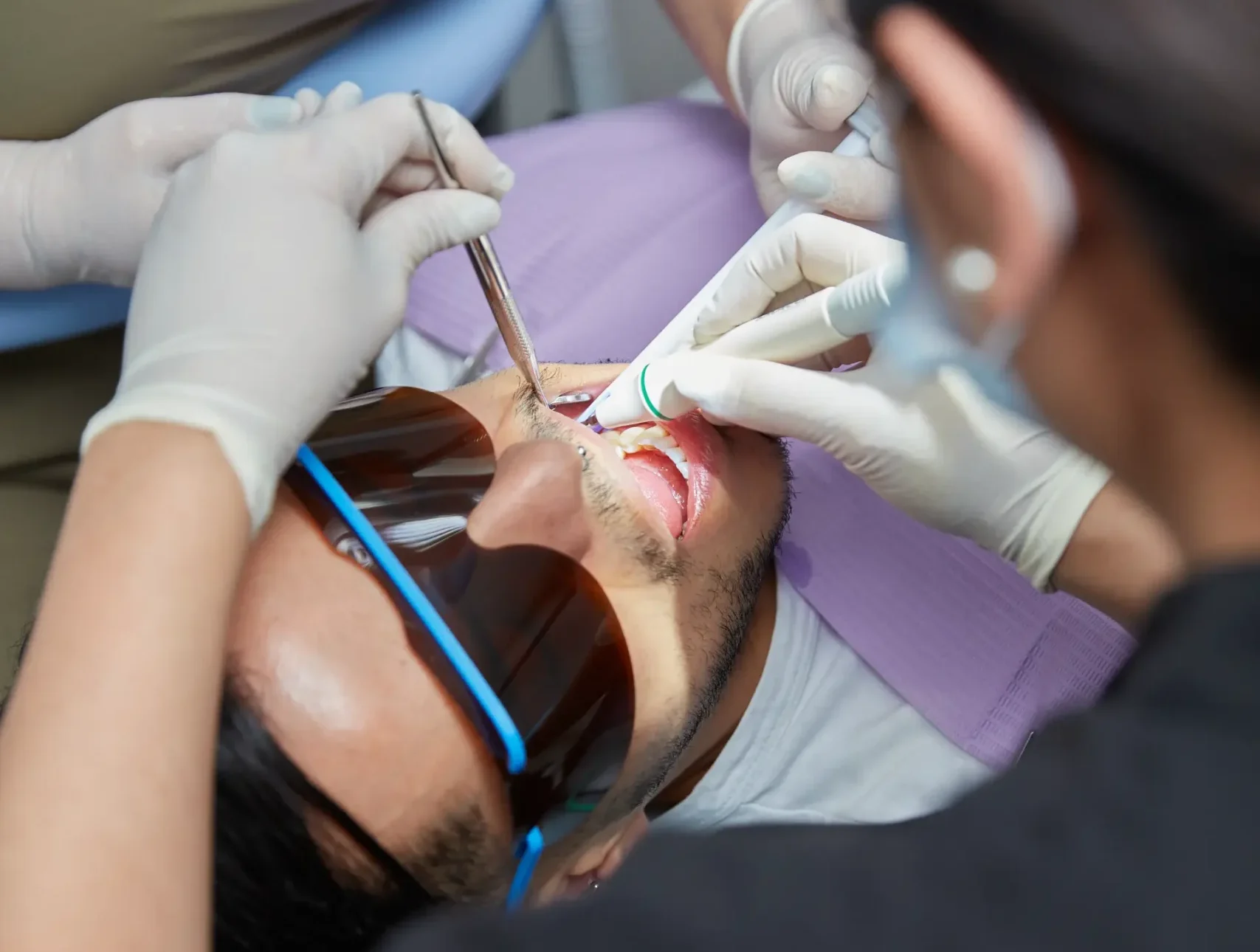
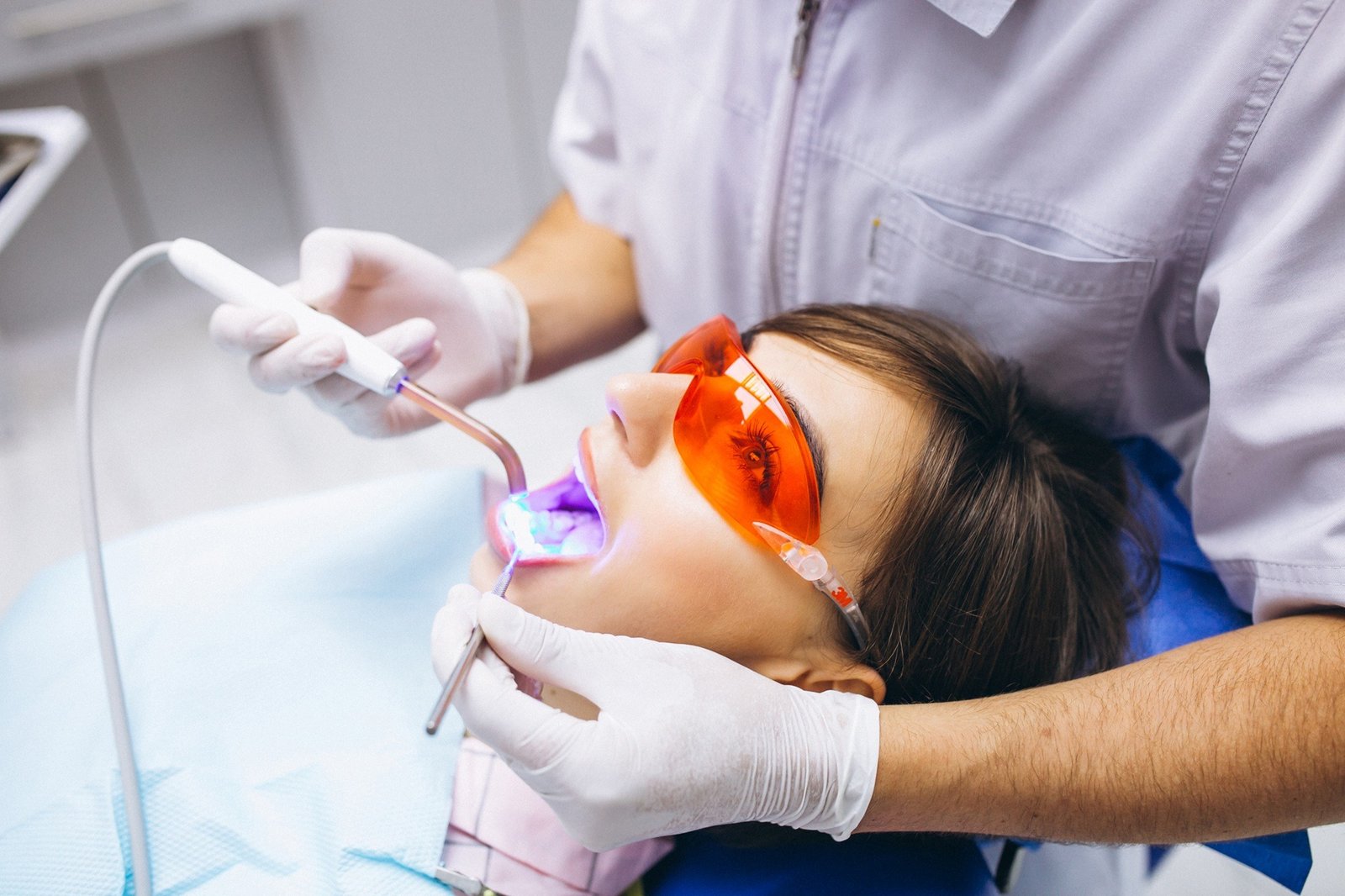
Professional whitening is performed by a dentist and often uses higher concentrations of peroxide (up to 38% hydrogen peroxide). This method is considered the safest because it is done under the supervision of a dental professional who ensures that the procedure is performed correctly and safely. The dentist also uses custom trays to ensure the whitening solution is evenly distributed and does not cause gum irritation or uneven application.
Professional whitening provides faster and more effective results, with the added benefit of enamel protection. Dentists often use desensitizing agents during treatment to minimize sensitivity and ensure that the whitening process does not cause long-term damage to the enamel.
At-Home Whitening Kits
At-home whitening treatments, such as whitening strips, trays, and gels, are readily available over the counter. These products typically contain a lower concentration of peroxide (usually 6% or less) compared to professional treatments. While they are more affordable and convenient, they are also less controlled, which can lead to issues like uneven application, gum irritation, or even enamel damage if misused. It’s important to follow the instructions carefully to avoid overuse or improper application, both of which can cause harm to your enamel.
Whitening Strips and Gels
Whitening strips and gels are common at-home options. They are easy to use but often require longer treatment times to achieve noticeable results. If overused, these products can lead to sensitivity and enamel erosion, especially if they contain abrasive ingredients or high concentrations of peroxide.
Whitening Toothpaste
Whitening toothpaste is another at-home option. These toothpaste brands usually use mild abrasives to scrub stains from the surface of the teeth rather than bleaching them. While they don’t typically damage enamel, they may not be as effective as peroxide-based treatments. Whitening toothpaste should be used sparingly to avoid over-abrasion, which could contribute to enamel wear over time.
Does Teeth Whitening Damage Enamel? What the Experts Say
The short answer is no, teeth whitening doesn’t damage enamel when done properly. However, like any cosmetic dental treatment, there are risks involved if whitening products are not used correctly. Let’s break down the factors that could lead to enamel damage:
What Causes Damage to Enamel During Whitening?
While professional whitening treatments are generally safe for enamel, overuse or improper use of certain products can lead to enamel damage. Here’s how:
- High Peroxide Concentrations: Overuse of whitening products with high peroxide concentrations can weaken enamel over time.
- Over-bleaching: Using whitening treatments too frequently, without proper dental supervision, can cause enamel to thin and become more susceptible to damage.
- Ill-fitting Trays: If whitening trays are not customized to fit your teeth, the whitening gel may come into contact with your gums, leading to irritation or burns.
It’s also important to note that at-home remedies such as lemon juice or activated charcoal can be abrasive and highly acidic, which increases the risk of enamel erosion. These natural remedies may seem like a safer option, but they can harm enamel in the long run.
Temporary Sensitivity vs. Enamel Damage
After whitening, many people experience temporary sensitivity to hot or cold foods. This is usually because the whitening agents temporarily dehydrate the enamel, making it more sensitive. This sensitivity should subside within a few days after the whitening treatment, but if it persists, it may indicate enamel damage. To minimize the risk of sensitivity, it’s best to consult with a dentist before undergoing any whitening treatment, especially if you have existing sensitivity issues.
However, patients often ask, can teeth whitening cause sensitivity? The answer is yes, but professional supervision ensures this sensitivity doesn’t lead to permanent enamel erosion.
Signs of Enamel Damage After Whitening: How to Spot the Warning Signs
Even though teeth whitening treatments are generally safe when used correctly, there are still a few signs to watch out for that may indicate potential enamel damage. While temporary sensitivity is common after whitening, prolonged or intense discomfort could be a sign that something went wrong. Understanding the early signs of enamel damage can help you take action before it becomes a serious issue.
Recognizing Early Enamel Erosion
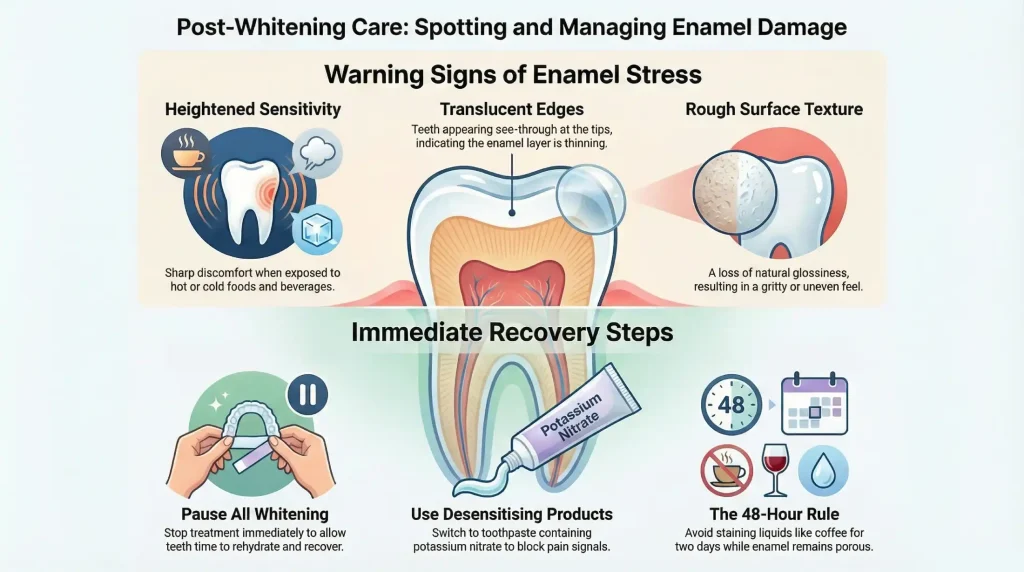
One of the first things you may notice if your enamel has been damaged is increased tooth sensitivity. This can happen immediately after whitening or over time if you’ve overused whitening products. Sensitive teeth may feel sharp discomfort when exposed to hot or cold foods and beverages.
Here are some early warning signs that your enamel may be under stress:
- Heightened Sensitivity: If you feel an extreme sensitivity to hot or cold drinks, it might be a sign that the protective enamel layer has been worn down or temporarily weakened.
- Translucency on the Edges of Your Teeth: As enamel thins, the edges of your teeth may appear slightly translucent. This is a visible indicator that the enamel is weakening.
- Rough or Uneven Surface Texture: Healthy enamel is smooth and glossy. If you notice that the surface of your teeth feels rough or uneven after whitening, this may be a sign that your enamel has been compromised.
- Visible Tooth Wear: Prolonged whitening or aggressive use of whitening products can cause noticeable wear and tear on your teeth. This could include chipping or rough spots that were not present before treatment.
What to Do If You Notice Enamel Damage
If you notice any of the above signs, it’s important to take immediate steps to prevent further damage and seek professional care. Here’s what you can do:
- Discontinue Whitening Treatment: If you experience ongoing sensitivity or discomfort, stop using whitening products. Give your teeth time to rehydrate and recover.
- Use Desensitizing Toothpaste: If you have noticed sensitivity, switch to a toothpaste designed for sensitive teeth. These types of toothpaste contain ingredients like potassium nitrate, which helps block the transmission of pain to the nerve endings in your teeth.
- Consult a Dentist: Schedule a visit, especially if symptoms persist. A Burwood dentist can examine your teeth to assess the extent of the damage and recommend appropriate treatments, such as fluoride treatments or enamel-strengthening products.
After a treatment, your enamel is temporarily more porous. To prevent new stains, you might know how long after teeth whitening I can drink coffee? It is usually recommended to wait at least 48 hours.
How to Safely Whiten Teeth Without Damaging Enamel
Ensuring your teeth-whitening process does not harm your enamel requires following safe practices. There are many ways to whiten your teeth effectively, but it’s important to be mindful of the risks and choose methods that won’t compromise your enamel’s integrity. Let’s explore the safest whitening options and practices that protect your enamel while giving you a brighter smile.
1. Best Whitening Practices: Enamel-Safe Techniques
The safest whitening treatments are those administered by professionals. Dentists have the necessary expertise to ensure your whitening treatment is both effective and safe. Here are a few enamel-safe techniques you can use:
- Professional Whitening: In-office whitening performed by a dentist offers the most control over the treatment. With proper supervision, this method uses higher concentrations of peroxide (up to 38%) that break down stains effectively without causing lasting damage to your enamel. Dentists also apply desensitizing agents to minimize post-treatment sensitivity, ensuring your enamel stays intact.
- Custom Whitening Trays: Dentists often provide customized trays for at-home whitening treatments. These trays ensure the whitening gel is applied evenly and stays in place, reducing the risk of gum irritation or uneven enamel exposure.
- Follow Instructions Carefully: If you choose to use take-home whitening kits, ensure you follow the dentist’s instructions exactly. Overuse of whitening products, especially those with a higher peroxide concentration, can damage your enamel. Always stick to the recommended time and frequency of use to avoid potential harm.
At Burwood Diamond Dental, we offer professional whitening services designed to give you a brighter,
2. Avoid Abrasive Products and Overuse of Whitening Products
While some at-home whitening products, such as toothpaste or strips, can provide effective results, they can also lead to enamel damage if not used properly. Here are some tips to help protect your enamel during at-home treatments:
- Use Low-Abrasion Whitening Toothpaste: Many whitening toothpastes contain mild abrasives to remove surface stains. While they are less likely to damage enamel than bleaching agents, it’s still important to use them in moderation. Overly abrasive toothpaste can wear down the enamel over time, so choose toothpaste that is specifically designed for sensitive teeth or that has received ADA (American Dental Association) approval for enamel safety.
- Limit Whitening Frequency: Even if you are using a dentist-approved kit or toothpaste, it’s important not to overdo it. Excessive whitening treatments, whether professional or at-home, can weaken enamel and increase sensitivity. Most dental professionals recommend whitening treatments every 6–12 months for optimal results without compromising enamel health.
- Avoid Over-the-Counter (OTC) Whitening Kits with High Peroxide: OTC whitening kits often contain peroxide concentrations that are too high for safe, regular use. Using these kits too often can cause long-term damage to your enamel, increasing the risk of sensitivity and erosion. Stick to products with peroxide levels under 6%, unless advised by your dentist.
3. Use Desensitizers and Protect Enamel with Fluoride
To mitigate potential damage and sensitivity, consider using desensitizing agents after whitening treatments. These agents, such as fluoride gels or potassium nitrate, help to strengthen enamel and reduce discomfort during the whitening process.
- Desensitizing Products: Many whitening treatments come with additional desensitizing agents that help reduce post-whitening sensitivity. These products work by blocking the nerve endings in your teeth, which helps prevent discomfort. If you are prone to sensitivity, talk to your dentist about desensitizing agents that can be incorporated into your whitening routine.
- Fluoride Application: Fluoride is well-known for its ability to remineralize enamel and protect against cavities. After whitening, fluoride toothpaste or treatments can help to strengthen your enamel and protect it from the demineralization that whitening can cause.
4. Avoid Acidic Foods and Beverages After Whitening
After teeth whitening, enamel may be more susceptible to damage from acidic foods and beverages. For the first 24–48 hours following a whitening treatment, it’s important to avoid or limit your consumption of these items, including:
- Citrus fruits (lemons, oranges, etc.)
- Sodas and sugary drinks
- Coffee and tea
- Red wine
These acidic substances can erode enamel more quickly when it’s in its temporarily dehydrated state, making it more susceptible to further damage. To keep your teeth bright and healthy, opt for neutral or water-based beverages and foods during this period.
5. Maintain Good Oral Hygiene to Support Enamel Health
Whitening treatments are not a substitute for regular oral care. To maintain a white smile and protect your enamel over the long term, it’s essential to keep up with a good dental hygiene routine:
- Brush Regularly: Brush your teeth twice a day using a fluoride toothpaste to remove surface stains and plaque. Be gentle with your brushing technique to avoid unnecessary abrasion on the enamel.
- Floss Daily: Flossing helps to remove food particles and plaque between your teeth, preventing cavities and maintaining overall dental health.
- Visit Your Dentist Regularly: Regular dental check-ups are crucial for monitoring enamel health, detecting early signs of damage, and getting professional cleanings to keep your teeth looking their best.
Risks of Teeth Whitening: What to Watch Out For
While teeth whitening is generally safe when performed correctly, there are some risks associated with improper use of whitening products. Understanding these risks can help you avoid enamel damage and ensure that your whitening experience is as safe as possible.
Overuse and Over-Bleaching
One of the primary risks of at-home whitening products is overuse. Using whitening products too frequently or for too long can cause your enamel to thin over time. This can lead to an increased risk of tooth sensitivity, which can be both painful and long-lasting if not managed properly. Over-bleaching is especially common with over-the-counter whitening kits that may not be as controlled or precise as professional treatments.
Acidic or Abrasive DIY Methods
Some people turn to natural or DIY remedies to whiten their teeth. However, these methods, such as using lemon juice, baking soda, or activated charcoal, can be damaging to your enamel. These substances are abrasive and acidic, which can lead to enamel erosion if used too frequently. It’s best to stick to whitening methods recommended by your dentist to ensure that you are not inadvertently harming your teeth.
Ill-Fitting Whitening Trays
Another risk factor is using whitening trays that are not properly fitted. Ill-fitting trays can cause the whitening gel to spill over into the gums, which can cause irritation and burns. Additionally, uneven application of the gel can lead to patchy results, leaving some areas of your teeth more exposed to the bleaching agents than others.
Sensitivity and Gum Irritation
While sensitivity is typically temporary, excessive whitening can exacerbate the discomfort. Overuse of peroxide-based whitening products or the use of poorly designed whitening products can lead to gum irritation or prolonged sensitivity, making it uncomfortable to enjoy everyday foods and drinks.
Frequently Asked Questions
Can Teeth Whitening Cause Permanent Damage to My Enamel?
No, when used correctly, whitening treatments won’t cause permanent damage. Overuse of high-peroxide products can cause temporary sensitivity, so follow guidelines and consult a dentist.
What Is the Best Way to Whiten My Teeth Without Damaging Them?
The safest option is dentist-supervised treatments. If using at-home products, choose ADA-approved ones and follow instructions carefully. Whitening toothpaste with mild abrasives is also safe for surface stains.
How Long Do Whitening Effects Last?
Whitening results last 6 months to 2 years, depending on the method and lifestyle. Professional treatments usually last longer. Avoid staining foods and maintain regular dental check-ups for the best results.
Can Sensitive Teeth Be Whitened Safely?
Yes, sensitive teeth can be safely whitened with proper precautions. Use desensitizing agents or consult a dentist for treatments that minimize discomfort.
Is Professional Whitening Better Than At-Home Kits?
Professional whitening is safer and more effective, offering faster, longer-lasting results with minimal risks. At-home kits are less expensive but take longer and offer less control.
Conclusion: Safe Whitening Practices for Enamel Protection
Teeth whitening doesn’t have to damage your enamel if done correctly. Whether you opt for professional whitening or at-home treatments, the key to protecting your enamel is moderation and choosing the right products. Always consult your dentist before starting a whitening regimen to ensure you are using safe and effective methods that won’t harm your teeth in the long run.
At Burwood Diamond Dental, we offer professional whitening services designed to give you a brighter, whiter smile while protecting your enamel. If you are considering whitening treatments, contact us today to schedule a consultation and learn how we can help you achieve your dream smile, safely and effectively.