Teeth whitening has become a go-to solution for achieving a brighter, more radiant smile. Whether you’re preparing for a big event or simply want to enhance your everyday look, teeth whitening treatments offer a quick and effective way to improve your appearance. However, like any cosmetic treatment, it’s important to understand the potential side effects and how to avoid them to ensure a safe and successful experience. This guide will walk you through the common side effects of teeth whitening, how to minimize risks, and what you can do to protect your smile.
What Is Teeth Whitening?
Teeth whitening is a cosmetic dental treatment aimed at lightening the color of your teeth by removing stains and discoloration. The treatment works through the use of bleaching agents, primarily hydrogen peroxide or carbamide peroxide, that break down stains and lighten the enamel of your teeth.
Whitening can be performed in different ways:
- In-office treatments: Done at the dental clinic with a professional-grade whitening solution and a stronger peroxide concentration for fast results.
- At-home treatments (dentist-supervised): Custom whitening trays filled with a professional gel that you wear daily for about 45 minutes over the course of 7-14 days.
- Over-the-counter products: Available in the form of strips, gels, and toothpaste, though they are typically less effective and can sometimes cause issues if not used correctly.
The goal of teeth whitening is simple: to achieve a brighter smile by breaking down surface stains caused by coffee, tea, wine, and smoking. However, as effective as these treatments can be, they also carry some risks and potential side effects.
How Teeth Whitening Works
Teeth whitening works by using oxidation to break down the chemical compounds in surface stains on your teeth. When the whitening gel (containing hydrogen peroxide or carbamide peroxide) comes into contact with your teeth, it releases oxygen molecules that penetrate the enamel and dentin (the second layer of your teeth). These molecules help break down the molecules in the stains, lightening the color of the tooth.
While this process is effective at whitening your teeth, it’s also why it can cause side effects such as tooth sensitivity and gum irritation. The peroxide breaks down not only the stains but also temporarily opens up the microscopic pores in your enamel, which can cause discomfort if the treatment is not properly managed.
Teeth Whitening Side Effects: Common Issues and Solutions
Teeth whitening treatments are generally safe when performed under professional supervision, but they can lead to certain side effects, especially if overused or improperly applied. Below is a detailed look at the most common teeth whitening side effects, their causes, symptoms, and how to manage them.
Tooth Sensitivity
Teeth whitening products contain peroxide-based bleaching agents that temporarily open the microscopic enamel pores, allowing the bleaching agents to reach deeper layers of the teeth. This exposes the dentin, the sensitive tissue beneath the enamel, which is why some people experience sensitivity during and after treatment.
Symptoms:
Pain or discomfort when eating or drinking hot or cold foods and beverages. You may also experience sensitivity to cold air, particularly during or immediately after the whitening procedure.
Duration:
Tooth sensitivity caused by whitening treatments is typically short-lived, usually resolving within 24-48 hours. In some cases, it may last slightly longer but should gradually subside.
Management:
To alleviate sensitivity:
- Use desensitizing toothpaste that contains fluoride or potassium nitrate. These ingredients help to block the nerve pathways and reduce discomfort.
- Avoid consuming hot or cold foods and drinks for the first 48 hours after treatment. Stick to lukewarm foods and beverages during this time.
- If sensitivity persists or worsens, consult your dentist to adjust the whitening treatment.
Gum Irritation
Gum irritation occurs when the whitening gel leaks out of the custom whitening trays and comes into contact with the soft tissues of the gums. This typically happens when the trays do not fit properly, allowing the gel to seep onto the gums.
Symptoms:
Gum irritation can cause redness, swelling, and mild discomfort around the gum line. The irritation is usually temporary but can be uncomfortable.
Duration:
Most gum irritation lasts a few hours to a few days, depending on how quickly the gum tissues heal. If the irritation persists beyond a few days, it may indicate the need for an adjustment to the treatment.
Management:
To prevent and manage gum irritation:
- Custom trays: Use custom trays made from dental impressions to ensure a proper fit, which will minimize leakage of whitening gel onto the gums.
- Barrier gels: Apply barrier gels to protect the gums from direct contact with the whitening gel.
- Saltwater rinse: If irritation occurs, rinse your mouth with a saltwater solution to soothe inflamed gum tissue.
Enamel Damage
Overuse of whitening products, especially those with high concentrations of hydrogen peroxide or carbamide peroxide, can lead to enamel erosion. This happens when the enamel becomes weakened over time due to frequent exposure to bleaching agents, leaving the teeth more vulnerable to damage.
Symptoms:
Enamel damage may manifest as thinning enamel, which results in increased tooth sensitivity and a higher risk of staining. Over time, weakened enamel can cause the teeth to become more prone to decay and other oral health issues.
Prevention:
To prevent enamel damage:
- Choose professional whitening treatments, as these are supervised by a dentist who ensures the proper use of whitening agents.
- Limit the frequency of whitening treatments, with recommendations typically being no more than twice a year.
- Schedule regular dental checkups to monitor the condition of your enamel and catch any issues early.
Uneven Whitening
Whitening agents cannot affect dental restorations like crowns, fillings, or veneers in the same way they whiten natural teeth. As a result, people with existing dental work may experience patchy or uneven whitening results, where the teeth around the restoration become whiter while the restoration remains the same shade.
Symptoms:
Patchy whitening, where the teeth around dental restorations appear brighter, but the restorations themselves don’t change color, leading to noticeable differences in tooth color.
Prevention:
To prevent uneven whitening:
- Pre-treatment dental evaluation: Consult with your dentist to assess the condition of your teeth and any existing dental work. Your dentist may suggest customized whitening plans that ensure a more even result.
- Alternative treatments: In cases where discoloration is internal or deep-seated, dental veneers may be the best option to ensure a permanent, consistent tooth color that whitening alone cannot achieve.
Temporary Tooth Color Changes
During the whitening process, dehydration of enamel can occur. The whitening gel strips moisture from the enamel, which can cause temporary changes in tooth color. This is known as the whitening rebound effect.
Symptoms:
Your teeth may appear slightly different in color immediately after treatment. This is temporary and may make your teeth appear more yellow or dull until the enamel rehydrates and stabilizes.
Duration:
These temporary color changes typically resolve within 2 weeks as the enamel rehydrates and stabilizes, and your teeth return to their normal color.
Management:
To manage temporary tooth discoloration:
- Hydration: Drink plenty of water to help rehydrate the enamel and restore its natural color.
- Avoid staining foods: For the first two weeks after treatment, avoid foods and drinks that can stain your teeth, such as coffee, red wine, and berries.
Increased Risk of Cavities
Whitening treatments can temporarily weaken the enamel, making it more susceptible to plaque buildup and tooth decay. If oral hygiene is not maintained during this time, the risk of cavities increases. Maintaining your results requires a healthy foundation; scheduling a general check-up ensures your enamel is strong enough for whitening and helps prevent plaque buildup.
Symptoms:
An increased risk of cavities is not immediately noticeable, but it can develop over time if proper oral hygiene is not maintained. Plaque buildup can lead to decay and other dental issues.
Prevention:
To prevent cavities after whitening:
- Use fluoride treatments to strengthen enamel and help prevent decay.
- Maintain good oral hygiene, including brushing twice a day with fluoride toothpaste and flossing daily to remove plaque buildup.
- Consider using remineralizing toothpaste that can help to strengthen weakened enamel.
How to Minimize Teeth Whitening Side Effects
Choose Professional Whitening Treatments
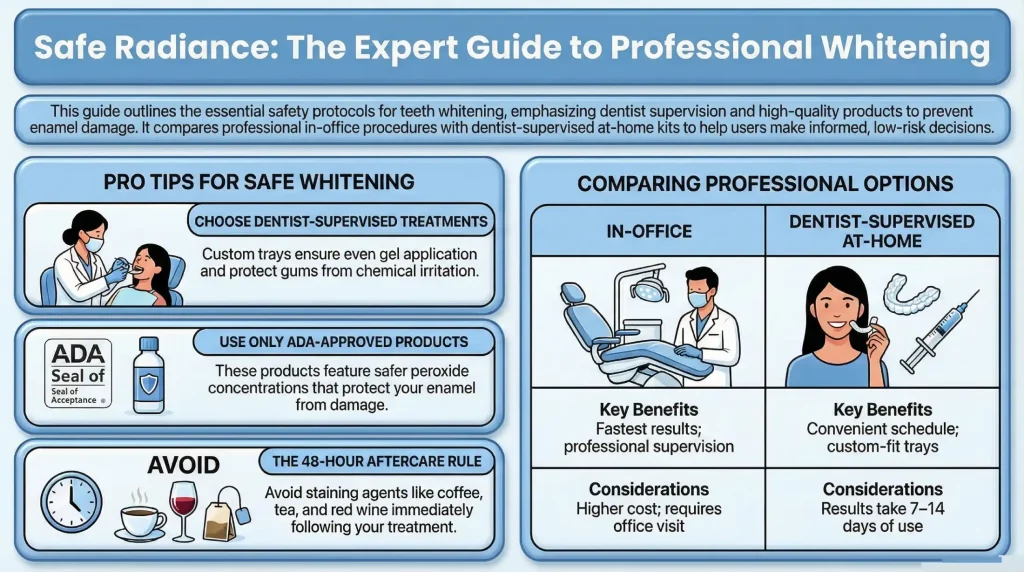
The best way to avoid side effects like tooth sensitivity and gum irritation is to choose professional whitening treatments. Dentist-supervised treatments are designed to minimize risks, as your dentist will ensure the whitening process is safe for your teeth and gums. These treatments typically use custom whitening trays, which ensure the gel is applied evenly and doesn’t irritate the gums. For those looking for the safest results, our professional teeth whitening services are tailored to minimize sensitivity while maximizing brightness.
Additionally, professional whitening gels have a more controlled peroxide concentration, reducing the likelihood of enamel damage and sensitivity.
Use ADA-Approved Whitening Products
For at-home whitening, always opt for ADA-approved products. These products are tested for safety and effectiveness, ensuring that they don’t harm your enamel or gums when used correctly. Look for products that feature lower peroxide concentrations and follow all usage instructions carefully.
Follow Aftercare Instructions
Proper aftercare is essential to prolong the results of your whitening treatment and minimize side effects. Avoid staining foods like coffee, tea, and red wine for at least 48 hours after treatment. It’s also important to rinse your mouth after meals and use whitening toothpaste to maintain your results.
In-Office vs At-Home Whitening: Which Is Safer?
Choosing between in-office whitening and at-home whitening kits can be tricky, but it’s important to consider both the effectiveness and the risks associated with each option.
In-Office Whitening
Pros:
- Faster results with a professional-grade gel and light activation.
- Supervised treatment by a dentist, ensuring a safer and more controlled process.
- Reduced risk of side effects like sensitivity or gum irritation.
Cons:
- Higher cost compared to at-home kits.
- Requires a visit to the dental office, which might not be convenient for everyone.
At-Home Whitening (Dentist-Supervised)
Pros:
- Convenient as it can be done at home on your schedule.
- Custom trays created by a dentist to ensure a better fit and more effective treatment.
Cons:
- Takes longer to see results (7-14 days of daily use).
- Risk of uneven results or gum irritation if not used correctly.
| Feature | In-Office Whitening | At-Home Whitening (Dentist-Supervised) |
| Time | 1-hour session | 45 min/day for 7-14 days |
| Supervision | Direct dentist | Custom trays with dentist guidance |
| Sensitivity | Often higher | Lower risk |
| Convenience | Clinic only | Home-based |
Teeth Whitening Maintenance and Aftercare
How to Maintain Teeth Whitening Results
Once you’ve achieved a brighter, whiter smile, it’s essential to take the necessary steps to maintain those results for as long as possible. The key to maintaining whitening results lies in consistent oral hygiene and avoiding staining foods and drinks.
Oral Hygiene Habits for Long-Lasting Results
Maintaining your teeth’s brightness is largely about sticking to a regular oral hygiene routine. After your whitening treatment, follow these steps:
- Brush twice a day: Use a fluoride-based toothpaste that not only protects your enamel but also helps keep your teeth white.
- Use a whitening toothpaste: Some whitening toothpastes help to prevent stains from setting on the enamel and keep your teeth looking bright.
- Floss daily: Flossing removes plaque and food particles from between your teeth, preventing staining and decay.
- Rinse with mouthwash: Consider using a mouthwash that helps to fight plaque while preventing new stains.
Avoiding Staining Foods and Drinks
Certain foods and drinks can cause your teeth to stain, even after whitening treatments. For the first 48 hours after your treatment, it’s crucial to avoid any food or drink that could cause staining. Here are the main culprits:
- Coffee and Tea: Both are notorious for staining teeth.
- Red Wine: It contains tannins and anthocyanins, which can cause staining.
- Berries: Blueberries, blackberries, and raspberries have natural pigments that can stain your teeth.
- Soy Sauce and Balsamic Vinegar: Dark sauces can leave a lasting stain if they are consumed in large amounts.
Top-Up Whitening Treatments
To keep your teeth sparkling white, consider top-up treatments every 6-12 months. These treatments involve using the same whitening gel that was used in your initial treatment but at a lower strength. You can discuss with your dentist whether these touch-ups are necessary for maintaining your smile’s brilliance.
Risks of Over-Whitening and Frequency
While whitening treatments can produce excellent results, it’s important to be mindful of the risks of over-whitening. Frequent whitening can lead to a variety of complications, including enamel thinning, gum irritation, and sensitivity. Here’s what you need to know about the frequency of whitening treatments:
Enamel Thinning
One of the biggest risks of over-whitening is that it can wear down your enamel over time. Enamel is the protective outer layer of your teeth, and when it thins, your teeth become more vulnerable to cavities and other dental issues.
- How to Prevent Enamel Damage: To prevent enamel thinning, avoid excessive use of whitening treatments. If you have sensitive teeth or enamel issues, consult your dentist before using any whitening products. Your dentist will assess your enamel and guide you on how often you can safely whiten your teeth without causing harm.
Chronic Sensitivity
Frequent whitening can also lead to chronic tooth sensitivity, making it uncomfortable to eat or drink hot or cold food and beverages. Overuse of high-concentration whitening products can worsen sensitivity, which might persist long after the treatment.
- How to Manage Sensitivity: If you experience chronic sensitivity, switch to a low-peroxide whitening gel and use desensitizing toothpaste. Consulting your dentist can help you find a solution that minimizes the risk of sensitivity while still achieving the whitening effect you want.
Gum Issues
If whitening products come into contact with your gums too often, they can lead to gum irritation. This can cause redness, swelling, and discomfort that might persist for a few days.
- Prevention: Using custom whitening trays ensures that the gel is applied only to the teeth and not the gums. Always follow the treatment instructions carefully, and if you experience irritation, stop the treatment and consult your dentist.
Consulting a Dentist for Teeth Whitening
Why Professional Supervision Is Important
While over-the-counter whitening products may seem tempting due to their lower cost, they often lack the supervision and precision that come with professional whitening treatments. Professional supervision ensures that:
- Proper fit of whitening trays: Dentists use custom whitening trays based on impressions of your teeth, ensuring that the whitening gel is applied evenly without causing gum irritation or unnecessary exposure to sensitive areas.
- Controlled peroxide levels: Dental professionals can control the strength of the whitening gel, reducing the risk of enamel damage and tooth sensitivity.
- Personalized treatment: Your dentist will assess your teeth to determine the best whitening approach for you, ensuring both safety and effectiveness.
If you’re considering teeth whitening, consult a local dentist like Burwood Diamond Dental to explore professional options that fit your needs. We offer a range of treatments, from in-office whitening to take-home kits, all designed to give you a brighter smile while maintaining your dental health.
Frequently Asked Questions (FAQs)
How Long Does Teeth Whitening Last?
The results of teeth whitening can last anywhere from 6 months to 2 years, depending on factors like your oral hygiene, diet, and lifestyle choices. Regular touch-ups can help maintain a bright smile.
Can Teeth Whitening Damage My Teeth?
Teeth whitening is generally safe when done professionally. Overuse of DIY kits or using products with high peroxide concentrations without supervision can lead to enamel damage and tooth sensitivity. Always consult with a dentist before starting any whitening treatment.
Is Teeth Whitening Safe for Sensitive Teeth?
Yes, professional whitening is often safe for sensitive teeth. Your dentist can recommend products with lower peroxide concentrations and provide treatments designed to minimize discomfort. Using desensitizing toothpaste before and after treatment can also help.
How Often Can I Whiten My Teeth?
It’s generally recommended to wait 6 months between whitening treatments to avoid overuse, which can lead to enamel thinning and increased sensitivity.