If you have spent time and money whitening your teeth only to notice that your front-tooth fillings now look dark or yellow by comparison, you are facing a common dental frustration. Many people across Burwood assume that a strong whitening gel will lift stains from every part of their smile, but they are often surprised when their natural teeth get brighter while their dental work stays exactly the same. This creates a patchwork effect that can make you feel more self-conscious than before. The truth is that standard whitening treatments cannot change the shade of synthetic dental materials. However, there are professional ways to fix this mismatch and create a uniform, bright smile. At Burwood Diamond Dental, we help patients fix these color gaps so their dental work blends perfectly with their new, lighter enamel.
Why Whitening Gel Doesn’t Work on Fillings
To understand why whitening gel fails to brighten a filling, you have to look at how different materials are built. Your natural tooth enamel is porous, meaning it has tiny holes that allow hydrogen peroxide to sink in and break up deep stains through a process called oxidation. In contrast, composite resin (the material used for white fillings) and porcelain are non-porous. They are engineered to be a solid, sealed barrier. Because the peroxide cannot penetrate the surface of a filling, no chemical reaction happens inside the material. This is a fundamental rule of cosmetic dentistry: whitening products only work on organic tooth structure, leaving man-made restorations at their original manufactured shade. Using unregulated products on teeth with old restorations is risky; DIY Zoom teeth whitening dangers show how acidic gels can irritate nerves through leaking fillings.
Identifying Your Discolouration: Is it the Filling or the Tooth?
Before you decide on a treatment, you need to know exactly what is causing the dark appearance of your dental work. Sometimes the filling itself has absorbed surface stains from tea, coffee, or Shiraz, which is common in older resin materials. Other times, the issue is marginal leakage, where a tiny gap has formed between the filling and the tooth, allowing bacteria and food particles to seep underneath. This creates a dark line around the edge that looks like decay or heavy staining. If the filling is very old, the resin itself may have reached the end of its lifespan, turning a dull yellow or brown as the chemical bonds in the plastic break down over time.
| Type of Discolouration | Appearance | Cause | Can Whitening Fix It? |
| Surface Staining | Yellow/Brown film | Coffee, wine, smoking | No (Requires polishing) |
| Marginal Leakage | Dark lines at edges | Filling pulling away | No (Requires replacement) |
| Internal Aging | Overall dull/grey | Material breakdown | No (Requires replacement) |
| Underlying Decay | Dark shadow under resin | New cavity | No (Requires urgent care) |
Internal vs. External Stains on Dental Work
External stains sit on top of your filling and are often caused by your lifestyle habits. Since composite resin is a type of plastic, it can get scratched over time, and those scratches hold onto pigments from dark foods. Internal stains are different; they happen when the material itself changes color because of age or exposure to light. While a professional clean at our Burwood clinic might buff away some external surface stains, nothing you do at home, including using whitening strips or charcoal toothpaste, will reach the internal discolouration of a composite filling.
The Problem with Marginal Leakage and Aging Composite
As fillings age, they can shrink slightly, creating a microscopic gap between the tooth and the resin. This is known as marginal leakage. Not only does this look like a dark, unattractive ring around your filling, but it also puts your tooth at risk for recurrent decay, where a cavity forms underneath the existing dental work. If you notice this dark border, it is a sign that the seal of the filling has failed. Whitening will not help here; in fact, putting bleach over a leaking filling can cause the chemicals to seep into the gap, leading to intense pain or nerve irritation.
The Risks of Whitening Over Old Dental Restorations
Proceeding with a whitening treatment when you have prominent fillings comes with a few specific risks that can affect both the look and health of your smile. The most immediate issue is the patchwork effect, where your natural enamel lightens significantly, leaving the unreactive fillings standing out like dark spots or yellowed patches. Beyond the aesthetics, applying high-concentration peroxide over old restorations can sometimes lead to increased sensitivity. If you have multiple large restorations on your front teeth, comparing a dental veneer vs crown will help you choose the most durable, stain-resistant option for a permanently white smile. If a filling is old or has tiny cracks, the whitening gel can migrate toward the inner nerve of the tooth more easily than it would through healthy enamel. While peroxide typically does not degrade the structural strength of a new filling, it can sometimes weaken the bond of an older, already failing restoration, potentially leading to a loose filling down the track.
How to Actually Fix Discoloured Fillings: Expert Solutions
Since bleaching gels cannot change the color of a filling, the only way to achieve a bright, uniform smile is through professional intervention. At Burwood Diamond Dental, we evaluate the condition of your restorations to decide the best path forward. For some, a simple surface treatment is enough, while others may need a more durable solution to ensure their smile stays white for years to come. Because we understand the local Sydney lifestyle, where coffee and social dining are a big part of the culture, we focus on using materials that offer the highest resistance to future staining.
Option 1: Professional Replacement with Shade Matching
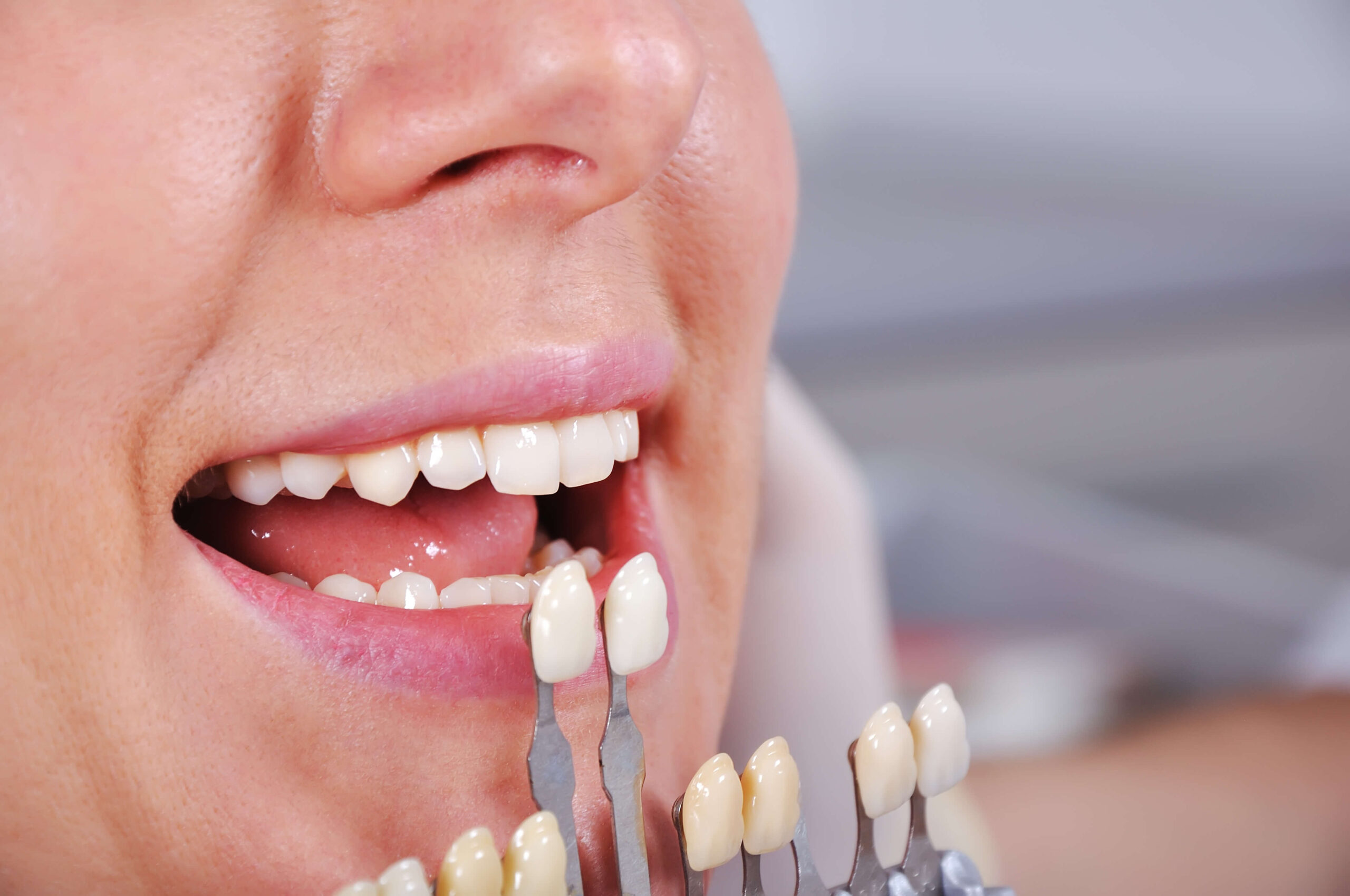
The most common solution for a mismatched smile is to simply replace the old, dark composite bonding with new material. After you have finished your whitening treatment and your natural teeth have reached their goal shade, we carefully remove the old resin and apply a new layer of premium composite. We use advanced digital shade matching to ensure the new filling is indistinguishable from your brightened enamel. This process is relatively quick and is the most cost-effective way to get rid of those yellow spots that the whitening gel couldn’t touch.
Option 2: Porcelain Veneers for a Permanent Match
If you have multiple large fillings on your front teeth that frequently pick up stains, porcelain veneers might be a better long-term choice. Unlike composite resin, high-quality porcelain is almost entirely stain-resistant and does not change color over time. By placing a thin shell of porcelain over the front of the tooth, we can hide the underlying fillings and the natural tooth structure at once. This ensures that your smile stays exactly the same shade of white for a decade or more, regardless of how much coffee or tea you drink. It is a popular choice for our patients in Burwood who want a set and forget solution for their smile aesthetics.
Option 3: Dental Crowns for Structural Integrity
In cases where a discoloured filling covers more than half of the tooth, or if the tooth has undergone a root canal, a dental crown is often the best option. A crown covers the entire visible portion of the tooth, providing a fresh start for both color and strength. Like veneers, crowns are made from materials that do not respond to whitening gel, so we ensure the crown is crafted to match your whitened teeth perfectly. This not only fixes the discolouration but also protects a heavily filled tooth from fracturing in the future.
Option 4: Professional Polishing and Buffing
Sometimes, the discolouration is actually just a buildup of surface stains on the exterior of the resin. Before committing to a full replacement, we can try a professional polishing session. Using specialised dental instruments and polishing pastes, we can buff away the top layer of stains and smooth out any rough patches where pigments like to hide. While this won’t change the internal color of the filling, it can often restore the shine and significantly improve the look of your dental work without the need for an injection or a drill.
| Solution | Best For | Longevity | Stain Resistance |
| Composite Replacement | Small to medium fillings | 5–7 Years | Moderate |
| Porcelain Veneers | Multiple front-tooth issues | 10–15 Years | High |
| Dental Crowns | Large fillings or weak teeth | 15+ Years | High |
| Professional Polish | Surface stains only | 6–12 Months | Low |
The Ideal Sequence: Whitening First, Restoring Second
When planning a smile transformation, the order of your treatments is just as important as the treatments themselves. Many people feel rushed to fix a dark filling, but replacing dental work before you whiten your natural teeth is a common mistake that leads to mismatched results. By following a specific clinical sequence, we ensure that your final look is cohesive and that the bond between your tooth and the new filling is as strong as possible. At Burwood Diamond Dental, we guide our patients through this transition to avoid unnecessary replacements and ensure long-term satisfaction.
Why Timing Matters: Reaching Your Goal Shade
The primary reason to whiten your teeth before replacing any dental work is that natural enamel is unpredictable. Everyone’s teeth respond to bleaching differently, and we cannot know exactly what shade you will achieve until the process is finished. If we were to match a new filling to your current teeth today, and then you whitened them next week, the filling would immediately look too dark and yellow. By reaching your goal first, we establish a fixed target. This allows us to select a composite resin that perfectly mirrors your new, brightened enamel, ensuring the restoration is invisible to the naked eye.
The Two-Week Rule and Oxygen Interference
It is vital to wait at least 14 days after your whitening treatment before bonding any new resin to your teeth. This is known in the dental community as the Two-Week Rule, and it is based on chemical necessity. During whitening, oxygen molecules penetrate the enamel to break up stains. For several days after the treatment, high levels of residual oxygen remain within the tooth structure. If we try to apply a filling immediately, this oxygen interferes with the curing process of the dental adhesive, causing a weak bond. Waiting two weeks allows the oxygen to dissipate and the color to set, ensuring your new filling stays securely attached and looks consistent. Clinical studies on the effects of bleaching on dental restorations confirm that waiting two weeks is essential for bond strength and color stability.
Consultation Strategy: Planning Your Smile Harmony
Achieving a uniform smile requires a clear roadmap, which we develop during your initial cosmetic consultation. Our strategy involves looking at your smile as a whole rather than focusing on one tooth at a time. We assess which fillings are visible when you talk or laugh and determine which ones will need replacing to match your post-whitening results. We also check the health of your gums and the integrity of your enamel to ensure you are a good candidate for bleaching. Regular check-ups allow us to monitor these restorations and suggest a refresh before they become a major aesthetic issue. This planning phase prevents surprises and allows us to provide a clear timeline and cost estimate, so you know exactly how and when you will reach your ideal, harmonious smile.
| Treatment Step | Purpose | Recommended Waiting Time |
| Professional Whitening | To lift stains and establish the brightest natural shade. | N/A |
| Color Stabilisation | To let oxygen dissipate and the tooth shade settle. | 14 Days |
| Shade Matching | To pick the exact composite resin color for new fillings. | Day of Replacement |
| Final Restoration | To replace old fillings and achieve a seamless, uniform look. | Final Appointment |
Common Questions About Fillings and Whitening
Can I whiten my teeth if I have front-tooth fillings?
Yes, you can certainly whiten your teeth, but you must be prepared for the fact that the fillings will remain their original color. If your fillings are small or located on the back of the tooth, the difference might not be noticeable. However, if you have large fillings on your smile line, you will likely need to have them replaced after the whitening process to ensure everything matches. We can help you plan this transition so you aren’t left with a two-toned smile for long.
How do you remove stains from white fillings?
While you cannot bleach a filling, a professional dental hygienist can often remove surface stains through a thorough cleaning and polishing. Using an air-polishing tool or a high-speed rotating brush with a special grit paste can lift coffee and tobacco stains from the surface of the resin. If the stain is deeper than the surface, the only way to remove it is to replace the material entirely with fresh, stain-resistant composite.
Will baking soda or charcoal whiten my fillings?
No, and in fact, these abrasive substances can make the problem worse. Baking soda and charcoal work by scratching the surface of the teeth to remove stains. While this might provide a tiny bit of temporary brightening on natural enamel, it creates microscopic scratches on your composite fillings. These new scratches act like magnets for food pigments, causing your fillings to stain even faster and more deeply than before. It is much safer to stick to professional polishing methods.
How often should composite fillings be replaced for aesthetics?
On average, composite fillings in the front of the mouth look their best for about five to seven years. Over time, the resin naturally begins to lose its luster and picks up staining at the edges. If you notice that your fillings no longer match your teeth or have developed dark borders, it is usually time to consider a replacement.
Achieve a Seamless Smile at Burwood Diamond Dental
Fixing a patchwork smile requires a combination of clinical skill and an eye for color. At Burwood Diamond Dental, we don’t just focus on making teeth white; we focus on making them look natural. When you visit us for a cosmetic consultation, we look at the health of your existing dental work and how it interacts with your natural enamel. Our team uses high-quality materials that mimic the way light passes through real teeth, ensuring that your new fillings or veneers look like they belong there.
Summary Checklist for Whitening with Fillings
- Step 1: Book a consultation at Burwood Diamond Dental to check for leaks or decay.
- Step 2: Complete your professional whitening treatment to reach your desired shade.
- Step 3: Wait 14 days for the tooth color and oxygen levels to stabilise.
- Step 4: Replace old, discoloured fillings with fresh, shade-matched composite resin.
- Step 5: Maintain your results with professional cleans and a good home care routine.