Written and clinically reviewed by Dr Johanna Ramon, general dentist at Burwood Diamond Dental. Graduated 2005, with over 19 years in general and cosmetic dentistry and a special interest in aesthetic and restorative work, crown and bridge, whitening and smile design.
Reviewed September 2026. This page covers the chemistry inside a whitening gel and the Australian rules governing its sale. It is not a recommendation to whiten, and it does not replace an examination.
Turn a syringe of whitening gel over and read the back of the box. There will usually be eight or nine ingredients listed, and exactly one of them bleaches anything. The rest are there to hold that one ingredient against the tooth, stop it decomposing in the tube, keep the pH from dropping far enough to etch enamel, and make it taste of mint rather than pool water.
The ingredient doing the work is either hydrogen peroxide or carbamide peroxide, and the number beside it is set by Australian law, not by the manufacturer.
Here is the part where almost nobody sells gel volunteers. The take-home kit I dispense from my surgery is held to exactly the same concentration ceiling as the one on the chemist’s shelf: 6% hydrogen peroxide, or 18% carbamide peroxide. Same cap, same law. If you’ve been told a dentist’s kit is a stronger product, you’ve been told something that isn’t true, and I’d rather you heard it from me before you spent money.
Peroxide works by breaking the molecules that absorb light
Tooth colour comes mostly from the dentine underneath, seen through semi-translucent enamel. Stain sits in both.
Peroxide is a small molecule. Small enough to diffuse through enamel into dentine, where it breaks down and releases reactive oxygen that attacks chromophores, the large pigmented molecules behind the discolouration. A chromophore carries a long chain of alternating double bonds, and it’s that chain which absorbs visible light. Break it up and the fragments stop absorbing light the same way, so the tooth reads lighter.
Two things follow from that.
Bleaching is chemical, not mechanical. It doesn’t scrub or polish. Anything that lightens teeth by abrasion is lifting surface stain, a different job with a hard floor to it.
And it only touches natural tooth. Peroxide does not change the colour of ceramic or composite, so porcelain crowns and bridgework, veneers and white fillings hold whatever shade they were made in. Whiten around an old front filling and it stays put while everything else moves, so it just becomes more obvious. Entirely predictable at an examination, almost never predicted at a checkout.
Carbamide peroxide releases roughly a third of its number as hydrogen peroxide
Carbamide peroxide is hydrogen peroxide bound up with urea. Add moisture and it comes apart, releasing roughly a third of its stated concentration as hydrogen peroxide, and releasing it more slowly than neat peroxide would. That slow release is why carbamide suits a tray worn for an hour, or overnight.
The figures below are approximate. Formulations vary, and the split isn’t a precise constant.
| Carbamide peroxide on the label | Hydrogen peroxide it releases, roughly |
| 10% | 3.5% |
| 16% | 5.5% |
| 18% | 6% |
| 22% | 7.5% |
| 35% | 12% |
A 10% carbamide gel and a 3.5% hydrogen peroxide gel sit in the same territory, so read the conversion before assuming the bigger number is stronger.
What Australian law allows, and to whom
Whitening products here sit under the Poisons Standard (properly, the Standard for the Uniform Scheduling of Medicines and Poisons). Two schedules matter.
Schedule 5 and Schedule 10: where the line is drawn
Schedule 5 (Caution). Hydrogen peroxide from 3% to 6%, and carbamide peroxide from 9% to 18%. These may be sold to consumers provided the stipulated safety warnings appear on the packaging.
Schedule 10 (prohibited for general sale). Hydrogen peroxide above 6%, and carbamide peroxide above 18%. These may only be sold, supplied and used by registered dental practitioners as part of their practice.
The Australian Dental Association’s policy on whitening by non-dental operators takes the matching position: only dental practitioners should be able to supply patients with products exceeding 6% hydrogen peroxide or 18% carbamide peroxide. A registered practitioner may use those higher concentrations in the chair, where the gums are isolated with a barrier and the timing is supervised. The same 6% line appears in the federal government’s healthdirect guidance on teeth whitening.
The ADA is blunt about the alternative. A non-dental operator isn’t trained to judge whether bleaching is safe for a given person; incorrect use of heat and light sources may damage the tooth nerve and burn adjacent soft tissue; and only a registered practitioner is bound to regulated standards of care. “Teeth whitening specialist” on a salon window is a business card, not a qualification.
The take-home kit your dentist dispenses is capped at the same strength as the supermarket’s
| Who | What they may lawfully use or supply |
| Retailers and consumers | Up to 6% hydrogen peroxide or 18% carbamide peroxide, with the required warnings |
| Beauty salons, kiosks, mobile operators | The same consumer limits. No lawful access to anything stronger |
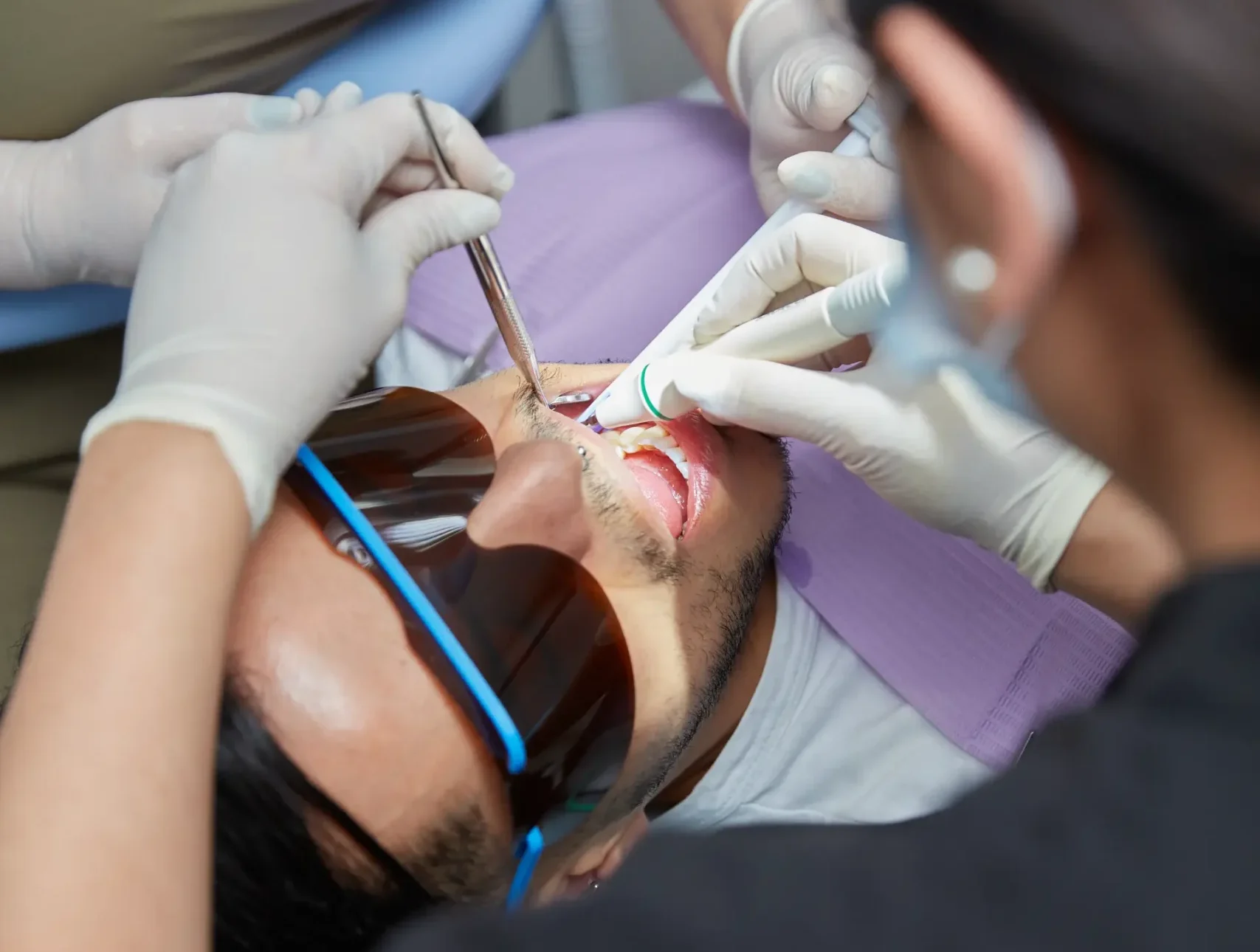
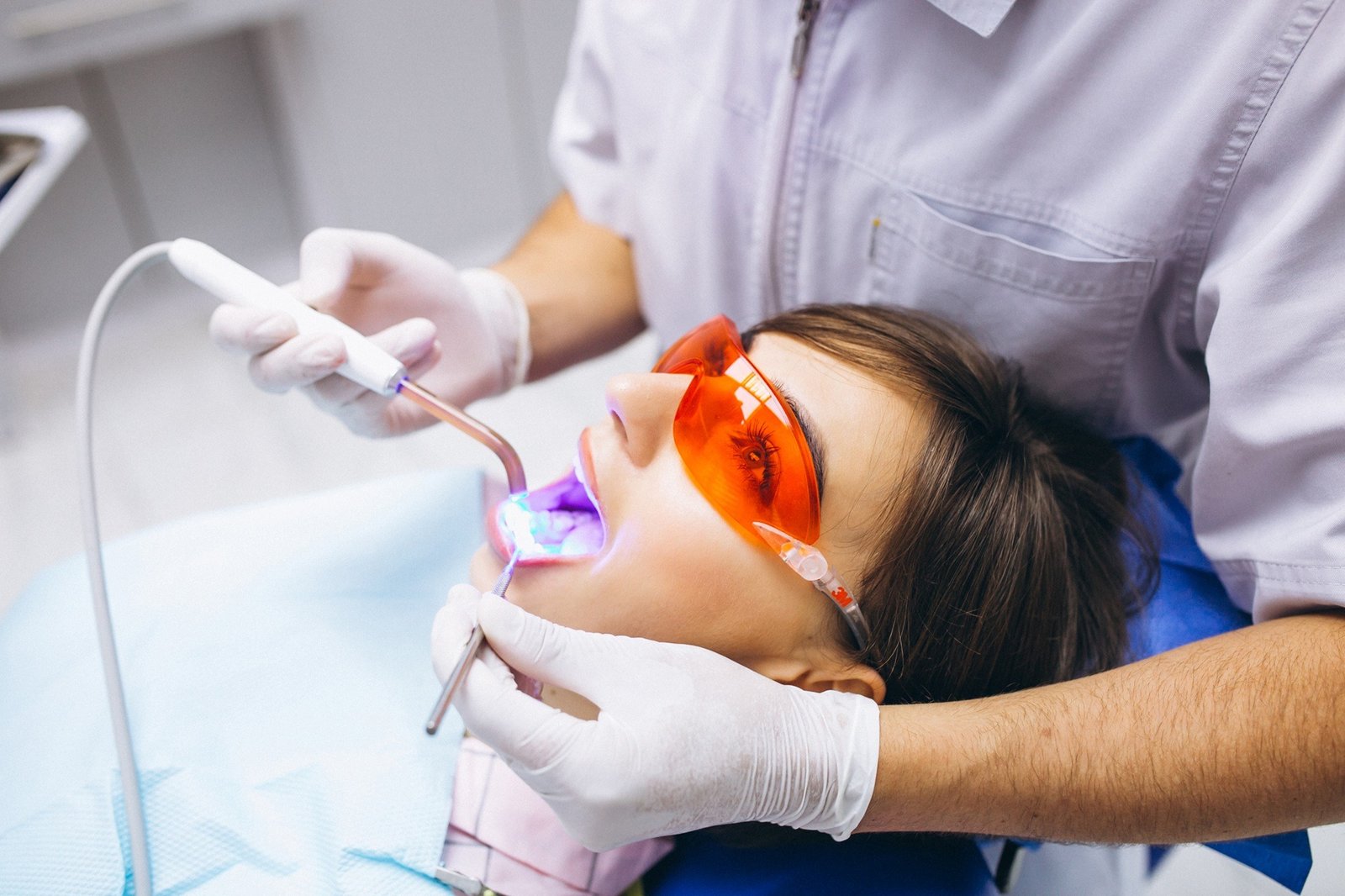
| Registered dental practitioners, in the chair | Higher concentrations, with soft tissue isolation and supervision |
| Registered dental practitioners, take-home kits | Up to 6% hydrogen peroxide or 18% carbamide peroxide. The same ceiling as retail |
The ADA NSW teeth whitening information sheet states the take-home restriction in exactly those terms. It isn’t an in-house policy. It’s the rule.
So what is the fee for, if the gel isn’t stronger? Four things, none of them peroxide. The assessment, which decides whether bleaching will do what you want and sometimes decides it won’t. A tray made from an impression of your own teeth, trimmed to sit at the gum margin so gel stays on enamel, not gum. The formulation choice, which for a sensitive mouth usually means carbamide with potassium nitrate rather than the fastest thing available. And a phone number that answers when something stings on day three.
That’s a real list, and for some people it’s worth paying for. It’s also an honest one: you’re buying judgement, fit and aftercare, not a more powerful chemical.
The rest of the ingredient list, and what each one is doing there
Strip out the peroxide and what’s left falls into four jobs.
Something has to hold the gel on the tooth. That’s the carbomer, carbopol or poloxamer near the top of the list: thickeners that give the gel enough body to stay in the tray rather than run off into the gum crevice. A thicker gel also gives up its peroxide more gradually, which stretches the working time. Glycerine and propylene glycol are the carriers that hold the formula together and stop it drying out. Glycerine gets blamed online for dehydrating teeth. Teeth do dry out a little during bleaching, which is why the shade an hour after a session looks lighter than it will a week later, but that rebound is ordinary rehydration, not damage.
Something has to manage the sensitivity. Potassium nitrate is the ingredient I look for first on a label. Potassium ions are thought to travel down the dentinal tubules and quieten the nerve fibres at the far end, taking the edge off the cold sensitivity bleaching causes. If your teeth already complain about ice water, ask whether it’s in there. Sodium fluoride, amorphous calcium phosphate and hydroxyapatite are there for a related reason: they keep mineral available at the enamel surface during and after treatment, and fluoride helps with sensitivity in its own right.
Something has to control the pH, and this is the one nobody talks about. Acid is what erodes enamel, not peroxide, so a gel buffered towards neutral with sodium hydroxide is a different proposition from an acidic one. Buffering costs money, and if I were going to find a pH problem anywhere I’d expect it in a cheap imported gel, though I’d want to test one before saying more than that. EDTA and similar stabilisers stop the peroxide breaking down in the tube; a gel that has spent a fortnight in a hot letterbox may carry less active ingredient than the label claims, which is one practical argument against ordering from overseas.
The flavouring is usually mint. It has no clinical job.
Ingredients that sell well and don’t bleach
Activated charcoal. I’ve not seen evidence that it bleaches anything, and I’ve looked. It’s an abrasive, and abrasives used daily wear enamel and expose the darker, more sensitive dentine underneath. When a charcoal paste appears to lighten teeth it has polished off surface stain, which a hygienist does better.
Blue covarine. A pigment in some whitening toothpastes. It leaves a thin blue-violet film that optically cancels yellow, so teeth look whiter without being whiter. Real, instant, and it rinses away.
PAP, or phthalimidoperoxycaproic acid. Sold hard online as the peroxide-free alternative. It’s a peracid oxidiser, so the mechanism is chemically plausible and I won’t pretend otherwise. What’s missing is independent clinical evidence comparing it against peroxide at equivalent exposure, and that remains thin. I neither recommend it nor dismiss it; we don’t know how it performs head to head, and the marketing is running well ahead of the trials.
Sodium chlorite and chlorine dioxide. In some imported kits. They act in acidic conditions, and there’s laboratory work raising concern about what they do to the enamel surface. I’d leave them alone.
Lemon juice, vinegar and bicarb pastes. Bicarb is mildly abrasive and shifts some surface stain. The acidic ones dissolve enamel, and enamel doesn’t grow back.
Sensitivity is the expected outcome, not the warning sign
If you whiten your teeth, they will probably go sensitive to cold for a few days. That isn’t a complication. It’s the ordinary consequence of driving an oxidiser through enamel and dentine, and it usually settles on its own. The ADA’s consumer information on whitening is candid that it can occasionally be severe, which is worth knowing before you start.
The mechanism is a reversible inflammatory response in the pulp as peroxide reaches it. It shows up during or shortly after treatment, peaks early and settles, and it’s more likely at higher concentrations, with longer contact times, and where dentine is already exposed by recession or wear. The ADA NSW information sheet lists inflammation of the pulp (the nerve and blood supply inside the tooth) among the recognised adverse effects, alongside irritation or burning of exposed skin, eyes and mucous membranes, and oesophageal and stomach irritation if gel is swallowed.
Gum irritation is a fit problem or an overfilling problem, not a chemistry problem. A custom tray ending at the gum margin, loaded with a rice-grain bead of gel per tooth, doesn’t push peroxide onto soft tissue. A generic boil-and-bite tray loaded generously does. A chemical burn to the lip or gum from a high concentration gel used without isolation is a different order of event, and the reason in-chair bleaching begins with a barrier along the gum line.
On enamel, here is what I’m prepared to say and no more. Laboratory studies sometimes pick up small changes at the enamel surface after bleaching. Clinically, at the concentrations and contact times used in supervised whitening, nobody has shown enamel loss that matters. That reassurance shifts with acidic formulations, prolonged unsupervised use and abrasives used alongside; every one of those is a variable someone controls, and usually that someone is you.
If your teeth are already sensitive, deal with that first. There are ways to settle sensitive teeth that work far better than gritting through a fortnight of tray wear and hoping.
What I look at before I would hand anyone a gel
Whitening is one of the few things in dentistry where you can buy the product before anyone has looked at your teeth. That’s where most of the trouble starts. Here is the order I work through.
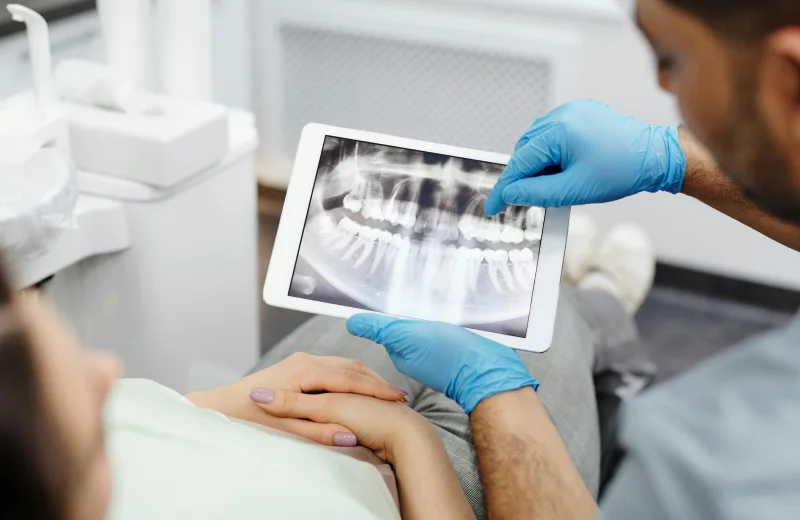
Is anything obviously wrong first? A scale and clean removes the calculus and coffee film a brush can’t reach, and for a fair number of people that alone lifts the shade enough that the gel becomes unnecessary. If a clean is all you need, a clean is all you need.
Is one tooth darker than the rest? A single tooth gone grey or brown on its own usually has a dead nerve, and external bleaching barely touches it because the pigment is locked in that tooth’s dentine. Lightening it means bleaching from inside the tooth after root canal treatment, a separate procedure entirely.
Is there untreated decay, or a crack? Peroxide entering a cavity or crack line reaches the pulp directly rather than by slow diffusion. Sensitivity there isn’t the ordinary transient kind, and the tooth needs fixing first.
Are the roots exposed? Recession leaves root dentine on show, and root surface is not enamel: more sensitive, it takes up peroxide differently, and it doesn’t lighten like the crown. Active gum inflammation should be settled first.
Where are the restorations? They won’t change colour. Often the sensible order is to whiten, let the shade settle a fortnight, then replace visible front fillings to match. If porcelain veneers are on your list, same logic: whiten the natural teeth first, then match the ceramic to the settled result.
Is it tetracycline banding or fluorosis? Tetracycline staining responds slowly, incompletely and sometimes only over months of supervised wear. Fluorosis produces white mottling that can look more obvious, not less, as the tooth lightens around it. Both need a realistic conversation first.
Are you pregnant or breastfeeding? The ADA doesn’t recommend whitening while pregnant or breastfeeding, on the straightforward basis that there isn’t enough safety evidence to say it’s fine. Nobody has shown harm either. The honest position is that we don’t know, and the treatment can wait.
Are you under 18? I don’t, as a rule. Pulp chambers are larger in younger teeth and the enamel is still maturing, and there’s no body of evidence I’d lean on to say otherwise.
Five ways to whiten, side by side
| Option | Active concentration | Assessed first | Gum protection | What it’s actually like |
| In-chair, dental practice | Above the consumer cap, practitioner applied | Yes | Barrier placed before any gel | One visit, fastest visible change, sharpest sensitivity spike |
| Dentist take-home kit | Up to 6% HP or 18% CP, same as retail | Yes | Custom trays from your own impressions | One to two weeks of tray wear, gentler, easier to control |
| Supermarket strips, pens, kits | At or below the cap, often well below | No | None | Cheap, modest and gradual, patchy on uneven teeth |
| Salon or shopping centre kiosk | Restricted to the consumer cap by law | No | Operator applied, no dental training required | Varies enormously, and nobody has checked your teeth |
| Offshore online kits | Often above the Australian cap, sometimes mislabelled | No | Generic trays | Not made to the Poisons Standard; unknown pH, unknown storage |
The row that surprises people is still the second one. In-chair and supervised take-home whitening differ in speed and sensitivity profile, not in legitimacy.
Getting more out of the same tube, with less sensitivity
• Have the teeth cleaned first. Bleaching over plaque and calculus gives a patchy result.
• Load a bead of gel the size of a grain of rice per tooth. More gel doesn’t whiten faster; it squeezes onto the gums and stings.
• Don’t exceed the wear time on the instructions. Longer contact doesn’t accelerate anything, it just recruits sensitivity.
• If you know you’re prone, start a desensitising toothpaste a week before and keep using it right through. If sensitivity builds, take a day or two off and resume; alternate-day wear usually reaches the same endpoint.
• Keep off deeply coloured food and drink for a few hours after each session, while the enamel is more permeable.
• Wait a fortnight after the last application before judging the colour; the immediate result is partly dehydration.
• Plan on topping up. Coffee, tea, red wine, smoking and how well you brush decide how long a result holds, and it’s months to a year or two rather than forever.
Questions I get asked about whitening gel
What strength whitening gel can I legally buy in Australia? Up to 6% hydrogen peroxide, or up to 18% carbamide peroxide, with the stipulated warnings on the pack. Above that, products sit in Schedule 10 of the Poisons Standard and are restricted to registered dental practitioners.
Is carbamide peroxide gentler than hydrogen peroxide? Not gentler, just slower. It releases roughly a third of its stated concentration as hydrogen peroxide over a longer period, which suits extended tray wear and often causes less sharp sensitivity.
Why do my teeth ache after whitening, and when should I be worried? Reversible pulpal inflammation is the usual explanation, and it normally settles in a few days. An ache that’s sharp, stays in one tooth or lingers past a week is tooth pain with a cause of its own and should be looked at.
Is salon or kiosk whitening legal? A salon can operate, but it’s held to the same consumer limits you are: nothing above 6% hydrogen peroxide or 18% carbamide peroxide. The ADA’s separate concern is that nobody there is qualified to judge whether your teeth should be bleached at all.
How long does a whitening result last? Longer with good hygiene and less coffee; shorter with tea, red wine, dark cola, curry and smoking. Most people manage with an occasional top-up rather than a full repeat course.
Before you buy a gel, get the teeth looked at
A short examination tells you whether bleaching will do what you’re picturing, which option suits your teeth and gums, and what your existing fillings mean for the result. Sometimes the answer is a clean and nothing else. That’s the one I’m happiest to give.
Burwood Diamond Dental is at Suite 1, Level 1, 28 Burwood Road, Burwood NSW 2134. Call (02) 9747 6835, or use the online booking form if that’s easier.
References
1. Australian Dental Association. Policy Statement 2.2.8: Teeth Whitening (Bleaching) By Persons other than Dental Practitioners. https://ada.org.au/policy-statement-2-2-8-teeth-whitening-bleaching-by-persons-other-than-dental-practitioners
2. Australian Dental Association NSW. Teeth Whitening/Bleaching Information Sheet. https://www.adansw.com.au/resource/teeth-whitening-information-sheet/
3. Poisons Standard (the Standard for the Uniform Scheduling of Medicines and Poisons), Schedules 5 and 10, entries for hydrogen peroxide and carbamide peroxide. Administered by the Therapeutic Goods Administration, Australian Government Department of Health.
4. Healthdirect, Australian Government. Teeth whitening. https://www.healthdirect.gov.au/teeth-whitening
5. Australian Dental Association consumer resource. Teeth Whitening. https://www.teeth.org.au/teeth-whitening
This article is general information about whitening gel chemistry and Australian scheduling law. It is not a diagnosis, a treatment plan, or a recommendation that you whiten your teeth. Whitening is not suitable for everyone, results vary between people and between teeth in the same mouth, and sensitivity is a common and usually temporary effect. The concentrations and schedules described here reflect the Poisons Standard and Australian Dental Association positions current at the review date. Talk to a registered dental practitioner about your own teeth before starting any whitening product.