Missing teeth can affect far more than the appearance of a smile. Research has shown that tooth loss may influence chewing ability, speech, jawbone health, and overall oral function. Over time, the absence of a tooth can trigger changes within the surrounding bone and place additional strain on neighbouring teeth. For many adults, these changes can gradually affect both oral health and quality of life.
Dental implants have become a widely used treatment option because they replace the missing tooth root as well as the visible portion of the tooth. This feature distinguishes implants from conventional tooth replacement methods such as removable dentures and traditional dental bridges. By integrating with the jawbone, dental implants can support long-term function while helping maintain the structures that naturally support the teeth and facial profile.
Understanding the Role of Dental Implants in Tooth Replacement
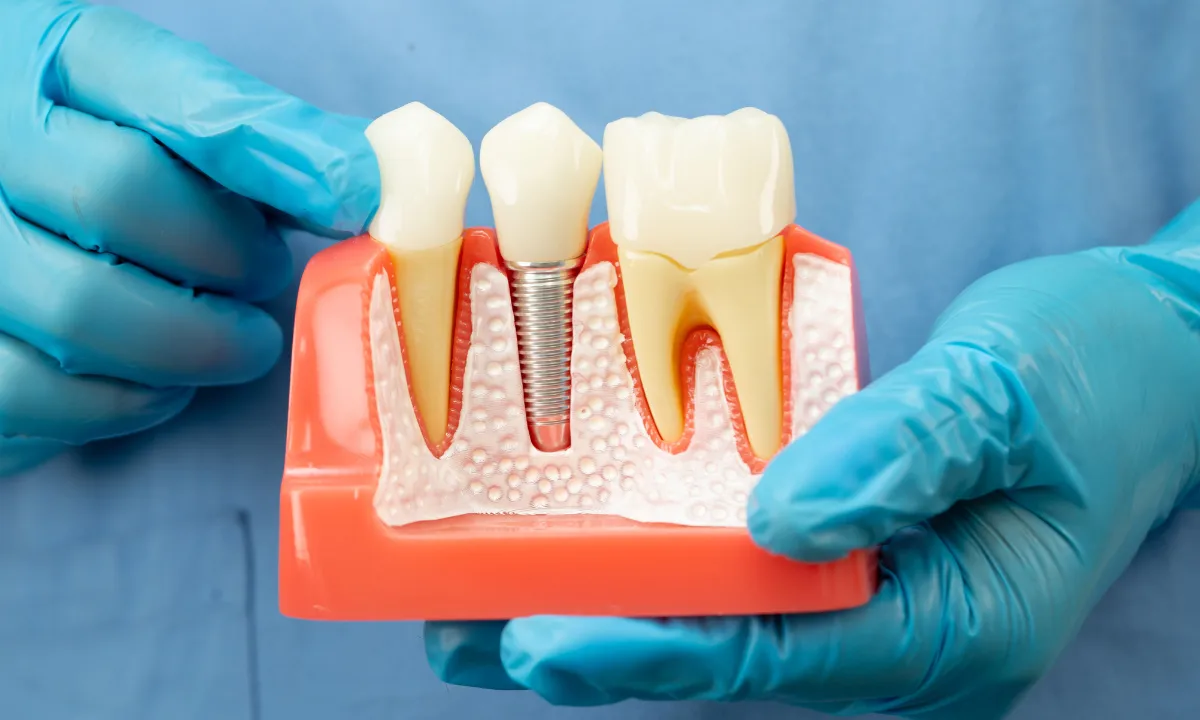
Dental implants are artificial tooth roots typically manufactured from biocompatible titanium or titanium alloys. They are surgically placed within the jawbone and serve as a stable foundation for a crown, bridge, or implant-supported denture. Following placement, the implant undergoes a biological process known as osseointegration, during which the surrounding bone forms a direct structural connection with the implant surface. From a functional perspective, dental implants are intended to transfer chewing forces into the jawbone in a manner that more closely resembles natural teeth. This allows the implant-supported restoration to participate in daily oral function while helping maintain the health of surrounding structures.
Key Components of a Dental Implant System
| Component | Function |
| Implant Fixture | Surgically placed within the jawbone and acts as the artificial root |
| Abutment | Connects the implant fixture to the final restoration |
| Crown or Prosthesis | Visible replacement tooth that restores appearance and function |
Because implants replace both the root and crown portions of a missing tooth, they offer benefits that extend beyond cosmetic improvement alone.
Preservation of Jawbone Following Tooth Loss
One of the most clinically important benefits of dental implants is their ability to help preserve jawbone volume following tooth loss. Bone tissue is dynamic and responds to functional stimulation. Natural tooth roots transmit chewing forces into the surrounding alveolar bone, helping maintain its density and structure. When a tooth is lost, this stimulation is reduced or eliminated. As a result, the body begins a natural remodelling process that can lead to progressive bone resorption within the area of the missing tooth.
Clinical studies have consistently demonstrated that the most rapid bone loss often occurs during the first year following extraction, although remodelling may continue for many years. The degree of bone reduction varies between individuals and can be influenced by factors such as age, systemic health, smoking status, and periodontal disease history.
Why Bone Preservation Matters
Preserving jawbone volume contributes to several important outcomes:
- Maintenance of facial support structures
- Improved stability for future dental restorations
- Reduced collapse of the tooth-bearing ridge
- Better long-term oral function
- Improved support for surrounding soft tissues
While no treatment can completely eliminate natural age-related bone changes, dental implants remain one of the few tooth replacement options capable of directly engaging the jawbone after tooth loss.
Restoration of Chewing Efficiency and Bite Function
Chewing is a complex physiological process that involves coordinated activity between the teeth, jaw muscles, temporomandibular joints, and nervous system. Missing teeth can disrupt this process by reducing contact between the upper and lower dental arches, which may affect food breakdown and overall chewing performance. The loss of even a single tooth can alter bite distribution and reduce the efficiency of mastication. Individuals with multiple missing teeth may experience greater difficulty processing certain foods, particularly those that require substantial chewing force, such as fibrous vegetables, meats, and nuts.
Dental implants provide a stable foundation that can help restore bite function more closely to natural dentition. Unlike removable appliances that rely on gum support, implant-supported restorations derive stability from their integration with the underlying bone.
Functional Advantages Associated With Implant-Supported Restorations
Research has reported several functional benefits associated with implant-supported tooth replacement:
- Improved chewing performance compared with conventional removable dentures
- Greater bite force generation
- Enhanced distribution of chewing forces
- Improved ability to process a wider variety of foods
- Increased patient satisfaction regarding oral function
Comparison of Functional Characteristics
| Feature | Dental Implant | Removable Denture |
| Anchored to Jawbone | Yes | No |
| Stability During Chewing | High | Variable |
| Bite Force Potential | Higher | Lower |
| Movement During Function | Minimal | More Common |
| Bone Stimulation | Yes | No |
It is important to recognise that outcomes vary according to individual anatomy, implant placement, prosthetic design, and oral health status. However, implant-supported restorations are generally associated with improved functional performance compared with many removable alternatives.
Protection of Adjacent Natural Teeth
Preservation of healthy tooth structure is an important principle in modern dentistry. Whenever possible, treatment approaches that minimise intervention on neighbouring teeth are preferred. Traditional fixed dental bridges commonly require preparation of the teeth adjacent to the missing space. This process involves reshaping these teeth to support the bridge framework. Although bridges remain a valuable treatment option in many circumstances, preparation can involve the removal of healthy enamel and dentine from otherwise intact teeth. Dental implants differ because they function independently of neighbouring teeth. The implant is supported by the jawbone rather than relying on adjacent teeth for retention.
Clinical Advantages of Independent Tooth Support
By avoiding preparation of adjacent teeth, dental implants may help:
- Preserve healthy enamel and dentine
- Reduce biomechanical loading on neighbouring teeth
- Maintain natural tooth structure
- Simplify oral hygiene access between teeth
- Preserve the integrity of the surrounding dentition
This independent support mechanism represents one of the key biological advantages associated with implant therapy and is frequently considered during treatment planning for single-tooth replacement.
Enhanced Stability Compared With Removable Dentures
Stability is a major concern for individuals wearing removable dentures. Although modern dentures can provide acceptable aesthetics and function, their retention often depends on factors such as ridge anatomy, saliva distribution, muscle coordination, and appliance fit. Over time, ongoing bone resorption may reduce denture stability further, particularly within the lower jaw. As ridge volume decreases, some individuals experience movement during speaking, chewing, or routine daily activities.
Dental implants can significantly improve retention by providing direct anchorage within the jawbone. Implant-supported restorations are therefore less dependent on soft tissue support alone.
Areas Where Improved Stability May Be Noticeable
Patients commonly report benefits in situations such as:
- Speaking in social settings
- Eating firmer foods
- Laughing or smiling confidently
- Reduced movement during daily activities
- Improved overall comfort
The degree of improvement depends on the number of implants placed, prosthetic design, and patient-specific anatomical factors. Nevertheless, enhanced retention remains one of the most frequently reported advantages of implant-supported tooth replacement.
Effects on Facial Support and Smile Appearance
The relationship between teeth, bone, and facial soft tissues plays a critical role in facial appearance. Missing teeth can contribute to changes in facial proportions over time, particularly when accompanied by progressive bone resorption. The teeth and supporting bone provide structural support for the lips, cheeks, and lower facial region. When these structures diminish, some individuals may notice changes such as reduced facial fullness or altered smile aesthetics. Dental implants can support restorations that closely resemble the size, shape, and position of natural teeth. When treatment planning is performed carefully, implant-supported restorations can contribute to a more natural appearance while helping maintain harmony between the teeth, gums, and facial soft tissues.
Factors Influencing Aesthetic Outcomes
Several factors contribute to the final appearance of implant treatment:
- Bone volume at the implant site
- Gum tissue quality
- Implant positioning
- Crown design
- Smile line characteristics
- Oral hygiene maintenance
Aesthetic outcomes vary between individuals, but modern implant dentistry places considerable emphasis on preserving both function and appearance.
Long-Term Durability and Implant Survival
Dental implants are widely recognised for their potential longevity when placed appropriately and maintained through regular professional care. Long-term clinical studies have reported high survival rates for implant therapy, particularly among individuals with good oral hygiene practices and stable periodontal health. Implant survival should be distinguished from implant success. Survival generally refers to the implant remaining in place, whereas success considers additional factors such as function, bone stability, patient comfort, and absence of disease.
Several factors can influence long-term outcomes.
Factors Associated With Implant Longevity
| Factor | Influence on Long-Term Outcome |
| Oral Hygiene | Supports peri-implant health |
| Smoking Status | May increase complication risk |
| Gum Health | Important for tissue stability |
| Systemic Health | Can influence healing and maintenance |
| Regular Dental Reviews | Supports early detection of issues |
| Bite Forces | May affect restoration longevity |
Current evidence suggests that many dental implants can remain functional for decades. However, no dental treatment should be considered permanent, and ongoing maintenance remains essential for preserving long-term outcomes. For this reason, successful implant therapy depends not only on the surgical procedure itself but also on continued oral hygiene, professional monitoring, and management of risk factors throughout the life of the restoration.
Patient-Reported Quality of Life Benefits
The success of dental implant treatment is often evaluated through clinical measures such as implant survival, bone stability, and prosthetic function. However, patient-reported outcomes have become increasingly important within modern dentistry because they provide insight into how treatment affects everyday life. Research examining oral health-related quality of life has consistently shown that tooth loss can influence social interactions, self-confidence, speech, and overall satisfaction with oral function. Unlike traditional clinical measurements, quality of life outcomes focus on how patients perceive the impact of treatment. For many individuals, the ability to speak comfortably, smile without self-consciousness, and participate in social activities without concern about tooth replacement appliances can be significant factors when considering restorative treatment.
Improvements in Speech Function
Speech production relies on coordinated interaction between the tongue, lips, teeth, and palate. Missing teeth, particularly those located in the anterior region of the mouth, can affect the pronunciation of certain sounds and alter speech patterns. Implant-supported restorations can help restore the position and structure previously occupied by natural teeth. This may contribute to improved speech clarity by re-establishing normal oral anatomy. While adaptation periods vary among individuals, fixed implant restorations generally provide greater consistency during speech compared with appliances that may shift during function.
Confidence in Social and Professional Settings
The psychological impact of tooth loss is frequently discussed within dental research. Individuals with missing teeth may experience concerns regarding appearance, communication, and social interactions. These concerns can affect confidence in both personal and professional environments.
Dental implants are intended to provide a stable and natural-looking tooth replacement option. As a result, many patients report increased confidence when smiling, speaking, and interacting with others following treatment.
Commonly Reported Quality of Life Benefits
Studies evaluating patient satisfaction frequently identify improvements in:
- Social confidence
- Speech comfort
- Perceived oral function
- Satisfaction with appearance
- Comfort during daily activities
- Overall oral health-related quality of life
Although individual experiences vary, these patient-centred outcomes represent an important aspect of implant treatment and help explain why implants are often considered a long-term solution for tooth replacement.
Who May Be Suitable for Dental Implant Treatment?
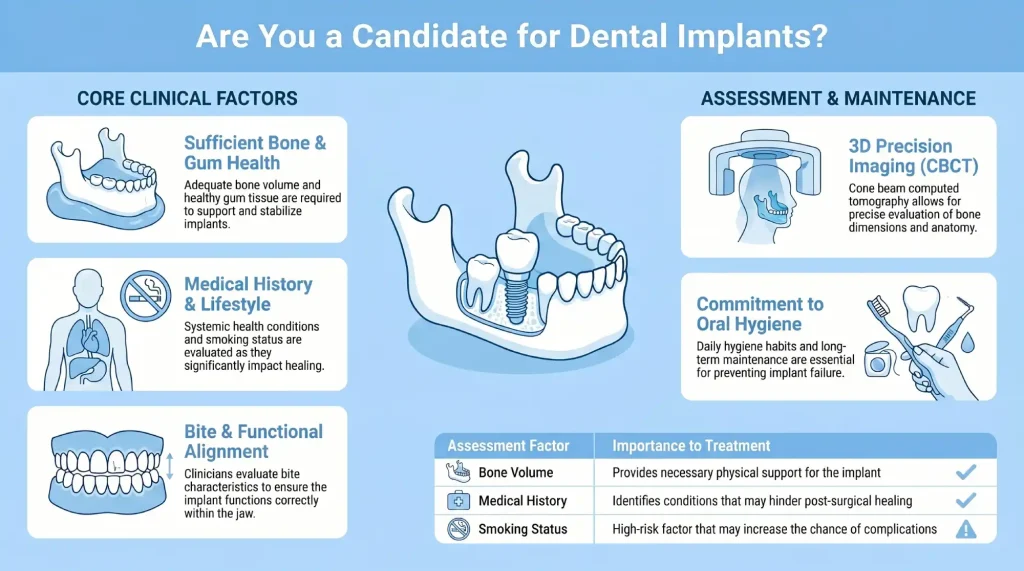
Dental implants can provide substantial benefits for many individuals, but suitability must always be assessed on a case-by-case basis. Successful treatment depends on a combination of oral health factors, systemic health considerations, anatomical conditions, and patient commitment to long-term maintenance. A comprehensive assessment allows the dental team to evaluate whether implant treatment is appropriate and to identify any factors that may require management before surgery is considered.
Factors Evaluated During Implant Assessment
Several clinical considerations influence treatment planning:
| Assessment Factor | Why It Matters |
| Bone Volume | Adequate bone is required for implant support |
| Gum Health | Healthy soft tissues support long-term implant stability |
| Medical History | Certain conditions may affect healing |
| Smoking Status | Smoking may increase complication risks |
| Oral Hygiene Habits | Essential for long-term maintenance |
| Bite Characteristics | Important for functional planning |
Modern imaging technologies such as three-dimensional cone beam computed tomography (CBCT) allow clinicians to evaluate bone dimensions and anatomical structures with a high level of precision before treatment begins.
Patients Who May Benefit From Implant Treatment
Dental implants may be considered for individuals who:
- Have lost one or more teeth
- Wish to avoid removable dentures
- Have sufficient bone support or are suitable for bone augmentation procedures
- Maintain good oral hygiene practices
- Are seeking a fixed tooth replacement option
- Have completed jaw growth and development
Suitability should always be determined following a comprehensive clinical examination and discussion of treatment objectives, expectations, and potential alternatives.
Important Considerations Before Choosing Dental Implants
While dental implants offer many advantages, balanced patient education requires consideration of potential limitations and treatment requirements. Understanding these factors helps patients make informed decisions based on their individual circumstances.
Dental Implant Treatment Involves Surgery
Unlike removable prostheses or conventional bridges, implant placement requires a surgical procedure. Although implant surgery is routinely performed and generally well tolerated, all surgical treatments involve some degree of risk.
Potential complications may include:
- Infection
- Delayed healing
- Implant failure
- Soft tissue complications
- Temporary discomfort or swelling
Appropriate treatment planning and post-operative care play important roles in reducing these risks.
Healing and Treatment Timeframes
Dental implant treatment often occurs over several stages rather than a single appointment. Following implant placement, a healing period is generally required to allow osseointegration to occur before the final restoration is attached.
Treatment duration may vary depending on factors such as:
- Bone quality
- Implant location
- Need for bone grafting
- Individual healing response
- Complexity of the case
Patients should understand that implant therapy is typically a long-term treatment process rather than an immediate solution.
Ongoing Maintenance Remains Essential
Dental implants cannot develop dental decay; however, they remain susceptible to inflammatory conditions affecting the surrounding tissues. Peri-implant diseases may occur when bacterial biofilm accumulates around the implant and is not effectively managed. For this reason, ongoing maintenance remains a critical aspect of long-term implant care.
Recommended maintenance measures include:
- Daily brushing and cleaning around implants
- Regular professional dental reviews
- Periodontal monitoring
- Management of risk factors such as smoking
- Early treatment of any developing complications
Comparison of Benefits and Considerations
| Benefits | Considerations |
| Preserves jawbone stimulation | Requires surgical placement |
| Protects adjacent teeth | Healing period required |
| Stable tooth replacement | Regular maintenance needed |
| Improved chewing function | Initial treatment costs may be higher |
| Long-term treatment option | Suitability varies between patients |
Providing balanced information allows patients to weigh both advantages and considerations before proceeding with treatment.
When to Seek Professional Advice About Missing Teeth
Tooth loss should not be viewed solely as a cosmetic concern. Changes within the surrounding bone, bite function, and neighbouring teeth can begin soon after a tooth is lost. Early assessment allows treatment options to be explored before significant structural changes occur. Individuals may benefit from professional advice if they have recently lost a tooth, are experiencing difficulties with removable dentures, have concerns regarding chewing function, or are considering alternatives to traditional bridges. Assessment may also be valuable for patients with failing restorations or multiple missing teeth that affect oral function. A comprehensive consultation typically includes clinical examination, radiographic assessment, discussion of treatment goals, and evaluation of available tooth replacement options. This process helps determine whether dental implants or another restorative approach is most appropriate for the patient’s circumstances.
Conclusion
Dental implants offer several clinically recognised benefits that extend beyond replacing the visible portion of a missing tooth. By replacing the tooth root, implants can help preserve jawbone structure, support functional chewing, protect adjacent natural teeth, improve prosthetic stability, and contribute to long-term oral rehabilitation. Research has consistently demonstrated that implant-supported restorations can provide predictable outcomes for appropriately selected patients when treatment planning, surgical placement, and ongoing maintenance are performed to a high standard. Their ability to integrate with the jawbone distinguishes them from many alternative tooth replacement options and contributes to both functional and biological advantages.