Your gums bleed when you brush your teeth. You rinse your mouth, see a little pink in the sink, and think nothing of it. It happens every morning, but it does not hurt, so you ignore it. A few years pass. Your gums start pulling away from your teeth. Your breath smells bad no matter how often you brush. Then one day, you notice a tooth feels loose. You push it with your tongue, and it moves. This is how gum disease works. It starts quietly. It causes no pain in the early stages, so most people do not realise they have it. But it keeps progressing. The infection spreads below the gumline. The bone that holds your teeth in place slowly disappears. By the time you feel pain, the damage is often severe.
Gum disease is an infection of the gums and the bone that support your teeth. It is caused by plaque, a sticky film of bacteria that forms on your teeth every day. If you do not remove plaque by brushing and flossing, it hardens into tartar, which can only be removed by a dentist. The bacteria in plaque and tartar release toxins that irritate your gums. Your body responds with inflammation, and over time, this inflammation destroys the gum tissue and bone that hold your teeth in place.
What Is Gum Disease?
Gum disease is an infection of the tissues that surround and support your teeth. Your gums and the bone beneath them work together to keep your teeth firmly in place. When bacteria build up along your gumline, they cause inflammation. This inflammation damages the gum tissue and, over time, the bone underneath. There are two main types of gum disease. The first is gingivitis. This is inflammation of the gums only. No bone has been lost. Gingivitis is fully reversible with professional cleaning and good home care. The second type is periodontitis. This is more serious. Periodontitis damages the bone and fibres that hold your teeth in place. The bone loss is permanent, but treatment can stop the disease from getting worse.
The process starts with plaque. Plaque is a sticky, colourless film that forms on your teeth constantly. It contains bacteria that feed on the sugars in your food. If you do not remove plaque within about 48 hours, it begins to harden into tartar, also called calculus. Tartar is rough and porous. It provides a perfect surface for more plaque to attach. Once tartar forms, you cannot remove it with a toothbrush. It requires a professional dental cleaning.
Your immune system tries to fight the bacteria in plaque and tartar. This creates inflammation. Inflammation is your body’s way of defending itself, but it also damages your tissues. The inflammation breaks down the gum tissue and the bone that supports your teeth. Over time, the damage becomes permanent. Gum disease is common among Australian adults, particularly with age. Many do not know it because early stages cause no pain. The Australian Dental Association recommends regular check-ups to catch gum disease early. The earlier you find it, the easier it is to treat.
| Feature | Healthy Gums | Diseased Gums |
| Colour | Pink | Red or dark red |
| Texture | Firm | Swollen or puffy |
| Bleeding | None | Bleeds when brushing or flossing |
| Pocket depth | 1–3 mm | 4 mm or more |
| Bone level | Full support | Bone loss visible on X-rays |
| Tooth stability | Firm | May feel loose |
Stage One: Gingivitis
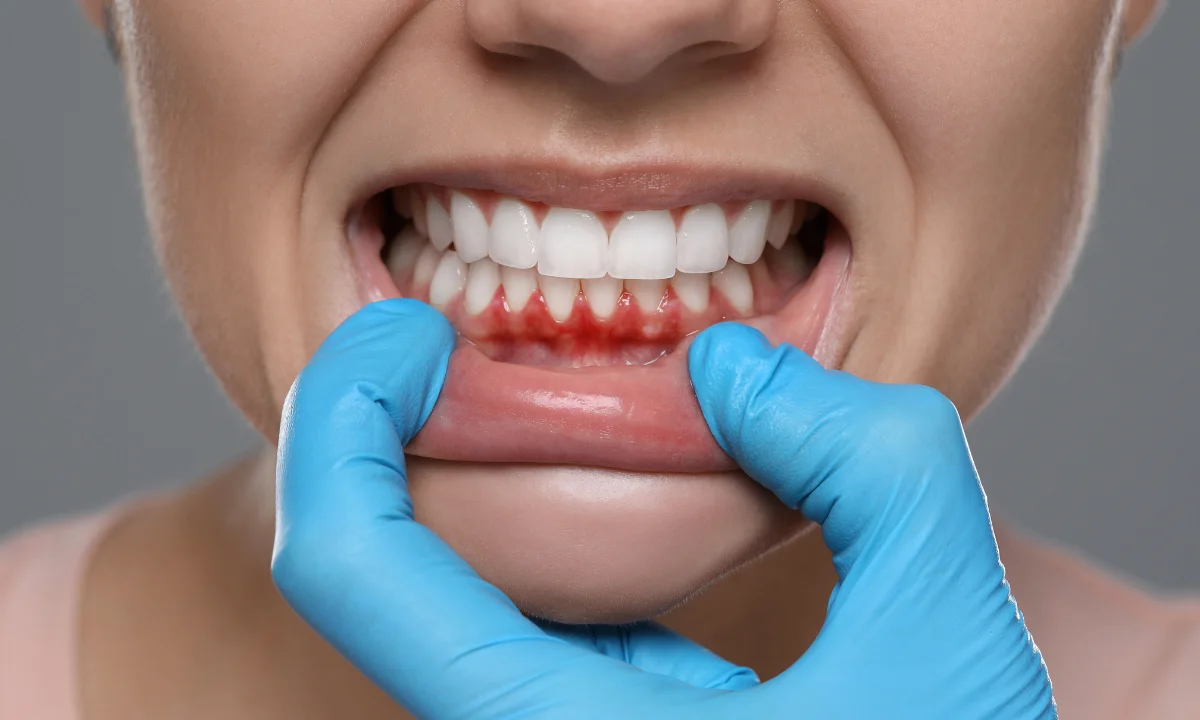
Gingivitis is the earliest stage of gum disease. At this point, the inflammation is limited to your gum tissue. Your bone and the fibres that attach your teeth are still healthy. No permanent damage has occurred. Gingivitis happens when plaque builds up along your gumline. The bacteria in the plaque release toxins that irritate your gums. Your immune system responds with inflammation. Your gums become red, swollen, and tender. They bleed easily when you brush or floss. This bleeding is the most common sign of gingivitis.
Many people think bleeding gums are normal or that they brushed too hard. Bleeding gums are never normal. Healthy gums do not bleed. If your gums bleed, it means they are inflamed. This is your body’s way of telling you something is wrong. Other signs of gingivitis include persistent bad breath and gums that look puffy or shiny. Your gums may also feel tender to the touch. However, gingivitis is often painless. That is why so many people ignore it.
Several factors increase your risk of developing gingivitis. Poor oral hygiene is the main cause. If you do not brush and floss regularly, plaque accumulates. Smoking and tobacco use also increase your risk. Stress, poor diet, and certain medications that dry your mouth can make you more vulnerable. The treatment for gingivitis is straightforward. Your dentist will perform a professional cleaning to remove plaque and tartar from above and below your gumline. You will also need to improve your home care. Brush twice daily with fluoride toothpaste. Floss every day to remove plaque from between your teeth. Your dentist may also recommend an antimicrobial mouthwash.
The best news about gingivitis is that it is fully reversible. With proper treatment and good home care, your gums return to health within one to two weeks. The bleeding stops. The redness and swelling go away. Your gums become firm and pink again. If you ignore gingivitis, it does not stay the same. It progresses to periodontitis, where permanent damage occurs. This is why you should not ignore bleeding gums. They are a warning sign that you need to see your dentist.
| Feature | Detail |
| Bone loss | None |
| Pocket depth | 1–3 mm |
| Key sign | Bleeding when brushing |
| Reversibility | Fully reversible |
| Treatment | Professional cleaning, improved brushing and flossing |
| Time to resolve | 1–2 weeks |
Stage Two: Early Periodontitis
Early periodontitis is the second stage of gum disease. At this stage, the infection has spread below your gumline. It is now affecting the bone and the fibres that hold your teeth in place. Bone loss has begun. When you have gingivitis, your gums are inflamed but still attached to your teeth. As the inflammation continues, the gums start to pull away from your teeth. This creates spaces called periodontal pockets. These pockets are deeper than normal gum crevices, and they trap food, plaque, and bacteria. The bacteria continue to cause damage below the surface.
In healthy gums, pocket depth is 1 to 3 millimetres. In early periodontitis, pockets measure 3 to 4 millimetres. This may not sound like much, but even a small increase in pocket depth allows bacteria to accumulate in areas where your toothbrush cannot reach. The signs of early periodontitis are similar to gingivitis but may be more noticeable. Your gums still bleed when you brush or floss. You may have persistent bad breath that does not go away. Your gums may start to recede, making your teeth look longer. You may also notice that spaces are forming between your teeth. Bone loss at this stage is up to 30 per cent of the bone that supports your teeth. That is a significant amount. The bone that is lost will not grow back on its own. However, treatment can stop the disease from progressing further.
Treatment for Early Periodontitis
The treatment for early periodontitis is scaling and root planing. This is a deep cleaning that goes below your gumline. Your dentist or dental hygienist uses special instruments to remove plaque and tartar from the pockets. They also smooth the roots of your teeth. Smooth roots make it harder for bacteria to attach and help your gums reattach to your teeth.
Scaling and root planing is usually done under local anaesthesia. You may need more than one appointment, depending on how much tartar has built up. After the procedure, your gums may be sore for a few days. Your dentist may also recommend antibiotics to help control the infection. Improved home care is essential after scaling and root planing. You will need to brush and floss carefully to prevent plaque from building up again. Your dentist may recommend interdental brushes or a water flosser to clean between your teeth more effectively. The bone loss from early periodontitis is permanent. However, with treatment, the disease stops progressing. Your gums can reattach to your teeth, and the pockets can shrink. Good oral hygiene and regular check-ups give you the best chance of keeping your remaining teeth long-term, though outcomes depend on individual factors your dentist can discuss with you.
| Feature | Detail |
| Bone loss | Up to 30 per cent |
| Pocket depth | 3–4 mm |
| Key signs | Bleeding gums, gum recession, bad breath |
| Reversibility | Bone loss is permanent, but progression can stop |
| Treatment | Scaling and root planing, antibiotics |
| Next step | Regular maintenance visits |
Stage Three: Moderate Periodontitis
Moderate periodontitis is the third stage of gum disease. The infection is now more aggressive and widespread. Significant bone loss has occurred. Your teeth may start to feel loose or shift position. At this stage, periodontal pockets deepen to 5 to 7 millimetres. These deep pockets trap large amounts of bacteria, food, and plaque. The bacteria continue to destroy the bone and tissue that support your teeth. The damage is substantial, and it can no longer be reversed.
The signs of moderate periodontitis are more obvious than in earlier stages. You may have bad breath that does not go away, no matter how often you brush. Your gums are receding, exposing the roots of your teeth. Your teeth may feel loose or shift position. You may notice spaces between your teeth that were not there before. You may also feel pain when you chew, and your teeth may be sensitive to hot and cold. Bone loss at this stage is 30 to 50 per cent of your supporting bone. This is a critical point. If the disease continues, you will lose more bone, and your teeth will become very loose.
Treatment for moderate periodontitis
Treatment for moderate periodontitis usually involves scaling and root planing, but it may also include antibiotics. Your dentist may place antibiotic fibres or gels directly into the pockets. These antibiotics help control the infection. Laser therapy may also be used to remove infected tissue and reduce pocket depth. In many cases, your dentist will refer you to a periodontist. A periodontist is a specialist in gum disease and the treatment of periodontal conditions. They have additional training and can provide more advanced treatments.
The bone loss at this stage is permanent. Treatment focuses on stopping the disease from progressing further and managing your symptoms. Your dentist will also talk to you about risk factors like smoking and diabetes. Controlling these risk factors is essential for successful treatment. After treatment, you will need to be seen more frequently for maintenance visits. We will check your pocket depths and clean your teeth thoroughly. These visits are usually every three to four months, rather than the standard six months. The more frequent visits help prevent the disease from returning.
| Feature | Detail |
| Bone loss | 30–50 per cent |
| Pocket depth | 5–7 mm |
| Key signs | Loose teeth, gum recession, pain when chewing |
| Reversibility | Bone loss is permanent, but progression can stop |
| Treatment | Scaling and root planing, antibiotics, laser therapy, referral to periodontist |
| Maintenance | Every 3–4 months |
Stage Four: Advanced Periodontitis
Advanced periodontitis is the most severe stage of gum disease. Extensive bone and tissue destruction threaten the survival of your teeth. Tooth loss is likely without treatment. At this stage, periodontal pockets exceed 7 millimetres. The pockets are very deep and filled with bacteria. Pus may form around your teeth. Your gums are severely receded, exposing a large portion of your tooth roots. Your teeth become very loose and may drift apart. Your bite changes because your teeth are no longer in their proper positions.
The signs of advanced periodontitis are hard to ignore. You may have severe pain when biting. Pus or discharge may come from around your teeth. Your gums bleed easily. You may have extreme gum recession, and your teeth may feel like they are floating. Chewing becomes difficult. You may also notice visible spaces between your teeth that were not there before. Bone loss at this stage is more than 50 per cent of your supporting bone. The bone has been so severely damaged that your teeth have lost most of their support. Tooth loss is very likely if you do not receive treatment.
Treatment for advanced periodontitis
Treatment for advanced periodontitis is complex. Non-surgical treatments alone are usually not enough. Surgical treatments are often required. Flap surgery is one option. During this procedure, your dentist or periodontist lifts your gums away from your teeth to remove tartar from deep pockets. The bone may be smoothed to remove areas where bacteria can hide. The gums are then sewn back in place so they fit snugly around your teeth.
Bone grafting may be needed if you have significant bone loss. Bone from your own body, from a donor, or synthetic material is placed where bone has been lost. This helps regenerate bone and support your teeth. Guided tissue regeneration is another option. A membrane is placed between the bone and gum tissue. This membrane encourages bone regrowth by keeping gum tissue from growing into areas where bone should be.
Soft tissue grafts are used to cover exposed roots and reduce sensitivity. Tissue from the roof of your mouth is grafted onto the affected areas. In some cases, severely loose teeth need to be removed. After extraction, your dentist can replace them with dental implants or bridges. Implants are a good option because they replace both the tooth and the root. They also stimulate the bone, which can help reduce further bone loss. Treatment for advanced periodontitis is extensive and requires significant commitment. You will need to work closely with your dentist or periodontist to manage the condition. Maintenance visits are essential to prevent the disease from returning.
| Feature | Detail |
| Bone loss | 50 per cent or more |
| Pocket depth | 7 mm or more |
| Key signs | Very loose teeth, pus, severe pain, tooth loss |
| Reversibility | Bone loss is permanent, but treatment can save remaining teeth |
| Treatment | Flap surgery, bone grafting, guided tissue regeneration, extraction, implants |
| Tooth loss risk | High without treatment |
The Link Between Gum Disease and Your Overall Health
Gum disease does not only affect your mouth. It affects your whole body. The inflammation from gum disease can enter your bloodstream and cause problems elsewhere. Heart disease is one of the most significant links. The inflammation from gum disease contributes to inflammation in your blood vessels. This can lead to plaque buildup in your arteries, which increases your risk of heart attack and stroke. Studies show that people with gum disease are more likely to have heart disease than those with healthy gums. While heart disease and gum disease can affect anyone, certain groups are at higher risk due to lifestyle, medical history, or age.
Diabetes has a two-way relationship with gum disease. People with diabetes are more likely to develop gum disease because high blood sugar makes it harder for the body to fight infection. At the same time, gum disease makes it harder to control blood sugar. Treating gum disease can improve blood sugar control in people with diabetes. Stroke is another concern. The inflammation from gum disease affects blood vessels in the brain. Research suggests that people with gum disease have a higher risk of stroke.
Pregnancy complications are linked to gum disease. Pregnant women with gum disease are more likely to have preterm births or babies with low birth weight. The inflammation from gum disease may trigger early labour. Respiratory disease can also be affected. Bacteria from your mouth can be breathed into your lungs. This can cause pneumonia, especially in older adults or people with weakened immune systems.
| Condition | How Gum Disease Affects It |
| Heart disease | Increases inflammation in blood vessels |
| Diabetes | Makes blood sugar harder to control |
| Stroke | Affects blood vessels in the brain |
| Pregnancy | Increases risk of preterm birth |
| Respiratory disease | Bacteria can be inhaled into the lungs |
Treatment Options at Every Stage
Treatment for gum disease depends on how advanced it is. Early stages can be treated with non-surgical methods. Later stages may require surgery.
Non-Surgical Treatments
Professional cleaning is the first step. This removes plaque and tartar from above your gumline. It is part of a standard check-up and cleaning. Scaling and root planing is a deep cleaning. It removes plaque and tartar from below your gumline. The roots of your teeth are smoothed so your gums can reattach. This is the main treatment for early and moderate periodontitis. Antibiotics may be prescribed. These can be taken as pills or placed directly into your gum pockets. They help control the infection. Laser therapy removes infected tissue and bacteria with less discomfort; it can also help shrink pockets.
Surgical Treatments
Flap surgery is used for moderate and advanced periodontitis. Your dentist lifts your gums to remove tartar from deep pockets. The gums are sewn back in place to fit snugly around your teeth. Bone grafting is used when significant bone has been lost. Bone material is placed where bone is missing. This helps regenerate bone and support your teeth. Guided tissue regeneration uses a membrane to encourage bone regrowth. The membrane keeps gum tissue from growing into areas where bone should be. Soft tissue grafts cover exposed roots and reduce sensitivity. Tissue from the roof of your mouth is used. Tooth extraction is sometimes necessary. Severely loose teeth may need to be removed. They can be replaced with dental implants or bridges.
| Stage | Treatment |
| Gingivitis | Professional cleaning, improved brushing and flossing |
| Early periodontitis | Scaling and root planing |
| Moderate periodontitis | Scaling and root planing, antibiotics, laser therapy, periodontist referral |
| Advanced periodontitis | Flap surgery, bone grafting, guided tissue regeneration, extraction |
Prevention: Stopping Gum Disease Before It Starts
Preventing gum disease is easier than treating it. Good oral hygiene and regular dental visits are the foundation of prevention. Brush twice daily with fluoride toothpaste. Use a soft-bristled brush. Replace your brush every three months. Brush for two minutes each time. Make sure you brush along your gumline, not just the chewing surfaces. Floss daily; it removes plaque from between your teeth where your brush cannot reach. It takes practice to do it well, but it is essential for gum health. The two most common methods are dental floss and water flossers, each with its own advantages. Also consider using interdental brushes. These small brushes clean between teeth and may be more effective than floss. Your dentist can recommend the right size for you.
Use an antimicrobial mouthwash. Mouthwash can reduce bacteria, but it is not a substitute for brushing and flossing. Use it as an extra step. See your dentist every six months. Professional cleaning removes tartar that you cannot remove at home. Your dentist can also spot early signs of gum disease before they become serious. Eat a balanced diet. Reduce sugar, which feeds the bacteria that cause plaque. Eat foods rich in vitamin C and calcium to support gum health. Quit smoking; smoking is the biggest risk factor for gum disease. Quitting is one of the best things you can do for your gums and your overall health.
Manage medical conditions. Keep diabetes and other health conditions under control. This reduces your risk of infection and helps your body fight inflammation. Manage stress. Stress weakens your immune system. Find healthy ways to manage stress, like exercise, meditation, or talking to someone.
Frequently Asked Questions
Can gum disease be cured?
Gingivitis can be cured. With professional cleaning and good home care, your gums return to health. Periodontitis cannot be cured, but it can be managed. Treatment stops the disease from progressing and saves remaining bone and teeth.
What is a periodontal pocket?
A periodontal pocket is the space between your tooth and your gum. Healthy pockets are 1 to 3 millimetres deep. Pockets deeper than 4 millimetres indicate gum disease. Deep pockets trap bacteria and cause bone loss.
How long does gum disease treatment take?
Non-surgical treatment usually takes two to four appointments. Surgical treatment takes longer. Healing is gradual. You will need ongoing maintenance visits every three to four months.
Does gum disease always cause tooth loss?
Not if it is treated early. Gingivitis does not cause tooth loss. Periodontitis can cause tooth loss if it is not treated. Early treatment is the key to keeping your teeth.
Is gum disease linked to heart disease?
Yes. The inflammation from gum disease contributes to inflammation in your blood vessels. This increases your risk of heart attack and stroke. Healthy gums are important for a healthy heart.
What happens if I do not treat gum disease?
Without treatment, gum disease tends to progress: bone loss continues, teeth can become loose, and tooth loss becomes more likely. The infection may also affect other parts of the body. Treatment is the most effective way to stop this progression.
Final Thought
Gum disease is a progressive infection that starts with bleeding gums and can end with tooth loss. The early stage, gingivitis, is fully reversible. The later stages, periodontitis, cause permanent bone loss but can be managed with treatment. The earlier you seek help, the easier and less expensive treatment is. Bleeding gums are not normal; they are a warning sign, so do not ignore them. If you have bleeding gums, bad breath that does not go away, loose teeth, or gum recession, it is time to see your dentist. At Burwood Diamond Dental, we screen for gum disease at every check-up. We use advanced diagnostic tools, including digital X-rays and periodontal probing, to detect problems early. Our team offers the full range of treatments, from professional cleaning to surgical intervention. We also work with periodontists for complex cases.