Pain after a tooth extraction can be normal, especially during the first few days, but the pattern of that pain matters. If your discomfort is gradually settling, healing is usually moving in the expected direction. If the pain becomes much stronger, starts throbbing deeply, or spreads towards areas such as the ear, jaw or temple, dry socket may be a possible cause. Dry socket, also called alveolar osteitis, is a painful complication in which the protective blood clot in the extraction socket is absent, lost or breaks down too early. Other possible dry socket symptoms after tooth extraction include an empty-looking socket, exposed bone, bad breath and an unpleasant taste. Severe or worsening pain should be assessed by a dentist rather than diagnosed from the appearance of the socket alone.
What Is Dry Socket After Tooth Extraction?
When a tooth is removed, it leaves an opening in the jawbone called an extraction socket or alveolus. A blood clot normally forms inside this socket soon after the extraction. This clot protects the underlying bone and sensitive tissues while early healing begins. Over time, new healing tissue develops and the socket gradually closes. Dry socket develops when this protective clot does not form properly, is lost, or breaks down before the extraction site has progressed far enough through healing. The clinical term is alveolar osteitis. Current clinical literature suggests premature breakdown of the clot, known as fibrinolysis, plays an important role, although the exact cause is still not fully understood. Once the protective covering is lost, the underlying alveolar bone can become exposed and the extraction site can become very painful.
The basic healing pathway is:
Normal healing: Tooth extraction → blood clot forms → socket is protected → new tissue develops → pain gradually improves.
Possible dry socket: Tooth extraction → blood clot is absent or breaks down → bone becomes exposed → pain becomes severe or worsens → dental assessment is needed.
What Are the Main Symptoms of Dry Socket?
Dry socket is mainly recognised by its pain pattern, supported by changes around the extraction site and other oral symptoms. A single sign, such as seeing a hole where the tooth was removed, is not enough to confirm the condition. Healthdirect notes that intense pain can start a few days after extraction, while clinical guidance also describes persistent moderate-to-severe pain as a central feature of alveolar osteitis.
Severe Pain That Gets Worse Instead of Better
The strongest warning sign is severe post-extraction pain that is getting worse rather than gradually improving. Normal extraction soreness can be uncomfortable, but there should usually be a general trend of improvement as healing progresses. With dry socket, pain may become deep, persistent or strongly throbbing after the initial post-extraction period. Some people notice that the extraction initially felt manageable and then became considerably more painful a few days later. The pain may also interfere with eating, sleeping or normal daily activities. Pain that remains severe despite following the pain-management instructions given after the extraction is another reason to contact your dentist. The key distinction is simple: normal extraction pain should generally improve with time; dry socket pain often becomes more intense during the early days after extraction.
Pain That Spreads to the Ear, Jaw or Temple
Dry socket pain does not always remain limited to the extraction site. It can produce radiating or referred pain, meaning discomfort is felt beyond the socket itself. Healthdirect describes pain extending to the ear or eye on the same side of the face, while other established clinical sources describe radiation into nearby facial and head regions. A person with dry socket may therefore feel pain in the:
- Jaw
- Ear
- Temple
- Side of the face
- Eye area
- Neck in some cases
For example, developing strong ear pain a few days after a lower wisdom tooth extraction does not necessarily mean there is something wrong with the ear. The pain may be referred from the extraction area. A dentist can examine the socket and determine whether dry socket or another dental problem is responsible.
An Empty-Looking Socket or Visible Bone
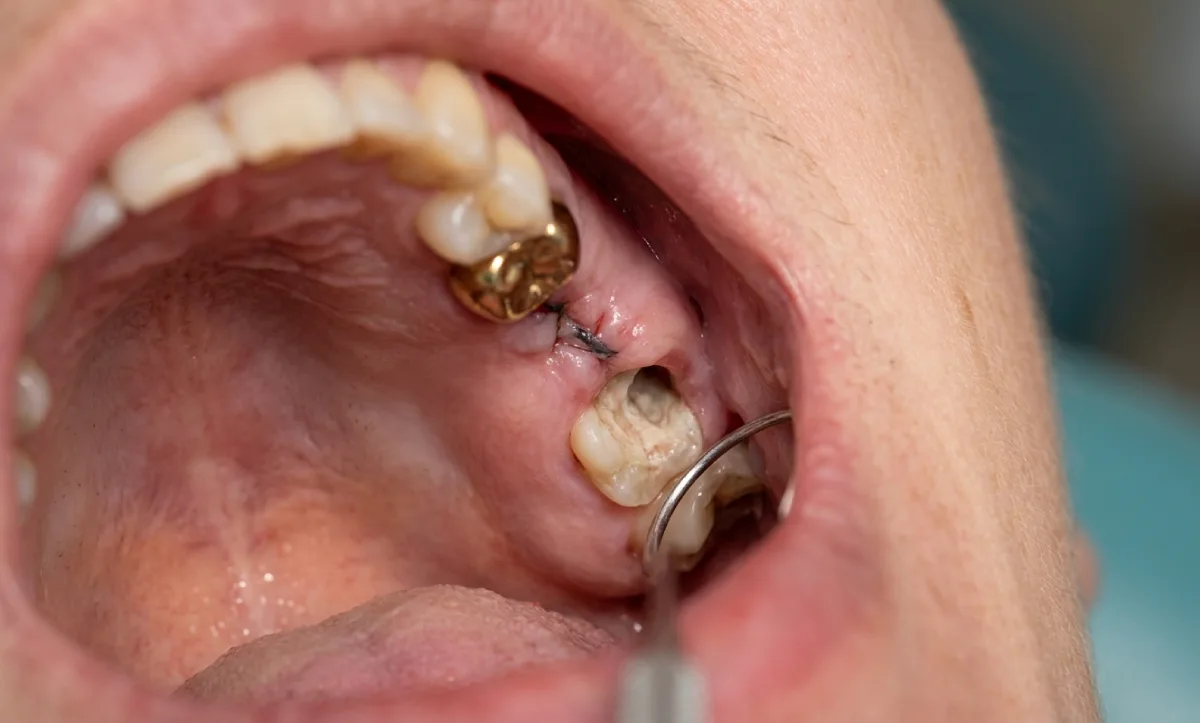
Another possible sign is a change in the appearance of the extraction socket. Instead of seeing the dark blood clot normally present during early healing, the socket may appear unusually empty. In some cases, exposed alveolar bone can be visible. Healthdirect notes that exposed bone may be seen instead of a dark clot and that greyish tissue can sometimes cover the area. However, looking into the socket is not a reliable way to diagnose yourself. Exposed bone can be difficult to see, especially after a back-tooth or wisdom-tooth extraction. Normal sockets can also remain visibly open for some time while new tissue develops. Do not poke, scrape or repeatedly touch the extraction socket to check whether the blood clot is present. Doing so can irritate healing tissues. Pain pattern and professional examination are more useful than socket appearance alone.
Bad Taste or Bad Breath
A persistent unpleasant taste or bad breath can occur with dry socket. Food particles and debris may also collect around an extraction site, so these symptoms need to be considered alongside the pain pattern rather than used as proof of dry socket by themselves. Healthdirect lists both bad breath and an unpleasant taste among possible symptoms. If a bad taste or smell develops at the same time as severe pain that is getting worse a few days after extraction, contacting your dentist is sensible. If these symptoms occur with significant swelling, pus or fever, another post-extraction problem such as infection may also need to be ruled out.
Dry Socket vs Normal Healing: How Can You Tell the Difference?
Many patients become concerned because extraction sites can look unusual while they heal. A visible hole, mild soreness or changing tissue colour does not automatically mean dry socket. The most useful comparison is the overall direction of recovery. Normal healing should generally become more comfortable, while possible dry socket usually produces significant pain that persists or becomes worse.
| Feature | Normal Healing | Possible Dry Socket |
| Pain | Gradually improves | Becomes severe or worsens |
| Pain location | Mostly near the extraction site | May spread to the ear, jaw, temple or nearby areas |
| Blood clot | Protects the socket during early healing | May be absent or broken down |
| Socket appearance | Healing tissue gradually develops | May appear empty; exposed bone may be visible |
| Taste and breath | No persistent major change expected | Bad taste or bad breath may occur |
| Recovery pattern | Symptoms generally settle | Pain becomes unexpectedly strong |
| Next step | Continue instructed aftercare | Contact a dentist |
White or pale material inside an extraction socket does not automatically mean exposed bone. Healing tissue can change how the area looks, and sockets do not close immediately. For that reason, trying to identify dry socket from colour alone can cause unnecessary concern. A significant change in pain is usually a more meaningful warning sign than the appearance of the hole.
When Do Dry Socket Symptoms Usually Start?
Dry socket typically becomes noticeable during the first several days after a tooth extraction. Healthdirect describes severe ongoing throbbing pain occurring within about one to three days, while other clinical references describe severe pain appearing within roughly one to five days after extraction. This timing matters because ordinary postoperative soreness is expected early in recovery. If you have pain immediately after the anaesthetic wears off, that alone does not indicate dry socket. Concern increases when pain becomes unexpectedly severe or starts getting worse several days after the extraction instead of showing a general improvement.
For example, some tenderness on day three may still be part of normal healing. Severe throbbing pain on day three or four that is becoming stronger, spreading into the ear or jaw, or occurring with an empty-looking socket needs more attention. There is no single calendar day that can diagnose dry socket. The safer question is: “Is my recovery improving, or is my pain becoming significantly worse?”
Why Does Dry Socket Happen and Who Is More at Risk?
The exact cause of alveolar osteitis is still being studied. A widely accepted explanation involves premature fibrinolytic breakdown of the blood clot, leaving the underlying extraction area less protected. Clinical evidence has identified several factors associated with a higher chance of dry socket, although having a risk factor does not mean a person will definitely develop it.
Smoking and Tobacco Use
Smoking is a recognised risk factor for dry socket. Healthdirect specifically lists smoking among factors that increase the likelihood of developing the condition. Smoking may interfere with healing, while the physical action associated with smoking may also disturb the early extraction site. If you have recently had a tooth removed, follow the specific smoking instructions given by your dentist. This is particularly important during the early stage when the blood clot and new healing tissues need protection.
Lower Wisdom Tooth or Difficult Extractions
Dry socket is particularly associated with lower wisdom tooth extraction. Healthdirect states that it occurs more often after removal of lower wisdom teeth than after many other extractions, and clinical research also shows a stronger association with mandibular third molars. Difficult or more traumatic extractions may further increase risk. This does not mean dry socket occurs only after wisdom teeth are removed. It can develop after other dental extractions as well.
Previous Dry Socket, Oral Hygiene and Hormonal Factors
A previous history of dry socket may increase the chance of experiencing it again. Poor oral hygiene is another recognised risk factor, as is existing oral infection or inflammation in some cases. Healthdirect also lists oral contraceptive use among associated factors, while clinical literature describes an association between hormonal factors and increased fibrinolytic activity. These are risk factors rather than a diagnosis. A dentist considers the complete clinical picture, including the extraction, pain pattern, healing site and medical history.
Actions That Can Disturb Early Healing
Protecting the extraction site is an important part of aftercare. Healthdirect advises avoiding smoking and recommends gentle rinsing and spitting. Its tooth-extraction guidance also advises avoiding mouth rinsing during the first 24 hours because this can interfere with the blood clot, followed by gentle rinsing after that period when instructed.
During early healing, follow your dentist’s instructions about:
- Smoking
- Rinsing and spitting
- Drinking through straws
- Cleaning around the extraction site
- Food choices
- Physical activity
Avoid touching or probing the socket with your fingers or tongue.
When Should You See a Dentist After Tooth Extraction?
Contact a dentist if pain after your extraction is severe, persistent or getting worse instead of better, especially if it begins a few days after the procedure or spreads into the ear, jaw or other nearby areas. Healthdirect specifically recommends contacting your dental clinic if you develop ongoing intense pain a few days after tooth removal or believe you may have dry socket.
You should arrange a dental assessment if you notice:
- Severe or increasing pain
- Deep throbbing pain several days after extraction
- Pain spreading to your ear, jaw or temple
- An empty-looking socket together with significant pain
- Visible bone with worsening discomfort
- Persistent bad taste or bad breath with increasing pain
If you are in Burwood or the surrounding Sydney area and your pain is becoming worse after an extraction, Burwood Diamond Dental provides emergency dental care and advises patients to contact the clinic for urgent dental problems and pain relief.
Symptoms That May Point to Something Other Than Dry Socket
Dry socket should not be used as a label for every problem that develops after an extraction. Fever above 38°C, increasing swelling, significant facial swelling, pus or persistent heavy bleeding can point to infection or another post-extraction complication and need dental assessment. Healthdirect specifically advises speaking to a dentist about fever, substantial bleeding, or swelling that does not improve or becomes worse. Healthdirect states symptoms include slight fever and local swelling among symptoms that can occur, but these findings are less specific than the characteristic severe pain pattern. Clinical literature also notes that alveolar osteitis itself is not generally classified as a true infectious process. For this reason, marked swelling, pus, or systemic illness should not simply be assumed to be dry socket.
How Does a Dentist Diagnose and Treat Dry Socket?
A dentist will usually diagnose dry socket by discussing your symptoms and examining the extraction site. They may ask when the tooth was removed, when the pain began, whether it is getting worse, and whether it spreads into nearby areas. The dentist can also check whether the blood clot is missing, whether bone is exposed, and whether another dental problem could explain the symptoms. Healthdirect notes that further testing may sometimes be required when another condition needs to be excluded.
Examining the Extraction Socket
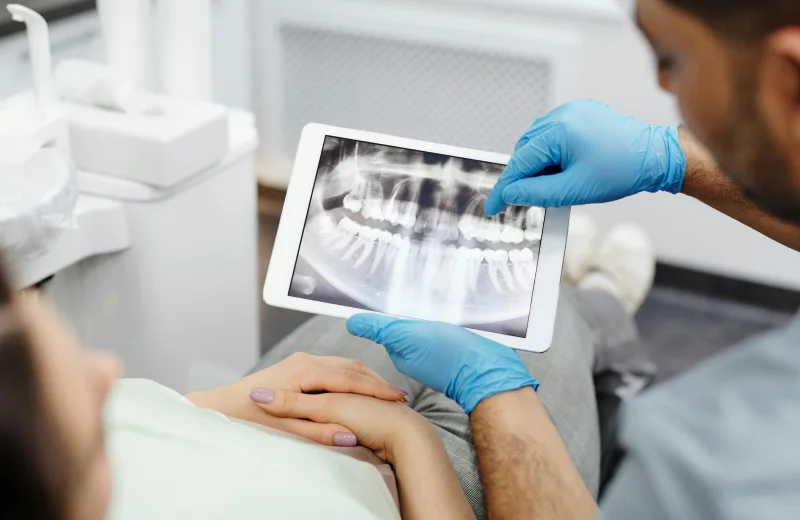
During the examination, the dentist looks at the socket and surrounding tissues while considering the patient’s pain history. Dry socket is mainly a clinical diagnosis, so an X-ray is not automatically needed for every case. Imaging may be considered if the dentist needs to rule out another source of pain, such as a retained tooth or root fragment or another complication. This is why professional assessment is more useful than trying to compare your socket with pictures online. Two extraction sites can look different while both are healing normally.
Cleaning or Irrigating the Socket
If dry socket is diagnosed, the dentist may gently irrigate the extraction socket to remove food particles, clot debris, or other material. Healthdirect lists flushing debris from the socket as a treatment option, while StatPearls describes intra-alveolar irrigation as one of the management approaches with clinical support. Patients should not attempt to scrape or deeply clean the socket themselves. StatPearls notes that curettage of a dry socket is not recommended because it can further expose the underlying bone.
Medicated Dressing and Pain Relief
A dentist or oral surgeon may place a medicated dressing inside the socket to help reduce discomfort. Treatment is largely aimed at pain relief while healing continues. Depending on the situation, your dentist may also review your pain-management plan and give instructions for mouth rinsing or further home care. Some patients need follow-up so the dentist can check their symptoms and healing. Because dry-socket pain can be intense, professional care can make recovery more manageable while also confirming that another complication is not being missed.
Are Antibiotics Needed for Dry Socket?
Antibiotics are not automatically required for uncomplicated dry socket. Alveolar osteitis is generally considered a post-extraction inflammatory/healing condition rather than a true bacterial infection. StatPearls specifically notes that the condition is not categorised as a true infectious process, and Cochrane similarly states that dry socket is not bacterial in origin. If your dentist finds signs of a separate infection, they will decide whether additional treatment is required based on your examination and medical history. Antibiotics should not be started simply because an extraction socket is painful.
What Should You Do While Waiting to See Your Dentist?
If you suspect dry socket, home care may help you stay more comfortable, but it should not replace an assessment when pain is severe or worsening. Follow the specific post-extraction instructions given by your treating dentist because advice may differ depending on the tooth removed, the type of extraction and your medical history.
While waiting for your appointment:
- Take pain-relief medicine only as directed by your dentist, doctor or the medicine label.
- Avoid smoking.
- Avoid disturbing the socket with your tongue, fingers or objects.
- Eat softer foods that are less likely to irritate the extraction area.
- Maintain gentle oral hygiene.
- Follow your dentist’s instructions about salt-water or other rinses.
- Avoid aggressive swishing or forceful spitting.
Healthdirect advises avoiding rinsing during the first 24 hours after a routine extraction and using gentle salt-water rinsing after 24 hours as directed. Do not place aspirin, unprescribed medicines, concentrated oils or other substances directly into the extraction socket. Severe pain needs a diagnosis, not repeated home experiments.
How Can You Reduce the Risk of Dry Socket?
Good aftercare focuses on protecting the early extraction site while keeping the mouth clean. Follow the instructions provided by your dentist, avoid smoking, rinse gently when you have been told it is safe to do so, and avoid unnecessarily disturbing the socket. Healthdirect specifically recommends gentle rinsing and spitting, avoiding smoking and following professional cleaning instructions.
Research has also examined chlorhexidine for people at risk of alveolar osteitis. A Cochrane review found moderate-certainty evidence that certain chlorhexidine mouth-rinse or gel approaches probably reduce dry-socket risk. However, chlorhexidine can cause unwanted effects, and the timing, formulation and method of use matter. It should therefore be used according to dental advice rather than added to your routine without guidance. The practical goal after extraction is straightforward: protect the blood clot, keep the mouth clean as instructed, and give the socket time to heal.
Key Takeaways
Dry socket, or alveolar osteitis, is a painful complication that can develop after a tooth extraction when the protective blood clot is absent or breaks down too early. Its clearest warning sign is severe post-extraction pain that becomes worse rather than steadily improving. Pain can spread to the ear, jaw, temple or nearby facial areas, and some patients notice an empty-looking socket, exposed bone, bad breath or an unpleasant taste. If pain is severe or worsening, contact a dentist. Fever, pus, substantial swelling, facial swelling or heavy bleeding may point to another complication and also require professional assessment.
Questions Patients Commonly Ask About Dry Socket
Is Dry Socket an Infection?
Dry socket itself is generally not classified as a true bacterial infection. It involves disruption or premature breakdown of the protective clot and inflammation of the extraction socket. Infection can develop separately, which is why symptoms such as marked swelling, pus or fever should be assessed rather than automatically blamed on dry socket.
Can You Have Dry Socket Without Seeing Exposed Bone?
Yes. Exposed bone may be difficult to see, particularly when a tooth has been removed from the back of the mouth. You can therefore have symptoms consistent with dry socket without being able to see bone yourself. Severe worsening pain and a dental examination are more useful than trying to diagnose the condition by looking in a mirror.
Can Dry Socket Heal on Its Own?
Dry socket can eventually heal as new tissue develops over the extraction site, but the pain can be significant while this happens. Healthdirect notes that the condition can heal by itself over several weeks, but dental care can provide pain relief, remove debris and allow another cause of severe pain to be ruled out.
Does Dry Socket Only Happen After Wisdom Tooth Removal?
No. Dry socket can occur after different types of tooth extraction. However, it occurs more often after removal of lower wisdom teeth and lower molars, which is why the condition is frequently discussed in connection with wisdom-tooth surgery.
Should I Worry if the Extraction Hole Still Looks Open?
An extraction socket does not close immediately, so seeing a hole after a tooth has been removed does not by itself mean you have dry socket. Healing takes place gradually as new tissue develops. The more concerning pattern is an open or empty-looking socket accompanied by severe pain that is worsening instead of improving. If you are unsure, let your dentist examine the site rather than probing it yourself.
When Worsening Extraction Pain Needs Dental Care
Most extraction sites become more comfortable as healing progresses. If the opposite is happening and your pain is becoming severe, throbbing, or spreading several days after the tooth was removed, dry socket is one possible explanation and should be assessed. Treatment can help relieve pain and confirm whether the socket is healing normally or another dental problem is present. If you are experiencing severe or worsening pain after a tooth extraction in Burwood, contact Burwood Diamond Dental for an assessment. Our dental team provide emergency dental care and can examine the extraction site, identify the likely cause of your pain, and discuss appropriate treatment.
References
Healthdirect Australia — Dry Socket
https://www.healthdirect.gov.au/dry-socket
StatPearls, NCBI Bookshelf — Alveolar Osteitis
https://www.ncbi.nlm.nih.gov/books/NBK582137
Cochrane — Interventions for Alveolar Osteitis
https://www.cochranelibrary.com/cdsr/doi/10.1002/14651858.CD006968.pub3/full