If you’ve ever had a broken wire in your braces, you know how uncomfortable and frustrating it can be. Braces are an essential tool for achieving a straight, healthy smile, but sometimes wires get bent, broken, or even loosened, whether from eating hard foods, an accidental injury, or simply wear and tear. The good news is, while this can seem like a major problem, a broken wire doesn’t need to derail your orthodontic treatment. With the right knowledge, you can address it temporarily until you can visit your orthodontist for a professional fix.
At Burwood Diamond Dental, we understand that dealing with a broken wire can cause discomfort and concern. We will provide practical solutions to help you manage the situation, step by step, so you can continue with your orthodontic treatment without unnecessary delays. Whether it’s a protruding wire or a loose bracket, we have you covered.
Understanding Braces Wires: The Basics
Orthodontic wires are the backbone of your braces. These wires connect all the brackets and apply continuous pressure to shift your teeth into proper alignment. Wires come in several types, each serving a specific purpose in your treatment. Common wire types include nickel-titanium, stainless steel, and beta-titanium, each with different levels of flexibility and strength to suit the various stages of your treatment.
The wire is crucial for moving your teeth in the right direction. However, over time, or through external factors, the wire can become loose, bent, or even snap. This is a common occurrence, but it’s essential to address it promptly to avoid interfering with your treatment progress.
Why Do Wires Break?
Brace wires are designed to withstand the pressure of tooth movement, but they can still break or bend. Some of the most common causes of wire breakage include:
- Biting into hard foods like nuts, ice, or hard candy.
- Injury or trauma to the mouth from sports or accidents.
- Normal wear and tear from the natural shifting of your teeth during the treatment.
When wires break, it can cause irritation to your gums, lips, or the inside of your mouth. Understanding the cause of the break can also help prevent it from happening again in the future.
Types of Wire Breakages and How to Fix Them
Braces wires can break or become loose in a few different ways. Depending on the severity of the issue, some situations can be resolved temporarily at home, while others may require an orthodontist’s attention.
Floating Bracket (Bracket Came Off)
Sometimes, a bracket can come loose from the wire, causing it to float or rotate. This situation is particularly concerning as it can disrupt the alignment process and cause discomfort. If this happens, the first step is to gently reposition the bracket using sterile tweezers. Move the bracket back into its correct position on the wire. If it’s rotating and causing irritation, you can use orthodontic wax to temporarily hold it in place.
While these fixes may offer short-term relief, it’s important to visit your orthodontist as soon as possible to have the bracket properly reattached.
Broken or Protruding Wire
A broken or protruding wire can cause sharp pain as it pokes into your cheeks, gums, or lips. If the wire has snapped but is still partially in place, you can use sterilized nail clippers or wire cutters to carefully trim the exposed part of the wire. Only cut the wire near the bracket and avoid cutting too close to the teeth to avoid damaging your braces.
Once the wire is cut, use orthodontic wax to cover the sharp edges and prevent further irritation to your mouth. Wax is safe to eat with and will help cushion the wire until your orthodontist can repair or replace it. Chronic irritation can make it harder to maintain your hygienic dental care, so it is vital to visit us for a professional assessment if sores persist.
Bent Wire
A bent wire may not be as painful as a protruding one, but it can cause problems with tooth movement and delay your treatment progress. If you notice that the wire has bent or shifted, avoid attempting to adjust it yourself too aggressively. Instead, use sterilized tweezers to gently try to reposition the wire, or cover it with wax for comfort. However, it’s best to schedule an appointment with your orthodontist as soon as possible to have the wire professionally fixed or replaced.
Temporary Fixes for Broken Wires
While a broken wire is an inconvenience, it’s important to remember that temporary fixes can be applied to relieve discomfort and prevent further issues. Here’s how to manage broken wire issues until you can get professional care.
Orthodontic Wax for Immediate Relief
One of the most effective and easiest ways to manage discomfort from a broken wire is using orthodontic wax. Wax can be used to cover sharp, protruding wires and brackets, preventing them from poking the inside of your mouth. Simply pinch off a small amount of wax and roll it into a ball, then flatten it and place it over the area causing discomfort. This will cushion the sharp wire and allow you to continue with your daily activities without irritation.
Orthodontic wax is safe to eat with, so you can continue your day while awaiting a professional solution.
Saltwater Rinse for Mouth Protection
If you’ve experienced irritation or a cut from a broken wire, using a saltwater rinse can provide some relief. Saltwater helps reduce inflammation, kill bacteria, and speed up healing. Simply dissolve a teaspoon of salt in warm water and swish it around your mouth for 30 seconds. This rinse will help soothe your gums and keep your mouth clean while you wait for a professional repair.
Trimming the Wire (With Caution)
If the wire is extremely bothersome, you can trim the excess part using sterilized nail clippers or wire cutters. However, you should only trim the wire if it’s sticking out and causing significant irritation. It’s important to be very careful and avoid cutting too close to the brackets. A precise trim can reduce discomfort without causing further damage. If you’re unsure, it’s always best to consult your orthodontist for advice.
Protecting the Area with a Soft Bite Guard
If you are unable to make any repairs to the wire or bracket, using a soft bite guard can protect your mouth from further irritation. The bite guard acts as a cushion between your teeth and the broken wire, preventing any additional pain until you can visit your orthodontist.
If you’re dealing with a broken wire or any other braces-related issues, contact Burwood Diamond Dental today. Our expert team is here to offer fast solutions, ensuring that your orthodontic treatment continues smoothly and effectively.
Causes of Broken Braces, Wires, and How to Prevent Them
Understanding why wires break is crucial for minimizing the risk and maintaining the integrity of your braces. While some factors are unavoidable, many issues arise from certain habits or foods that can put unnecessary stress on your braces. In this section, we’ll discuss the main causes of wire breakages and how to prevent them to ensure your orthodontic treatment proceeds smoothly.
Hard or Crunchy Foods
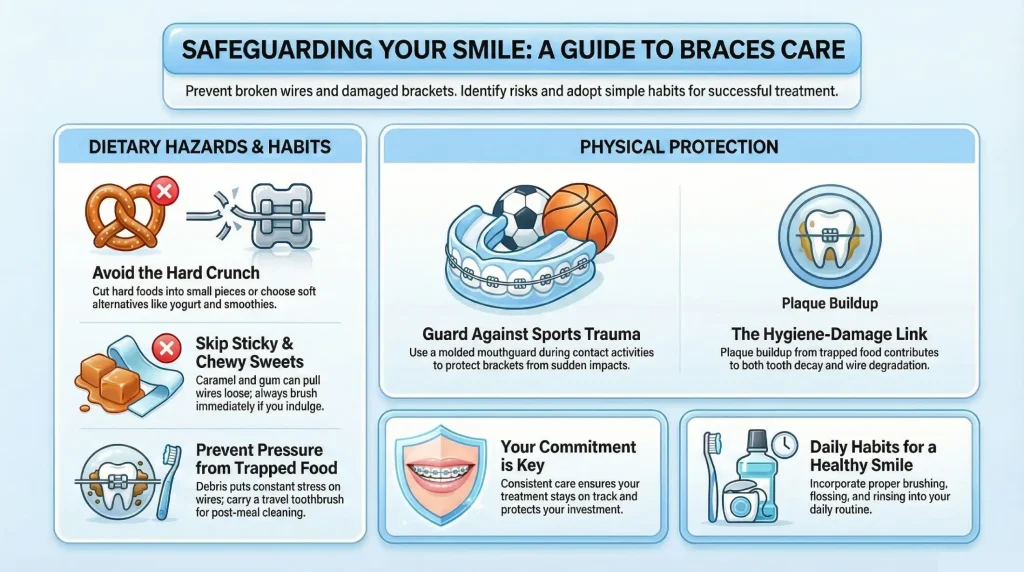
One of the leading causes of broken wires is eating hard foods. Foods like nuts, popcorn, and hard candies can put a lot of pressure on the braces and lead to broken wires or damaged brackets. These foods can also get stuck in your braces, making them more difficult to clean and potentially leading to other oral health issues like cavities or gum disease.
Prevention Tip:
To avoid damage, cut hard foods into smaller pieces before eating. Choose softer alternatives like yogurt, smoothies, or soft fruits to minimize the risk of harming your braces.
Sticky and Chewy Foods
Sticky foods like caramel, chewing gum, and taffy are notorious for causing problems with braces. These foods tend to get stuck between your teeth and brackets, making them difficult to remove. When food remains stuck for long periods, it can increase plaque buildup, which may contribute to cavities, gum disease, and wire damage.
Prevention Tip:
Avoid sticky foods that can pull on the braces and cause the wires to loosen. If you do indulge, be sure to brush and floss your teeth thoroughly afterward to remove any debris.
Trauma and Accidents
Accidental trauma to the mouth, such as a sudden impact from a sports injury or a fall, can result in broken wires or brackets. This can happen if your braces are exposed to high force, which is why wearing a mouthguard is crucial for individuals involved in contact sports.
Prevention Tip:
If you engage in activities that might involve physical contact, such as sports, wearing a molded mouthguard can protect your braces and teeth from potential damage. Always follow your orthodontist’s recommendations regarding mouthguards.
Trapped Food and Debris
Food that gets trapped between your teeth and brackets can put pressure on your braces, particularly the wires. This can lead to discomfort and may eventually cause a wire to bend or break if not addressed promptly. The longer food remains stuck, the more likely it is to cause irritation or damage to the braces.
Prevention Tip:
Make sure to brush and floss regularly, especially after meals, to remove food particles. Carrying a travel toothbrush can help you clean your teeth immediately after eating, preventing food from staying trapped in your braces for too long.
When to Contact Your Orthodontist
While temporary fixes can help manage broken wires, it’s essential to know when to seek professional help. A broken wire, if not addressed properly, can delay your treatment and cause unnecessary discomfort. Here are the key signs that it’s time to contact your Burwood Diamond Dental orthodontist.
When the Wire is Severely Broken or Detached
If the wire has completely snapped or is detached from your braces, it’s important to contact your orthodontist immediately. While you may be able to temporarily manage the situation with orthodontic wax, a fully broken wire requires professional attention to ensure that your braces can continue to move your teeth in the correct direction.
When You Experience Severe Pain or Discomfort
If the broken wire is causing intense pain or discomfort that doesn’t subside with the application of orthodontic wax or other temporary fixes, it’s crucial to get professional care. Pain that persists can be a sign that the wire is putting too much pressure on your gums or the inside of your mouth, which can lead to further complications if left untreated.
When You’re Unable to Reposition the Wire
If the wire is out of place and you’re unable to gently reposition it yourself, it’s time to seek orthodontic care. Trying to force the wire back into place can cause further damage to your braces, leading to delays in your treatment. Your orthodontist will be able to make the necessary adjustments or replace the wire entirely.
For Professional Repairs and Adjustments
Regardless of the severity, all broken wires should be professionally repaired by your orthodontist to ensure your treatment remains on track. Regular checkups are vital during the course of your orthodontic treatment, as they allow your orthodontist to monitor the progress of your braces and make any necessary adjustments to the wires or brackets. If a broken wire has caused a deep laceration or if you have suffered facial trauma, contact our emergency dentist in Burwood immediately for urgent care
Severity Levels
| Issue | Severity | Action Required |
| Long wire at the back | Mild | Apply wax; book a routine comfort adjustment. |
| Loose rubber ligature | Mild | Call to inform us; usually fixed at your next visit. |
| Snapped the main archwire | Moderate | Contact us within 24–48 hours to prevent tooth shifting. |
| Wire causing deep bleeding | High | Emergency visit required for clipping and tissue care. |
Potential Risks of Ignoring a Broken Wire
It can be tempting to leave a broken wire alone if it isn’t causing you direct pain, but this can cause long-term problems for your smile. Your braces work by applying a constant, light pressure that gradually reshapes the bone around your teeth. When a wire snaps, that pressure is lost or, worse, it becomes unbalanced. This can cause some teeth to move in the wrong direction, potentially adding months to your total treatment time. Furthermore, a wire that has caused a cut can lead to a localised infection if the wound isn’t allowed to heal properly because of repeated scratching.
Preventing Future Wire Breakages: Tips for Maintaining Your Braces
One of the best ways to avoid dealing with broken wires is by taking proactive measures to protect your braces. Here are some helpful tips to minimize the risk of wire breakage and ensure that your braces stay intact throughout your treatment. Understanding the prevention of cavities around damaged hardware is essential, as a broken wire can create new ‘bacteria traps’ that lead to decay
Avoid Hard, Sticky, and Chewy Foods
As we mentioned earlier, certain foods can put undue stress on your braces. By being mindful of what you eat and avoiding hard, sticky, or chewy foods, you can greatly reduce the risk of damaging your braces. Always remember to cut hard foods into smaller pieces and chew carefully to avoid putting excessive pressure on your braces.
Wear a Mouthguard During Physical Activities
If you play contact sports or engage in physical activities where there’s a risk of injury to the mouth, wearing a mouthguard is essential. A mouthguard will protect both your braces and your teeth from trauma, preventing damage to the brackets and wires.
Maintain a Consistent Oral Hygiene Routine
Keeping your braces clean is crucial for preventing plaque buildup and avoiding damage. Brushing your teeth after every meal, flossing daily, and using mouthwash can help keep food particles and bacteria at bay, preventing issues that could lead to wire breakages. Make sure to follow your orthodontist’s advice on the best tools for cleaning your braces, such as orthodontic toothbrushes, floss threaders, and interdental brushes.
Visit Your Orthodontist Regularly
Regular checkups give your orthodontist the chance to adjust the wires, ensure everything is functioning as expected, and address any issues before they become bigger problems. Staying on schedule with your appointments will help prevent wire breakage and keep your treatment on track.
Conclusion: Managing Broken Braces, Wires, and Keeping Your Smile on Track
A broken wire in braces doesn’t have to be a major setback. With the right knowledge and temporary fixes, you can manage the issue until you can see your orthodontist for a professional repair. Whether it’s using orthodontic wax, adjusting the wire, or seeking timely orthodontic care, it’s essential to address any issues quickly to avoid discomfort and ensure your treatment continues without delays.
At Burwood Diamond Dental, we are committed to providing top-quality care throughout your orthodontic treatment. If you experience any issues with your braces, such as broken wires or brackets, don’t hesitate to reach out to us. We’re here to help you maintain a healthy, beautiful smile.
FAQs about Fixing Broken Braces
What should I do if my braces wire is poking into my gums?
If the wire is poking into your gums or lips, apply orthodontic wax to the sharp end for immediate relief. If the irritation persists, consult your orthodontist for a professional fix.
Can I fix a broken wire myself?
Yes, you can use orthodontic wax or sterilized tweezers to reposition or trim the wire. However, it’s essential to contact your orthodontist for a proper repair.
How can I prevent my braces’ wires from breaking in the future?
Avoid eating hard, sticky, or chewy foods, wear a mouthguard during sports, and stick to your oral hygiene routine to keep your braces in top condition.
Can a regular dentist fix my braces wire, or do I need my orthodontist?
While a general dentist can often help with “comfort” fixes like clipping a long wire, it is always best to see your orthodontic team to ensure the corrective force of the wire is still accurate.
What if I accidentally swallowed a piece of wire?
Most small fragments pass through the body without issue, but you should always notify us. If you experience sudden chest pain or difficulty breathing, seek medical attention immediately.