Finding out why your teeth or your child’s teeth are growing in at odd angles can feel like a puzzle with missing pieces. Many families in Burwood assume that crooked teeth are simply a stroke of bad luck, but there is usually a very specific biological or developmental reason behind the shift. Whether it is a small jaw inherited from a parent or a childhood habit that stayed around too long, understanding the root cause is the first step in fixing the problem for good.
At Burwood Diamond Dental, we see crooked teeth as more than just a look; they are often a sign of how your jaw and muscles are working together. By identifying the why early on, we can help you choose the right path to a straighter, healthier smile that stays in place for life.
The Genetic Blueprint: How Heredity Shapes Your Smile
Your DNA plays a massive role in how your smile develops, often dictating the size of your teeth and the shape of your jaw long before you are even born. Just as you might inherit your mother’s eyes or your father’s height, you can inherit a jaw that is too small for your teeth or teeth that are too large for your mouth. This mismatch is the most common reason for crowding. Genetics also control the alignment of your jawbones, which can lead to overbites or underbites that run through generations of a family in the Inner West.
The Jaw Size vs. Tooth Size Mismatch
The physical space available in your mouth is a major factor in how straight your teeth will be. If your jaw is narrow or small, the adult teeth will struggle to find a spot to emerge, forcing them to twist, overlap, or grow behind other teeth to fit into the arch. Conversely, if the jaw is too large for the size of the teeth, you will see significant gaps and spacing issues. This struggle for space often becomes most obvious during the transition from baby teeth to adult teeth, as the larger permanent teeth try to claim their territory in a limited environment.
Inherited Bite Patterns
Beyond the teeth themselves, the way your upper and lower jaws fit together is a trait passed down through your family line. A malocclusion is the clinical term for a bite that does not line up correctly. This includes overjets, where the top teeth stick out too far forward, or underbites, where the lower jaw sits in front of the upper teeth. Because the jaw is the foundation for the teeth, an inherited bone structure that is off-balance will naturally cause the teeth to tilt or shift as they try to find a way to meet for chewing.
Hypodontia and Supernumerary Teeth
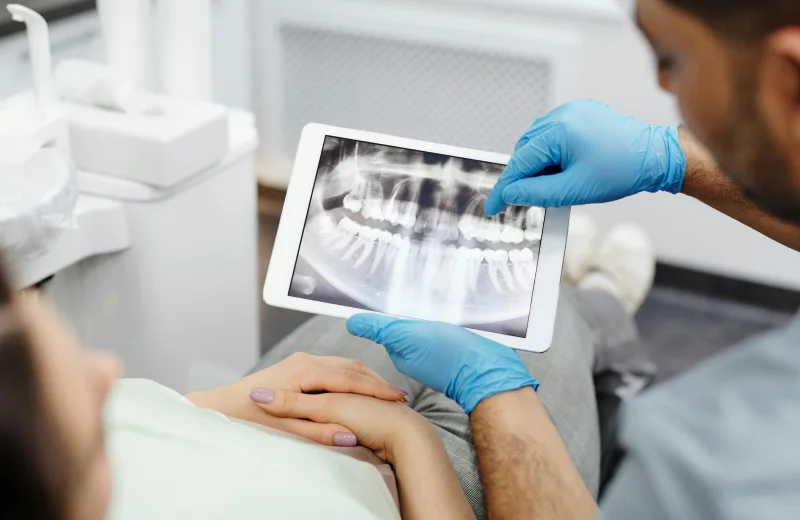
Sometimes, the cause of crooked teeth is simply a matter of the wrong number of teeth. Hypodontia is a genetic condition where certain adult teeth never develop at all, leaving gaps that cause the remaining teeth to drift out of place. Supernumerary teeth are extra teeth that grow in and take up valuable space, pushing the regular teeth into crooked positions. At our Burwood clinic, we use digital X-rays to spot these missing or extra teeth early, allowing us to plan for the gaps before they cause a major collapse of the dental arch.
Genetic vs. Environmental Factors
| Cause Category | Specific Issue | Impact on Smile |
| Genetic | Small Jaw Size | Severe crowding and overlapping teeth. |
| Genetic | Extra Teeth (Supernumerary) | Displaces healthy teeth into odd angles. |
| Developmental | Early Baby Tooth Loss | Back teeth drift forward, blocking adult teeth. |
| Behavioral | Thumb Sucking | Pushes front teeth out and narrows the palate. |
Myofunctional Habits and Childhood Development
While genetics set the stage, the way we use our mouths during our early years can physically reshape the bone and change how teeth erupt. These are often called myofunctional habits, referring to the muscles of the face and tongue. Because a child’s jawbone is soft and still growing, constant pressure from a thumb, a finger, or even the tongue can act like a slow-moving orthodontic appliance, but in the wrong direction. At Burwood Diamond Dental, we look for these functional signs during check-ups to help parents intervene before the habits cause permanent changes to the facial profile.
The Impact of Prolonged Thumb Sucking and Pacifier Use
Thumb sucking is a natural comfort reflex for babies, but if it continues past the age of three or four, it starts to create a V-shaped upper jaw rather than a healthy, wide U-shape. The pressure of the thumb against the roof of the mouth pushes the palate upward and the front teeth outward, often creating an open bite where the top and bottom teeth don’t touch even when the mouth is closed. This change in the bone structure means that even if the teeth are straight, the jaw itself has been molded into a shape that prevents a proper bite.
Tongue Thrusting
Tongue thrusting is a habit where the tongue presses against the back of the front teeth during swallowing or speaking, rather than resting against the roof of the mouth. Every time a person swallows, the tongue exerts a surprising amount of force. If that force is constantly hitting the back of the teeth, it slowly pushes them forward, creating gaps and protrusion. This is often a silent cause of crooked teeth that many people don’t notice until they realize their front teeth are becoming more prominent over time.
Mouth Breathing and Facial Structure
It might seem strange that how you breathe affects how your teeth grow, but mouth breathing is a leading cause of narrow dental arches and crowding. When you breathe through your nose, your tongue naturally rests on the roof of your mouth, acting as a support that keeps the upper jaw wide. When a child breathes through their mouth due to allergies or enlarged tonsils, the tongue drops to the floor of the mouth. Without that internal support, the cheeks press inward, causing the upper jaw to grow narrow and crowded. This is why addressing airway issues is a critical part of modern dental thinking in the Inner West.
Dental History and Physical Trauma
The life story of your teeth, from the first baby tooth to any accidents on the playground, has a direct impact on your final alignment. Your teeth are part of a moving system; they are not fixed into the bone like nails in wood. Instead, they are held by ligaments that allow them to move in response to pressure or the absence of a neighbor. Any disruption to this system, whether through disease or injury, can lead to a domino effect of shifting and tilting.
The Critical Role of Baby Teeth
Baby teeth are often viewed as temporary, but they serve the vital purpose of being space maintainers for adult teeth. If a baby tooth is lost too early due to decay or injury, the surrounding teeth will naturally tilt into that empty space. When the adult tooth is finally ready to grow in, its path is blocked, forcing it to emerge sideways, behind other teeth, or not at all (becoming impacted). Keeping baby teeth healthy isn’t just about preventing pain; it’s about holding the parking spot for the adult smile.
Gum Disease and Bone Loss
In adults, a common cause of shifting teeth is gum disease. Periodontitis destroys the bone and fibers that hold your teeth in place. As the foundation weakens, the teeth lose their stability and begin to fan out or drift. This is why some adults notice their teeth becoming crooked later in life even if they had straight teeth as a teenager. At our Burwood clinic, we prioritize gum health as the first step in any treatment, because you cannot build a straight smile on a foundation that is moving. If your teeth have begun to drift due to inflammation, we must first address the early signs of gum disease to stabilize the foundation of your mouth.
Facial Injury and Trauma
A sudden impact to the face, such as a sports injury or a fall, can physically knock teeth out of alignment or damage the jawbone. If a tooth is pushed out of place and not repositioned by a dentist quickly, the bone will heal around it in its new, crooked position. Furthermore, trauma to a baby tooth can sometimes damage the developing adult tooth bud underneath it, causing the permanent tooth to grow in at an odd angle. This is why we always recommend custom mouthguards for our local athletes.
Health Risks and Modern Solutions
Why Does It Matter? The Risks of Leaving Crooked Teeth Untreated
Leaving crooked teeth alone is rarely just a cosmetic choice. When teeth are not aligned, they fail to work together as a single unit, which places a heavy burden on your oral health and your general well-being. Many people do not realize that the crookedness they see on the surface is often causing deeper issues within the jaw and the digestive system. At Burwood Diamond Dental, we focus on the long-term benefits of alignment, ensuring that your teeth stay healthy and functional for years to come. For a discreet way to fix crowding without metal wires, many of our patients choose the Invisalign, which uses transparent trays to guide teeth into position.
Hygiene Challenges and Decay
Misaligned teeth are essentially bacteria traps. When teeth overlap or crowd together, they create tight spaces that are physically impossible to reach with a toothbrush or standard floss. Plaque and food debris remain trapped in these areas, leading to chronic decay and eventually painful infections. Furthermore, the constant irritation of trapped plaque against the gum line causes persistent inflammation, which is the starting point for gum disease. Straightening your teeth is the most effective way to make your daily brushing and flossing actually work. When crooked teeth make cleaning impossible, deep decay can reach the nerve, potentially requiring a root canal to save the tooth from extraction
TMJ Strain and Uneven Wear
When your teeth don’t meet correctly, your jaw has to shift in unnatural ways to chew and speak. This puts constant stress on the temporomandibular joint (TMJ), which can lead to chronic headaches, neck pain, and a clicking or popping jaw. Additionally, crooked teeth tend to hit each other at the wrong angles. This causes premature aging of your smile, where certain teeth become chipped, flattened, or worn down much faster than they should be because they are carrying too much of the biting load.
Modern Solutions: How We Fix Crooked Teeth in Burwood
The good news is that no matter what caused your teeth to become crooked, modern dental technology offers many efficient ways to fix them. We no longer rely on a one size fits all approach. Instead, we use digital diagnostics to understand the specific biology of your mouth and offer a solution that fits your lifestyle. Our team has been helping families in the Burwood area achieve healthier smiles using these advanced methods.
Interceptive Orthodontics for Children
For our younger patients, we often use interceptive orthodontics. This involves using tools like palatal expanders to gently widen a narrow jaw while the child is still growing. By creating space early, we can often prevent adult teeth from becoming stuck in the bone or severely crowded. In many cases, this early intervention simplifies or even removes the need for more complex braces or pulling teeth later in the teenage years.
Clear Aligner Therapy (Invisalign)
For adults and teenagers who want a more discreet option, clear aligners are an excellent choice. These transparent, removable trays use targeted pressure to nudge teeth into their correct positions without the need for metal wires or brackets. Because they are removable, you can continue to eat your favorite foods and brush your teeth normally. We use 3D digital scans to map out your entire journey before you even start your first tray.
Traditional and Ceramic Braces
Traditional braces remain the best choice for fixing complex structural issues, such as severe jaw rotations or major bite corrections. Modern braces are much smaller and more comfortable than the versions used in the past. We also offer ceramic braces, which use clear brackets to blend in with your natural tooth color. This provides the powerful movement of traditional braces with a much more subtle appearance.
Frequently Asked Questions
Can teeth become crooked after wearing braces?
Yes, if you do not wear your retainer. Teeth have a memory and will try to drift back to their old positions if they aren’t held in place.
Does nutrition play a role in tooth alignment?
Definitely. Getting enough Vitamin D and Calcium during childhood is vital for building a strong, wide jawbone that has enough room for all thirty-two adult teeth.
Are crooked teeth always a health problem?
Not always. If you can clean them perfectly and your bite is comfortable, it may just be a cosmetic issue. However, most crooked teeth eventually cause wear or hygiene problems.
At what age should a child see a dentist for alignment?
We generally recommend an orthodontic screening by age seven. This is when we can see how the adult teeth are coming in and catch jaw growth issues early.
Conclusion: Taking Control of Your Smile’s Future
While the causes of crooked teeth, from your family’s DNA to childhood habits,s are often outside of your control, the solution is entirely within your reach. Misalignment is a biological challenge that can lead to real health problems if left alone, but with the right care, it can be corrected at any age. At Burwood Diamond Dental, we pride ourselves on providing honest, professional guidance to help our local community achieve smiles that are as healthy as they are beautiful.