Written and clinically reviewed by Dr Roger Gomez, general dentist at Burwood Diamond Dental. Over 30 years in clinical practice: an internship at a Navy Hospital in 1987, Dental Officer with the NSW Health Department, and nearly 20 years with Royal Far West in Manly to 2023.
Reviewed: September 2026
Sensitive teeth are the most over-treated and under-diagnosed complaint I deal with. Over-treated, because people work their way along the whole supermarket shelf for something that was never sensitivity. Under-diagnosed, because the word covers at least four different problems and only the mildest of them responds to toothpaste.
So before anything else, one rule. If the pain hangs around after the cold has gone, if it starts by itself, or if it wakes you at night, stop reading about toothpaste and book an examination. That isn’t sensitivity. It’s a nerve or a crack, and every week spent testing another tube is a week the tooth gets harder to save.
If your pain switches off the moment the trigger stops, the rest of this is for you.
What dentine hypersensitivity is, and the longer list of what it isn’t
The definition dentists work from (Holland and colleagues, Journal of Clinical Periodontology, 1997) is short, sharp pain from exposed dentine in response to cold, heat, drying air, touch, sweet or acid, which can’t be put down to any other dental defect or disease.
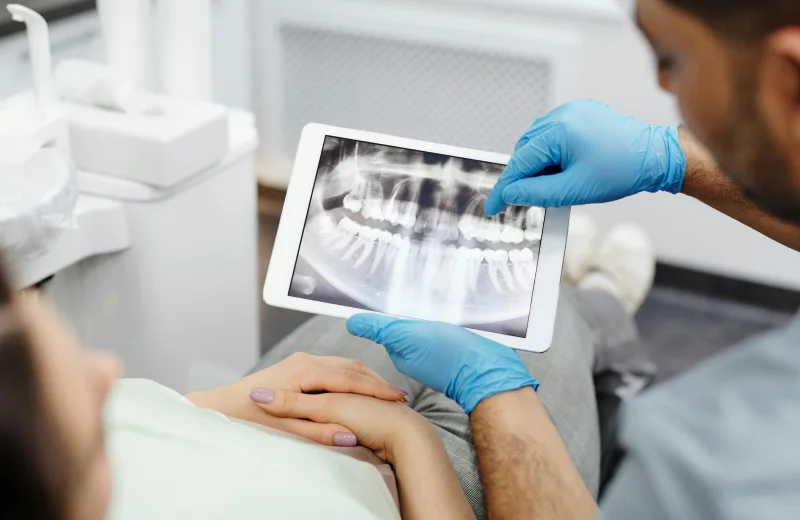
Read that last clause again, because it does all the work. This is a diagnosis of exclusion: you reach it once decay, a crack, a leaking filling and an inflamed pulp have been ruled out, not by ticking off symptoms on a website. Which is why a dentist looks and takes an x-ray rather than naming a toothpaste.
Fluid moving in tiny tubes, and the two ways to stop it
Under the enamel of the crown and the cementum of the root sits dentine, and dentine isn’t solid: it’s threaded with thousands of fluid-filled channels per square millimetre (the dentinal tubules) running in towards the pulp.
The accepted explanation for the pain is the hydrodynamic theory: a stimulus makes that fluid shift fast, the movement deforms nerve endings at the pulp end of the tubule, and the fast-conducting A fibres fire. Hence a pain that’s sharp and brief rather than dull.
Two things have to be true at once: the dentine has to be exposed, and the tubules have to be open all the way through. Exposed dentine with plugged tubules is silent, which is why plenty of people have visible root surface and feel nothing. That leaves only two ways to treat it: block the tubule, or make the nerve less excitable.
Published prevalence runs from 3% to 98%, which tells you something
Reported prevalence runs from about 3% to 98% depending on the study, with the more realistic estimates between 4.8% and 62.3% (Dam and colleagues, The Open Dentistry Journal, 2022). Anyone who quotes you one tidy percentage has picked their favourite study.
What the literature does agree on is softer: it’s reported most often by people aged roughly 30 to 50, more often by women, and most often on canines and premolars, the teeth at the corner of the arch where the brush bears down hardest.
Why your dentine got exposed in the first place
Almost always one of these, often two or three together.
• Gum recession. The root has no enamel, so once the gum moves the dentine is bare. Brushing too hard does it, gum disease in its later stages does it across whole quadrants, and thin gum over a prominent root does it with no help from you.
• Acid erosion. Acid dissolves the enamel surface and strips the plugs out of sealed tubules. Soft drinks (sugar-free included), citrus, wine, sports drinks, kombucha, vinegar dressings. Then reflux, the one people miss, because silent reflux causes no heartburn and often shows up first as wear inside the upper back teeth.
• Abrasion. Horizontal scrubbing with a stiff brush and a gritty paste cuts a notch at the neck of the tooth, where the enamel is thinnest.
• Grinding. Clenching wears the biting surfaces flat and flexes the tooth at the neck. Most grinders have no idea, and teeth grinding travels with other sleep problems, including obstructive sleep apnoea.
• Whitening. Peroxide passes through enamel and dentine and irritates the pulp, reversibly. It’s the complaint I hear most after whitening, and a reason to know what’s actually in a whitening gel before you buy one.
• A scale and clean. Heavy calculus sits over the root like a cap; take it off and the root meets cold water for the first time in years.
• A new filling. A week or two of sensitivity afterwards is normal. Sensitivity that worsens week by week is not.
How I work out whether it’s sensitivity, decay, a crack or a dying nerve
I ask a handful of questions, in roughly this order, and the answers usually settle it before I’ve picked up a mirror.
How long does it hurt once the cold is gone? The one I care about most. Genuine hypersensitivity switches off with the stimulus; thirty seconds of throbbing after you’ve swallowed is a pulp in trouble, and no toothpaste touches that.
Does it ever start by itself, and does it wake you? Sensitivity needs a trigger. Pain at two in the morning is an inflamed pulp until proven otherwise; the pulp is a closed chamber with nowhere to swell, and lying down raises the pressure inside it.
Is heat worse than cold? Sensitivity is a cold complaint. Once heat is worse, and especially once cold starts to feel soothing, the pulp is usually past saving.
How many teeth? Sensitivity is generous, often several and often both sides. One tooth alone points at decay, a crack or a failing filling.
Does it hurt when you let go of a bite? Pain on release rather than on clamping down is as close to a signature as a cracked cusp gives you.
The same thing as a table, as a guide to what to tell me rather than a substitute for the x-ray.
| What I ask | Dentine hypersensitivity | Decay | Cracked tooth | Irreversible pulpitis (a dying nerve) |
| What the pain feels like | Sharp, short, shooting | Sharp with sweet or cold; often nothing at all early on | Sharp, electric jolt on biting | Deep, throbbing ache |
| How long it lasts after the trigger stops | Seconds, then gone | Seconds; longer as the decay deepens | A moment, then gone | Lingers: 30 seconds to many minutes |
| Starts on its own | No | Only once the nerve is involved | No | Yes |
| Wakes you at night | No | Only once the nerve is involved | No | Often |
| Heat or cold | Cold, clearly | Cold and sweet | Cold often, but biting is the giveaway | Cold lingers early; later heat is worse and cold may even soothe |
| How many teeth | Often several, often both sides | Usually one | Usually one | Usually one |
| Typical trigger | Cold, sweet, acid, air, touch | Sweet, cold, food packing into a hole | Letting go of a bite, chewing something hard | Nothing at all, or heat |
The rule: stop buying toothpaste and get examined
If the pain lingers after the trigger has gone, starts on its own, wakes you at night, is worse with heat than cold, or appears when you release a bite, stop shopping for toothpaste and get examined. Those patterns point to the pulp or to a crack. Desensitising products fix neither, and they can take the edge off just enough that you put up with it for three more months while the problem gets dearer to solve. A crack that could have been crowned becomes one that needs the nerve out.
The same goes for pain that has been grumbling for months, and for pain that spreads away from its source along the jaw or towards the ear. Swelling, fever or a foul taste belongs in same-day emergency care, not in a toothpaste aisle.
Desensitising toothpaste works, but most people use it wrong
Start here. The published advice is conservative first, irreversible later, and desensitising toothpaste is the least invasive and cheapest option on the list. The only large practice-pattern data I know of is American, a picture of what dentists there do rather than Australian guidance, but the shape of it matches my own habits: among 1,862 patients treated by 171 dentists in the United States National Dental Practice-Based Research Network, potassium nitrate toothpaste was used for half of all patients, fluoride varnish for 28%, high-fluoride paste for 17% and restorative treatment for only 8% (Kopycka-Kedzierawski and colleagues, Journal of the American Dental Association, 2017).
What the actives do
• Potassium nitrate. Potassium ions diffuse along the tubule and make the nerve fibres at the far end less excitable. It calms the nerve, plugs nothing, and the effect builds: two to four weeks of twice-daily use before you can judge it.
• Stannous fluoride. Stannous deposits block the tubule openings while the fluoride works on the mineral surface. Relief tends to come faster than with potassium.
• 8% arginine with calcium carbonate and 1450 ppm fluoride. Forms a plug inside the tubule, and has outperformed a potassium formulation in published comparison.
• Calcium sodium phosphosilicate, sold as NovaMin in some markets. Lays a mineral layer over the surface. The trial evidence is short and modest, and one 12-week finding often cited for it concerns saliva chemistry rather than how the teeth feel. A reasonable option, not a proven one.
• Hydroxyapatite. The mineral teeth are made of, and a reasonable fluoride-free choice. The trials behind it are smaller and shorter than for the older actives, and fluoride is far better established against decay.
• 5000 ppm fluoride toothpaste from behind the pharmacy counter. Not a desensitiser as such, but it hardens the exposed surface, and it’s what I suggest when erosion or recession comes with a high decay risk.
The five things that decide whether it works
The product matters less than the method. Nearly everyone who tells me desensitising toothpaste did nothing was using it in one of these five ways.
The first is rinsing. You brush for two minutes, rinse with a mouthful of water, and wash the active straight down the sink. Spit the foam out and leave the rest. That’s the whole instruction; it’s printed on the tube, and nobody reads it.
The second is treating it as a toothpaste only. The best use of the stuff isn’t brushing at all. Last thing at night, put a smear on a clean fingertip, rub it onto the sore spot at the gumline, and leave it there. Nothing to eat or drink afterwards. Eight hours of undisturbed contact does more than two minutes of foam.
The third is impatience. Potassium nitrate builds slowly; give it four weeks of twice-daily use before you decide. Using it once on a bad day achieves nothing, and people do that.
The fourth is switching. Every fortnight a new tube, because the last one “didn’t work”, and every fortnight the clock restarts at zero. It’s the commonest reason people conclude nothing works, and it isn’t the toothpaste’s fault.
The fifth is the brush. A hard brush and a heavy hand caused a good share of these cases, and no active on earth outpaces a scrubbing hand. Soft brush. Light grip. Hold it like a pen, not a hammer.
One caveat. If the sensitivity is mild and doesn’t really bother you, doing none of this is a legitimate choice. Exposed dentine isn’t a disease that must be treated, and I won’t talk anyone into treating something that isn’t troubling them.
What makes it worse, usually with the best of intentions
Brushing harder, or switching to a grittier paste. The instinct is to scrub the sore area clean. Scrubbing is what wore the notch, and whitening and charcoal pastes that work by abrasion remove the very surface you’re trying to rebuild.
Avoiding the sore spot. Plaque builds there, the gum inflames, the recession advances and the sensitivity gets worse. Brush it gently, but brush it.
Brushing straight after acid. Enamel is softened for a while after anything acidic, and a brush at that moment takes some of it along. Wait an hour. It’s also how often acid hits the teeth that does the damage, not how much, so cut the frequency and use a straw.
Ignoring reflux. Treating the tooth while stomach acid keeps arriving is a losing game. If you have heartburn, a sour taste in the morning or unexplained wear inside the back teeth, the conversation about reflux and how it’s managed belongs with your GP or pharmacist, not with me.
Boil-and-bite guards from the chemist. They fit roughly, load the teeth unevenly, and I’ve seen them make both the grinding and the sensitivity worse.
In-practice treatments, from varnish to a graft
If four to six weeks of proper home care hasn’t shifted it, or the sensitivity is severe, or it sits on one or two teeth only, the answer is a diagnosis, not a different tube. An examination with bitewing x-rays separates exposed dentine from decay hiding between two teeth, which look identical from the outside.
Fluoride varnish. 5% sodium fluoride painted onto the exposed root. Quick, well evidenced, often the first thing I try. Not permanent, so it needs repeating.
Tubule sealers. Glutaraldehyde and HEMA solutions coagulate protein inside the tubules; oxalates precipitate crystals in them; resins lay a thin barrier over the top. The best reported figures run to about nine months, which tells you plainly they wear off, and resin margins can stain.
Restoring the notch. Where abrasion has cut a groove at the neck of the tooth, glass ionomer or composite covers the dentine and stops it deepening. For a deep notch that’s usually the answer, though any filling has a margin that can leak and will need replacing one day. Where grinding has worn teeth until the shape has gone, full coverage crowns rebuild them, but that’s a far bigger step and never a first move.
Lasers and iontophoresis. Iontophoresis uses a small electrical current to drive fluoride into the tubules; lasers aim to seal them. The evidence for both is still developing and results vary with the device, the settings and the protocol. I’d rather say that plainly than oversell it.
Treating the gum disease, and grafting. Where periodontal disease drives the recession, stabilising it comes first, and sensitivity usually settles as the inflammation resolves. The recession itself doesn’t come back. A graft can cover an advanced recession, but it’s surgery, usually with a donor site on the palate, and the coverage isn’t always complete.
A splint, or adjusting the bite. Where a heavy bite loads particular teeth, reducing the load treats the cause. I’m cautious with adjustment because enamel removed can’t be put back, so the splint goes first.
Root canal treatment. Last resort, and only with a clear diagnosis of an irreversibly inflamed or dead pulp. Taking a healthy nerve out to stop a tooth feeling cold is a permanent answer to a temporary question, and any plan that jumps to root canal treatment without a diagnosis behind it deserves a second opinion. Get one. I would.
Sensitivity after whitening or a clean is expected
Both bring people back in worried, and both are usually fine. After whitening, peroxide irritates the pulp and the tooth goes sensitive for a few days; that’s irritation, not damage. A potassium nitrate toothpaste for a week beforehand helps, so do shorter sessions and a day off when it builds, and a gel with a desensitiser in it is worth asking about before a supervised whitening course. After a scale and clean, the root the calculus was covering meets cold for the first time; expect a few days, occasionally a fortnight. If either is still there a month on, say so.
Managed, not cured, and the gum will not grow back
Where the cause was a single worn notch, restoring it usually settles the problem. Where the cause is still running (and recession, grinding and reflux all keep running), sensitivity is managed rather than cured; it comes back when the management stops. That’s not a failure of treatment, it’s what a chronic cause looks like, and I’d rather say so now than have you feel let down in eighteen months.
And the gum doesn’t grow back. Receded tissue doesn’t regenerate, at any age, with any toothpaste. It can sometimes be covered surgically and further loss prevented, but what’s gone is gone. Which is the best argument I know for taking the pressure off the brush today, not next year.
Questions I get asked about sensitive teeth
Why have my teeth suddenly gone sensitive? Usually a recent whitening course, a recent clean, a new filling, a harsher toothpaste, more acid in the diet, new reflux, or a stressful stretch that has you grinding. Sudden severe pain in one tooth is more likely a crack or a pulp problem; that’s an appointment, not a shopping trip.
Is sensitivity a sign of a cavity? It can be; decay causes cold and sweet sensitivity too. The differences are in the table above, but the reliable answer comes from an examination and an x-ray, not a symptom list on a website. The Australian Dental Association makes the same point about sensitive teeth and when to have them checked: toothpaste does nothing for sensitivity that decay is causing.
What if none of it works? Then the diagnosis is more likely wrong than the treatment. Reassess for cracks, failing fillings, pulp involvement and, occasionally, facial pain that isn’t coming from a tooth at all.
If it hasn’t settled in a month
A month of the right toothpaste, used properly, is a fair test. If the sensitivity is still there, it’s telling you something worth ten minutes in a chair, and you can decide with the dentists working here whether that means varnish, a filling or just keeping an eye on it.
Burwood Diamond Dental is at Suite 1, Level 1, 28 Burwood Road, Burwood NSW 2134. Phone (02) 9747 6835 or use online booking; fund claims go through HICAPS on the spot.
References
1. Holland, G.R., Narhi, M.N., Addy, M., Gangarosa, L. and Orchardson, R. (1997). Guidelines for the design and conduct of clinical trials on dentine hypersensitivity. Journal of Clinical Periodontology, 24(11), 808 to 813.
2. Dam, V.V., Nguyen, T.H., Trinh, H.A., Dung, D.T. and Hai, T.D. (2022). Advances in the Management of Dentin Hypersensitivity: An Updated Review. The Open Dentistry Journal, 16, e187421062201130.
3. Kopycka-Kedzierawski, D.T. and colleagues (2017). Management of dentin hypersensitivity by practitioners in The National Dental Practice-Based Research Network. Journal of the American Dental Association, 148(10), 728 to 736.
4. Australian Dental Association. Sensitive Teeth. teeth.org.au. https://www.teeth.org.au/sensitive-teeth
5. Better Health Channel, Victorian Government Department of Health. Dental erosion. https://www.betterhealth.vic.gov.au/health/conditionsandtreatments/dental-erosion
6. Healthdirect Australia. GORD (reflux). https://www.healthdirect.gov.au/gord-reflux
7. Healthdirect Australia. Teeth grinding (bruxism). https://www.healthdirect.gov.au/teeth-grinding
This article describes how tooth sensitivity is assessed and treated in general terms. It cannot tell you whether the tooth that hurts when you drink cold water has exposed dentine, a cavity, a crack or an inflamed pulp, because those four are distinguished by examination and x-rays rather than by symptoms alone. Tooth pain that lingers after the trigger has gone, starts without warning, or wakes you at night should be assessed in person by a registered dental practitioner rather than self-treated.