Bleeding gums can be easy to ignore, especially when they do not hurt. Yet regular bleeding, swelling, gum recession, or persistent bad breath may signal inflammation that needs attention. Australian clinical data show that gingivitis and periodontitis affect a large share of the population, with the risk rising sharply as people get older. Early gum inflammation can often improve with suitable home care and professional cleaning. Periodontitis is more serious because it damages the attachment and bone supporting the teeth. Understanding the latest gum disease statistics, warning signs and risk factors can help you seek care before loose teeth, infection or permanent bone loss develops.
How common is gum disease in Australia?
The latest national clinical study found gingivitis in 29% of Australian adults aged 15 and over. Around 30% had moderate or severe periodontitis. A later survey found that only 11% of adults reported having gum disease, which suggests that many people may not recognise the condition without a dental examination.
How Common Is Gum Disease in Australia?
Gum disease is one of the most common oral-health concerns affecting Australian adults. The exact percentage depends on whether researchers measure visible gum inflammation, moderate or severe periodontitis, self-reported disease or severe disease alone. Keeping these measures separate gives a more accurate picture than using one percentage to describe every form of periodontal disease.
| Gum-health measure | Reported figure | Population | Data period |
| Gingivitis | 29% | Adults aged 15+ | 2017–18 |
| Moderate or severe periodontitis | 30% | Adults aged 15+ | 2017–18 |
| Self-reported gum disease | 11% | Adults aged 18+ | 2021 |
| Gingivitis | 22% | Children aged 5–14 | 2012–14 |
| Moderate plaque accumulation | 43% | Children aged 5–14 | 2012–14 |
| Severe periodontal disease | More than 1 billion cases | Global population | Latest WHO estimate |
The Australian Institute of Health and Welfare reports clinically identified gingivitis in 28.8% of adults and moderate or severe periodontitis in 30.1%. Among children aged 5–14, 21.8% had gingivitis, and 43% had moderate plaque accumulation.
Why Do Gum-Disease Percentages Differ?
Different gum-disease statistics can all be correct because they measure different outcomes. A clinical examination can detect bleeding, gum recession, periodontal pockets and attachment loss. A telephone survey relies on a person already knowing or believing that they have gum disease. International estimates may use statistical modelling to compare countries with different data sources.
| Data method | What it measures | Main limitation |
| Clinical examination | Inflammation, pockets, recession and attachment loss | Conducted less frequently |
| Self-reported survey | Whether people believe they have gum disease | Undiagnosed cases may be missed |
| International model | Estimated severe-disease prevalence across countries | Relies on source data and modelling assumptions |
In the 2021 National Dental Telephone Interview Survey, 11% of adults said they had gum disease. The survey had no clinical examination component, so that result measures awareness and self-reporting rather than the complete diagnosed burden. Adults who usually visited only after developing a dental problem were about twice as likely to report gum disease as those who usually attended for a check-up.
Is Gum Disease Becoming More Common?
The proportion of Australian adults with moderate or severe periodontitis increased from approximately 23% in 2004–06 to 30% in 2017–18. This change may reflect several influences, including population ageing, longer retention of natural teeth, accumulated risk exposure and differences between study populations. The data shows a national trend, but it does not prove that every community or age group experienced the same increase.
Retaining natural teeth for longer is a positive health outcome, but those teeth remain exposed to plaque, smoking, diabetes, dry mouth and other risks across more years. This means preventive care and periodontal monitoring remain important throughout adulthood.
What Is the Difference Between Gingivitis and Periodontitis?
Gingivitis and periodontitis are related, but they are not interchangeable terms. Gingivitis affects the surface gum tissue and does not involve periodontitis-related loss of attachment or supporting bone. Periodontitis affects deeper structures and can eventually loosen teeth. This distinction changes the treatment goal and the long-term maintenance required.
| Feature | Gingivitis | Periodontitis |
| Main area affected | Surface gum tissue | Gum attachment and supporting bone |
| Common signs | Redness, swelling and bleeding | Pockets, recession, mobility and bone loss |
| Supporting-bone loss | No | Yes |
| Pain | Often painless | May remain painless until advanced |
| Reversibility | Often reversible | Existing damage is not usually fully reversible |
| Long-term care | Based on personal risk | Ongoing periodontal maintenance is often required |
Gingivitis
Gingivitis usually develops when bacterial plaque collects along the gumline. The body responds with inflammation, which may make the gums red, swollen, tender or likely to bleed during brushing. Some people also notice persistent bad breath or an unpleasant taste. At this stage, the inflammation remains in the gum tissue and has not caused periodontitis-related bone loss. Plaque-induced gingivitis can often resolve when plaque and hardened deposits are removed and daily cleaning improves.
Periodontitis
Periodontitis affects the attachment between the gum and tooth and can damage the alveolar bone supporting the teeth. As attachment is lost, deeper spaces called periodontal pockets can form. These areas can retain plaque below the gumline and become difficult to clean at home. Progressive periodontitis may cause gum recession, exposed roots, sensitivity, loose teeth, drifting teeth or changes in the bite. Advanced disease can result in tooth loss. Periodontitis can often be controlled, but the tissue and bone already destroyed do not normally return through routine cleaning alone.
Does Gingivitis Always Progress to Periodontitis?
Gingivitis does not inevitably progress to periodontitis in every person. Susceptibility varies according to immune response, smoking, diabetes, genetics, plaque control and several other factors. However, persistent inflammation should not be ignored because it creates an environment in which deeper periodontal damage may develop. Pain is not a reliable way to judge severity. Some people have advanced pocketing and bone loss without strong discomfort. A periodontal examination is needed to determine whether inflammation remains limited to the gums or has affected the supporting structures.
Who Is Most Affected by Periodontal Disease?
Gum disease can affect people at any age, but Australian data shows clear differences by age, sex, education, dental-service use and access to care. These figures describe population associations rather than determining one person’s diagnosis.
How Does Periodontitis Prevalence Change With Age?
Periodontitis becomes much more common with age. The latest national clinical data found moderate or severe disease in 12% of people aged 15–34, rising to 69% among adults aged 75 and over.
| Age group | Moderate or severe periodontitis |
| 15–34 | 12% |
| 35–54 | 33% |
| 55–74 | 51% |
| 75+ | 69% |
Age does not create bacterial plaque by itself. Older adults have had more years of exposure to plaque, smoking, dry mouth, health conditions and irregular care. Periodontal damage can also accumulate gradually. Many older adults now keep their natural teeth longer, increasing the need for continued gum care.
Are Men More Likely to Have Gum Disease?
Australian clinical data found higher rates among males. Gingivitis affected 35% of males and 23% of females, while moderate or severe periodontitis affected 35% of males and 26% of females. These differences may relate to smoking patterns, preventive behaviour, oral-hygiene habits, health conditions, and dental attendance. Being male does not mean that gum disease is inevitable, and being female does not remove the need for periodontal assessment.
How Do Education and Dental Access Affect Gum Health?
Periodontitis was more common among people with lower educational attainment and those eligible for public dental care. Adults whose last dental visit was prompted by a problem also had a higher prevalence than people whose last visit was a check-up.
| Patient characteristic | Moderate or severe periodontitis |
| Completed Year 10 or less | 45% |
| Completed Year 11 or higher | 26% |
| Last visit was for a dental problem | 37% |
| Last visit was a check-up | 26% |
| Eligible for public dental care | 43% |
| Ineligible for public dental care | 26% |
These are associations rather than proof that education or public-care eligibility directly causes disease. Income, treatment cost, access, health literacy, preventive attendance and other social factors can affect how early inflammation is detected and managed.
What Do the Statistics Show for Children?
Gingivitis can affect children even though destructive adult-type periodontitis is far less common at younger ages. Australian clinical data found gingivitis in 22% of children aged 5–14 and moderate plaque accumulation in 43%.
Childhood gingivitis was more common among boys, Indigenous children, children in lower-income households, and those living in remote or very remote areas. Children whose last dental visit was for a problem also had slightly higher gingivitis prevalence than those attending for a check-up. These differences reflect wider oral-health and access inequalities rather than identity itself being a biological cause.
Do Gum-Disease Rates Vary Across Australia?
AIHW data from 2017–18 found that periodontal disease prevalence varied between states and territories, ranging from 37% in Queensland to 21% in South Australia. Geographic differences may reflect population age, smoking, health conditions, socioeconomic factors, access to dental care, and the characteristics of the study sample. A person’s suburb or state does not determine whether they have gum disease. Local access and individual risk factors are more useful for clinical decisions.
What Causes Gum Disease and Which Factors Increase Risk?
Bacterial plaque at the gumline is the main local cause of gingivitis and periodontitis. Disease severity, however, depends on the interaction between the biofilm and the body’s immune response. Smoking, diabetes, genetics, dry mouth, medicines and access to preventive care can alter susceptibility or healing.
Plaque at the Gumline
Plaque bacteria and their by-products irritate the gum tissue. The immune system responds to that bacterial challenge, producing redness, swelling and bleeding. If plaque remains and a susceptible person develops deeper inflammation, attachment and bone around the teeth may begin to break down.
Crowded teeth, calculus, poorly contoured restorations and difficult-to-reach areas can make plaque removal harder. These factors retain bacteria, but they do not remove the need to assess smoking, diabetes and other personal risks. The Australian Dental Association identifies plaque as the primary cause of periodontal disease and recommends daily mechanical plaque control.
Smoking and Tobacco Use
Smoking is one of the strongest modifiable risk factors for periodontitis. Tobacco exposure can alter immune function, reduce healing, increase attachment and bone loss, and reduce the response to periodontal treatment. Smokers may also show less obvious bleeding even while active disease is present.
Stopping tobacco use can improve healing and reduce future oral health risks. Patients who smoke should discuss cessation support with their dental and medical professionals rather than assuming that a lack of bleeding means their gums are healthy. WHO identifies tobacco use as a major periodontal disease risk.
Diabetes and Blood-Glucose Control
Diabetes and periodontitis have a two-way relationship. Diabetes, particularly when blood glucose is poorly controlled, can increase susceptibility to periodontal inflammation and tissue destruction. Periodontitis is also associated with poorer glycaemic control.
This does not mean that every person with diabetes develops gum disease. Effective plaque control, diabetes management and professional monitoring can reduce risk. Periodontal care supports oral health but does not replace medical treatment for diabetes.
Genetics, Hormonal Changes, Medicines and Dry Mouth
Some people may be more susceptible because of family history or genetic factors that influence the inflammatory response. Hormonal changes during puberty, pregnancy and menopause can also affect how gum tissue responds to plaque.
Certain medicines can reduce saliva, alter immune response or contribute to gum enlargement. Dry mouth makes oral cleaning and bacterial control more difficult. Stress, poor nutrition, immune conditions and obesity may also influence periodontal health, although their effects are not identical in strength. Healthdirect includes pregnancy, family history, diabetes, stress and medicines causing dry mouth among recognised gum-disease risk factors.
Does Teeth Grinding Cause Periodontitis?
Teeth grinding and clenching do not create the bacterial inflammation that defines periodontitis. Bruxism should therefore not be presented as a primary cause of gum disease.
Heavy bite forces may still complicate an existing periodontal problem. Teeth that have already lost supporting bone may become more mobile or uncomfortable under repeated clenching. Bite assessment can form part of a wider treatment plan, but controlling plaque and inflammation remains central.
How Can You Tell if You Have Gum Disease?
Gum disease may cause visible warning signs, but symptoms alone cannot reveal its stage. Gingivitis and periodontitis can both cause bleeding, while advanced bone loss may develop with limited pain. A professional examination is needed to measure attachment, pocket depth and supporting-bone levels.
Early Warning Signs
Early signs of gum inflammation:
- Bleeding during brushing or interdental cleaning
- Red or swollen gums
- Gum tenderness
- Persistent bad breath
- An unpleasant taste
- Plaque or calculus near the gumline
- Sensitivity around the gums
Healthy gums should not bleed repeatedly. The Australian Dental Association recommends seeking assessment when bleeding continues despite consistent oral-hygiene practices.
Signs of More Advanced Disease
Possible signs of periodontitis include:
- Gum recession
- Teeth appearing longer
- Spaces forming between teeth
- Pus near the gumline
- Loose or drifting teeth
- Pain when chewing
- Changes in the bite
- A partial denture fitting differently
- Tooth loss
These signs can have more than one cause. Gum recession, for example, may relate to periodontal disease, aggressive brushing, thin gum tissue or tooth position. An examination is needed before treatment can be recommended.
What Happens During a Periodontal Examination?
A periodontal assessment may include a visual examination, plaque and calculus assessment, bleeding measurements, gum-recession records, tooth-mobility testing and periodontal probing. A periodontal probe is a small measuring instrument used to assess the space between the gum and tooth. Deeper readings may indicate attachment loss or inflammation, but one isolated measurement does not determine the entire diagnosis. Distribution, bleeding, recession, medical history and X-ray findings must also be considered.
When Are Dental X-Rays Needed?
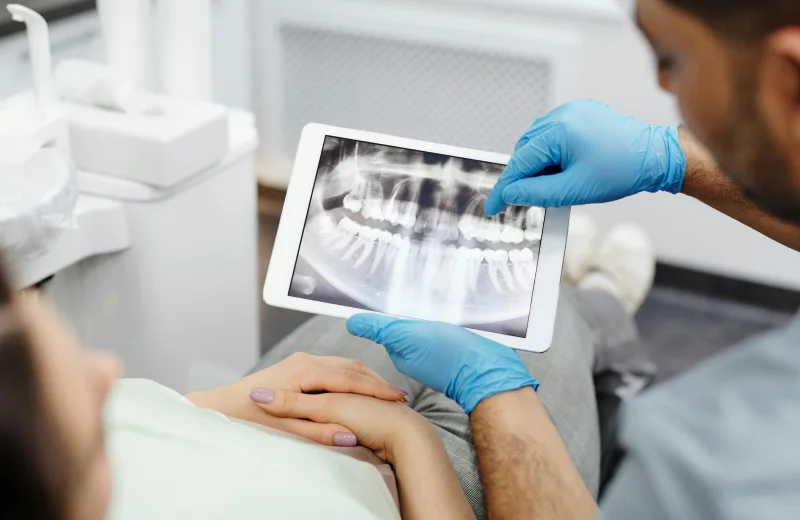
Dental X-rays may help assess the height and pattern of supporting bone around the teeth. They can also reveal calculus, tooth decay and other structures that are difficult to evaluate visually. X-rays do not show active gum inflammation by themselves. They should be interpreted alongside periodontal measurements and clinical findings. Comparing current images with previous records may help determine whether bone loss has progressed.
What Do Periodontitis Stage and Grade Mean?
The current periodontal classification uses stages and grades to describe the condition more precisely.
- Stage I–IV describes disease severity and management difficulty.
- Grade A–C estimates likely progression and future risk.
- Staging may consider attachment loss, bone loss, tooth loss and case difficulty.
- Grading may consider documented progression, smoking and glycaemic control.
This system replaced several older labels and helps clinicians plan care according to both current damage and future risk.
When Is Urgent Assessment Needed?
Arrange a prompt dental visit for persistent bleeding, recession, bad breath, pus, increasing swelling or tooth movement.
Urgent dental or medical help may be required for:
- Rapid facial or neck swelling
- Fever with oral swelling
- Severe or increasing pain
- Uncontrolled bleeding
- Difficulty swallowing
- Difficulty breathing
Burwood Diamond Dental lists swollen or bleeding gums and dental abscesses among conditions that may require emergency dental attention.
Can Gum Disease Be Reversed or Treated?
The treatment outlook depends on whether inflammation is limited to the gums or has damaged deeper supporting tissues. Gingivitis can often resolve without permanent damage. Periodontitis can usually be managed and stabilised, but established attachment and bone loss are not ordinarily restored through routine cleaning.
Can Gingivitis Be Reversed?
Plaque-induced gingivitis can often be reversed when plaque and calculus are controlled. Treatment may involve professional cleaning, improved brushing, daily interdental cleaning and correction of local factors that retain plaque.
Bleeding may take time to settle as the tissue heals. Gentle cleaning should usually continue rather than stopping completely because of bleeding. Healthdirect states that gingivitis can be reversed with dental treatment and good oral hygiene.
What Does Initial Periodontal Treatment Include?
The first stage of care may include:
- Explanation of the diagnosis
- Personalised brushing and interdental-cleaning instruction
- Smoking and risk-factor support
- Professional removal of plaque and calculus
- Cleaning below the gumline
- Scaling and root-surface debridement
- Review after healing
- Repeat pocket and bleeding measurements
The European Federation of Periodontology recommends a stepwise approach beginning with patient education, plaque control, health-behaviour support and professional mechanical plaque removal.
When May Advanced Treatment Be Required?
Further treatment may be considered when deep pockets, inflammation or difficult bone defects remain after initial care. Options can include periodontal surgery, regenerative treatment, management of gum recession or referral to a periodontist.
Stage IV periodontitis may also require coordinated restorative care where tooth loss, mobility or bite collapse has affected function. Treatment decisions depend on the prognosis of individual teeth, overall health and the patient’s goals.
How Can Gum Disease Be Prevented?
Prevention centres on disrupting plaque every day, controlling modifiable risks and arranging professional reviews based on personal needs. Mouthwash or occasional cleaning cannot compensate for plaque that remains around the gumline and between the teeth.
Brush and Clean Between the Teeth Daily
The Australian Dental Association recommends brushing for two minutes twice a day with age-appropriate fluoride toothpaste and cleaning between the teeth once daily with floss or interdental brushes.
A practical routine includes:
- Use a soft-bristled manual or electric toothbrush.
- Aim the bristles carefully along the gumline.
- Avoid aggressive scrubbing.
- Clean between tight contacts with floss.
- Use correctly sized interdental brushes where spaces allow.
- Clean beneath bridges and around implants as instructed.
- Replace worn toothbrushes or brush heads.
The best interdental tool depends on tooth spacing, restorations, dexterity and gum condition.
Control Modifiable Risks
Prevention also involves managing factors that make disease more likely or harder to treat.
Helpful actions include:
- Stop smoking or request cessation support.
- Work with your medical team to control diabetes.
- Discuss dry mouth or medication effects.
- Maintain a balanced diet.
- Seek help when manual dexterity limits cleaning.
- Follow professional advice during pregnancy.
- Attend prescribed periodontal-maintenance visits.
Burwood Diamond Dental notes that patients with gum disease or diabetes may need more frequent check-ups than people with lower oral-health risk.
What Can Be Checked During a Dental Visit?
A gum-health assessment may include:
- Plaque and calculus levels
- Gum colour and inflammation
- Bleeding points
- Periodontal pocket depths
- Gum recession
- Tooth mobility
- Supporting-bone changes
- Existing crowns and bridges
- Tissue health around implants
- Dental X-rays where justified
- Smoking, diabetes and other risk factors
- Suitable home-cleaning techniques
Burwood Diamond Dental provides general check-ups, professional dental cleaning, emergency care and implant monitoring for patients in Burwood and Sydney’s Inner West. The clinic also assesses inflammation, bleeding and bone changes around older dental implants. Gum disease can remain painless until supporting tissue has already been damaged. Patients experiencing bleeding, recession, persistent bad breath or loose teeth can arrange a comprehensive dental assessment to identify the cause and discuss appropriate care.
Key Findings About Gum-Disease Prevalence and Prevention
Gum disease is common in Australia. The latest national clinical data found gingivitis in 29% of adults and moderate or severe periodontitis in 30%. Self-reported prevalence was much lower, showing that many people may not know they have the condition. Periodontitis becomes considerably more common with age and is associated with smoking, diabetes, socioeconomic disadvantage and problem-based dental attendance. Gingivitis can often be reversed, while periodontitis usually needs long-term control. Bleeding, recession, bad breath and loose teeth should not be ignored. Daily plaque removal, smoking avoidance, diabetes management and risk-based dental care remain the main foundations of prevention.