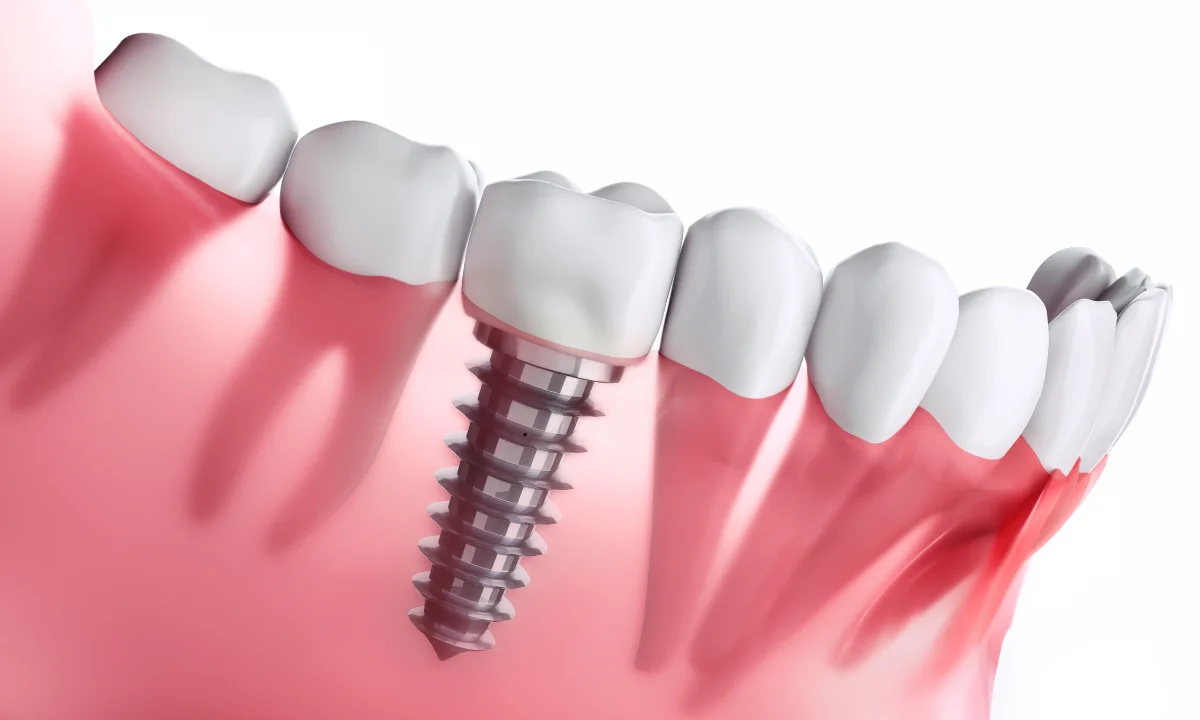
Dental implants are widely used across Australia as a long-term solution for missing teeth, especially for patients looking for stable chewing function and a natural-looking smile. In most cases, implants integrate well with the jawbone and perform for many years without major issues. However, some patients begin to experience discomfort, movement, or gum changes around an older implant, raising an important question: does this implant need repair or full replacement?
This situation usually develops slowly. A dental implant may feel completely fine for years, then small changes begin to appear: slight tenderness while chewing, mild gum swelling, or a change in how the bite feels. These signs are often ignored because implants are assumed to be permanent. While the titanium implant post itself is designed for long-term use, the surrounding gum and bone structure can still change over time due to infection, pressure, or natural bone loss.
Dental implants generally have a high success rate, often above 90–95% over 10+ years, but longevity depends heavily on oral hygiene habits, lifestyle, and regular dental maintenance. Patients who smoke, grind their teeth, or skip dental check-ups tend to face complications earlier than others. Even with good care, it is still normal for implant-supported crowns or connecting parts to require maintenance or replacement after 10–15 years.
Key point to understand early
Not every “problem implant” means failure. There are three different clinical scenarios:
| Condition Type | What is affected | Typical action |
| Crown wear | Visible tooth part | Replacement or repair |
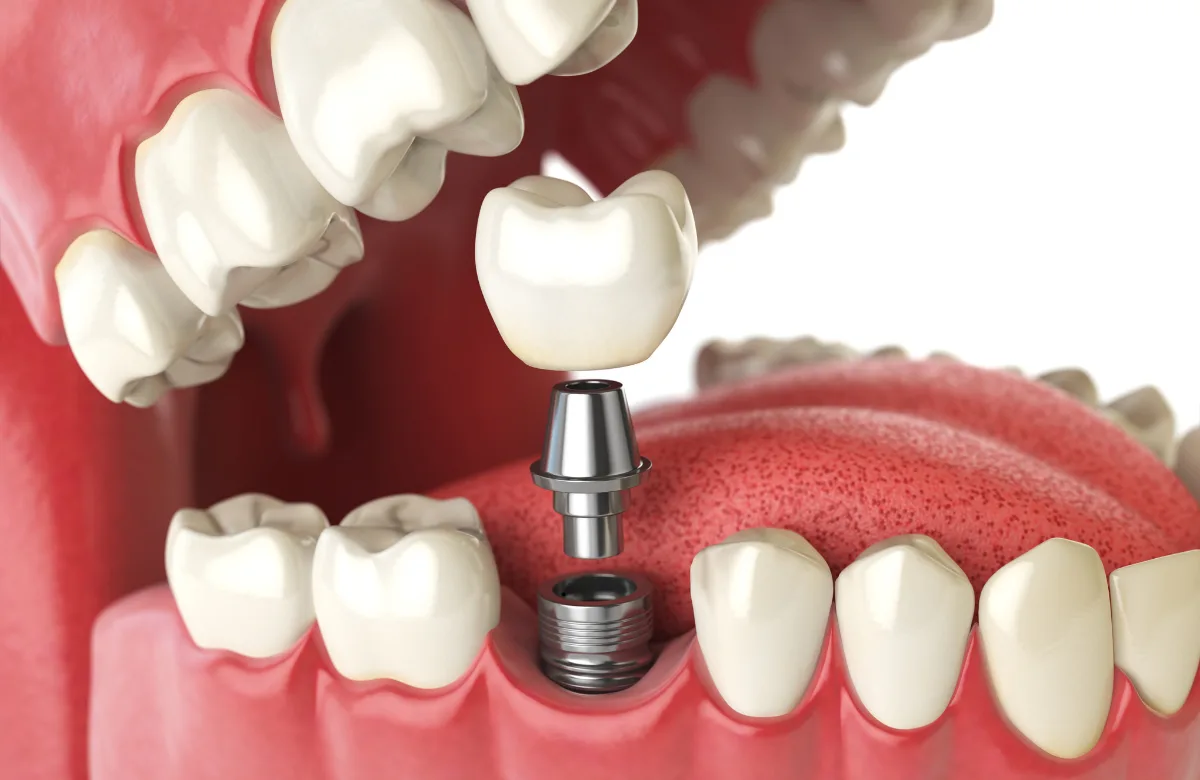
| Abutment issue | Connector between implant & crown | Adjustment or replacement |
| Implant fixture failure | Implant inside bone | Surgical removal & replacement |
This distinction is important because treatment planning changes completely depending on which part is affected.
Why early evaluation matters
When patients delay checking symptoms like bleeding gums, discomfort, or slight movement, the condition may progress into peri-implant disease. This affects the bone around the implant and can reduce the chances of saving it. Early assessment using clinical examination and imaging helps dentists decide whether a simple repair is enough or whether full replacement is required.
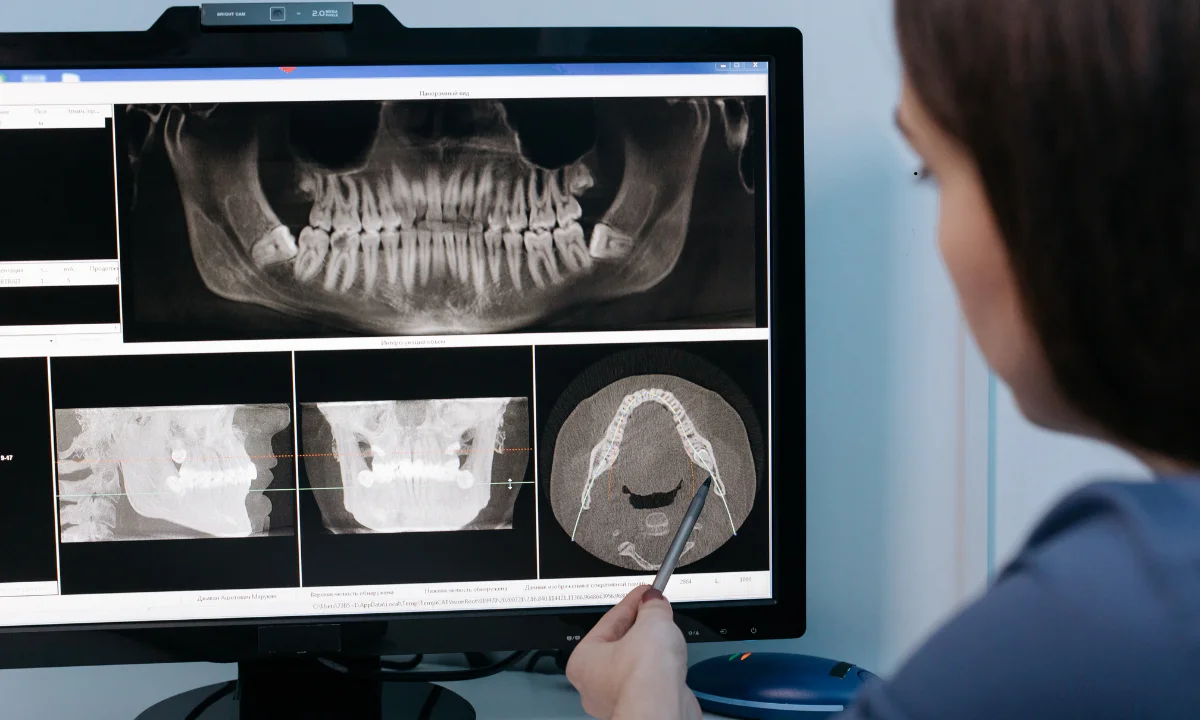
Modern dental practices in Australia use tools such as digital X-rays and CBCT 3D scans to evaluate bone levels and implant stability with precision. This helps avoid unnecessary procedures and ensures treatment is based on actual bone and tissue condition rather than surface symptoms alone.
What patients usually notice first
Most implant-related concerns begin with small changes such as:
- Mild discomfort while chewing on one side
- Slight gum swelling near the implant
- A feeling that the bite “does not align properly”
- Occasional bad taste in the mouth
- Minor bleeding while brushing around the implant
These signs do not always mean implant failure, but they should never be ignored because they often indicate early-stage inflammation or mechanical stress.
When an Old Dental Implant Becomes a Concern
Once early discomfort, gum changes, or bite differences start appearing, the next step is understanding what is actually happening beneath the surface. Dental implant issues do not start as sudden failure in most cases. They usually develop through slow biological or mechanical changes around the implant and supporting bone. In Australian dental clinics such as Burwood Diamond Dental, implant concerns are usually grouped into specific clinical conditions. This classification helps dentists decide whether the implant can be saved, repaired, or needs full replacement.
1. Peri-implant mucositis (early inflammation stage)
This is the earliest stage of implant-related gum disease. It affects only the soft gum tissue around the implant and has not yet reached the bone.
Common features include:
- Red or swollen gums near the implant
- Bleeding during brushing or flossing
- Mild sensitivity in the area
At this stage, the implant itself is still stable. With professional cleaning and improved oral hygiene, this condition is often reversible. Ignoring it, however, can lead to a more serious condition.
2. Peri-implantitis (progressive infection with bone loss)
This is one of the most important causes of implant failure. It involves both gum infection and gradual bone loss around the implant fixture.
Typical signs include:
- Persistent gum inflammation
- Pus or discharge near the implant
- Bad taste in the mouth
- Noticeable bone loss on X-rays
- Gradual loosening of the implant
Peri-implantitis does not heal on its own. It requires active treatment such as deep cleaning, antibiotic therapy, and in advanced cases, surgical intervention or implant removal.
3. Osseointegration failure (bonding failure with bone)
Dental implants rely on a process called osseointegration, where the titanium post fuses with the jawbone. In some cases, this integration does not fully succeed or weakens over time.
This may happen due to:
- Poor bone quality
- Early infection during healing
- Excess pressure during healing phase
- Underlying medical conditions like diabetes
When osseointegration fails, the implant may feel loose or unstable. In most cases, this requires removal and replacement after healing.
4. Mechanical implant failure (structural breakdown)
Not all implant problems come from infection. Some are mechanical in nature and affect the physical parts of the implant system.
This can include:
- Fracture of the implant post (rare but serious)
- Loosening of the abutment screw
- Cracks or damage in the crown
- Repeated crown detachment
Mechanical issues are often easier to manage if detected early. In many cases, only the crown or abutment needs replacement rather than the full implant.
5. Bone loss around the implant (structural support weakening)
The stability of a dental implant depends heavily on surrounding bone. If bone gradually shrinks or deteriorates, the implant loses its support.
Bone loss can occur due to:
- Long-term gum disease
- Infection (peri-implantitis)
- Excessive bite force over time
- Smoking or poor healing response
Once bone loss reaches a significant level, implant replacement often requires bone grafting before a new implant can be placed.
Clinical insight (how dentists interpret these conditions)
Dentists do not decide implant replacement based on a single symptom. Instead, they assess:
- Gum condition (inflammation level)
- Bone stability (X-ray/CBCT analysis)
- Implant mobility
- Patient discomfort level
- Infection presence
This layered diagnosis helps separate:
- Treatable cases (repair or cleaning)
- Progressive cases (surgical treatment)
- Failure cases (implant removal and replacement)
| Condition | Tissue affected | Severity | Typical treatment |
| Mucositis | Gum only | Mild | Cleaning + hygiene control |
| Peri-implantitis | Gum + bone | Moderate to severe | Deep cleaning / surgery |
| Osseointegration failure | Bone integration | Severe | Removal + replacement |
| Mechanical failure | Implant components | Variable | Repair or replacement |
| Bone loss | Jawbone support | Progressive | Grafting + possible replacement |
Warning Signs That Your Dental Implant May Be Failing
Dental implant problems usually do not appear suddenly. Most patients in Australia first notice small changes in comfort, bite feel, or gum condition before any major failure develops. These early signs are the body’s way of showing that something around the implant is under stress, inflamed, or losing stability.
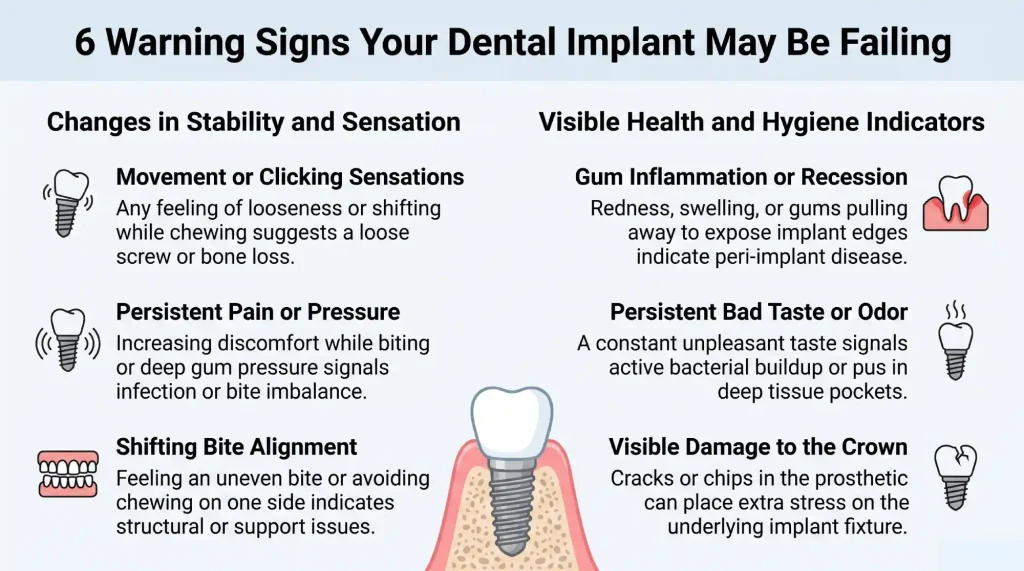
1. Movement or looseness in the implant or crown
A healthy dental implant should feel completely stable, almost like a natural tooth. Any sensation of movement is a strong warning sign.
Patients may notice:
- Slight shifting while chewing
- Clicking or pressure movement
- Crown feeling “not fixed properly”
This may indicate:
- Loose abutment screw (minor repair case)
- Bone loss around implant (serious concern)
- Implant fixture failure (replacement required)
Even minimal movement should not be ignored, as it often indicates loss of stability at the bone level.
2. Persistent pain or pressure discomfort
Some sensitivity after dental work is normal, but ongoing or increasing pain around an implant is not.
Typical patterns include:
- Pain while biting food on one side
- Pressure sensation deep in the gum
- Discomfort that worsens over time
This may be linked to:
- Infection around the implant
- Overloading from bite imbalance
- Early peri-implant bone irritation
Pain that does not improve over time usually requires clinical assessment and imaging.
3. Gum changes around the implant
The gums play a major role in protecting the implant. Any visible change in gum health is an important diagnostic clue.
Look for:
- Gum recession exposing implant edges
- Redness or swelling
- Bleeding during brushing or flossing
These symptoms often point toward early peri-implant disease, especially when combined with bad breath or discomfort.
4. Persistent bad taste or bad breath
A constant unpleasant taste or odour that does not improve with brushing is often linked to bacterial buildup around the implant.
This can indicate:
- Deep gum infection (peri-implantitis)
- Pus formation in deeper tissue pockets
- Poor cleaning around crown margins
This symptom is often underestimated but is clinically important because it signals active infection.
5. Difficulty chewing or bite changes
A stable implant should not change how your bite feels. If you notice changes, it may mean structural or alignment issues are developing.
Patients often report:
- Uneven bite pressure
- Avoiding chewing on one side
- Food getting stuck near implant area
This can result from:
- Crown wear or damage
- Shifting implant position
- Bone support loss affecting alignment
6. Visible damage to crown or prosthetic part
Sometimes the issue is not inside the bone but on the visible part of the implant system.
Signs include:
- Cracks or chips in the crown
- Loose or worn-down chewing surface
- Discolouration or structural wear
These are usually repairable, but if ignored, they can place extra stress on the implant fixture itself.
How Dentists Diagnose a Failing Dental Implant
When a patient presents with pain, looseness, or gum changes around an implant, the first step is not treatment but accurate diagnosis. In modern Australian dental practice, including clinics such as Burwood Diamond Dental, implant assessment is done using a combination of clinical examination and advanced imaging. This helps identify whether the issue is reversible or requires replacement.
A correct diagnosis is important because symptoms alone can be misleading. For example, gum swelling may come from minor inflammation, while the same symptom combined with bone loss may indicate peri-implantitis.
1. Clinical examination (first assessment stage)
Dentists begin with a detailed oral examination to assess visible and physical signs around the implant.
They check:
- Gum colour (redness or inflammation)
- Bleeding during probing
- Presence of swelling or pus
- Implant stability (manual mobility test)
- Condition of crown and abutment
This step helps identify whether the issue is superficial or deeper in the bone structure.
2. Probing and gum pocket measurement
A periodontal probe is used to measure the depth between the gum and implant surface.
Findings may show:
- Shallow pockets → healthy or mild inflammation
- Deep pockets → possible peri-implantitis or bone loss
This test helps determine how far infection has progressed beneath the gum line.
3. Dental X-rays (bone level evaluation)
X-rays are essential for assessing internal bone structure that cannot be seen visually.
They help identify:
- Bone loss around implant threads
- Changes in bone density
- Position of implant within jawbone
- Signs of infection progression
X-rays are often the first imaging step in diagnosing implant stability.
4. CBCT 3D scan (advanced diagnostic imaging)
A CBCT (Cone Beam Computed Tomography) scan provides a detailed 3D view of the implant and surrounding bone.
It allows dentists to:
- Measure exact bone loss levels
- Check implant angle and positioning
- Detect hidden infection areas
- Plan surgical removal or replacement if required
This is the most accurate method used in complex implant cases.
5. Bite and functional assessment
Dentists also evaluate how the implant performs under real chewing pressure.
They check:
- Bite alignment (occlusion balance)
- Pressure distribution during chewing
- Excess force on implant crown
- Grinding or clenching patterns
This helps identify mechanical overload as a cause of failure.
Treatment Options for Old or Failing Dental Implants
Once diagnosis is complete, the treatment plan depends on the severity of the condition. Not every implant problem requires removal. In many cases, simple repair or cleaning can restore stability. Dentists generally follow a step-based treatment decision system.
Option 1: Conservative repair (mild cases)
If the implant is still stable in the bone, treatment may involve:
- Crown replacement if worn or damaged
- Abutment tightening or replacement
- Professional deep cleaning around implant
- Removal of plaque or infected tissue
This approach is used when:
- No bone loss is present
- Implant fixture is stable
- Infection is in early stage
Option 2: Infection control treatment (moderate cases)
When infection is present but implant is still stable:
- Deep cleaning (debridement)
- Antibiotic therapy if required
- Gum treatment around implant
- Regular monitoring visits
This aims to stop disease progression and protect remaining bone.
Option 3: Implant removal and replacement (severe cases)
When implant stability is lost or bone damage is advanced:
- Surgical removal of implant
- Cleaning infected bone tissue
- Bone grafting if bone loss is significant
- Healing phase (several months)
- Placement of new titanium implant
- Custom crown restoration
This is the most advanced treatment path and is used when saving the implant is no longer possible.
Prevention & Long-Term Implant Care
After treatment or replacement, long-term success depends on maintenance. Dental implants can last many years, but only when supported by proper care habits.
Daily care routine
- Brush twice daily using a soft toothbrush
- Clean between teeth using interdental brushes or floss
- Use antibacterial mouth rinse if recommended
Professional maintenance
- Dental check-ups every 6 months
- Regular cleaning around implant area
- Early detection of gum inflammation
Lifestyle protection
- Avoid smoking and nicotine use
- Manage teeth grinding with a nightguard
- Reduce excessive biting force on hard foods
Final Conclusion: When to Act on a Dental Implant Problem
Old dental implants do not always fail suddenly. Most issues develop slowly through infection, bone loss, or mechanical stress. Early symptoms such as gum swelling, discomfort, or slight movement should never be ignored, because they often indicate underlying changes in bone or tissue health. With modern dental care in Australia, including advanced diagnostics like CBCT scans and structured implant replacement techniques, most cases can be successfully treated. In many situations, implants can be repaired or restored without full removal if addressed early.
However, when bone loss or structural failure occurs, replacing the implant becomes the most reliable option to restore function and protect long-term oral health. If you notice any persistent symptoms around an old implant, a professional dental evaluation is the safest next step to avoid further complications and ensure the stability of your smile for years ahead.