Wearing braces is an exciting step toward achieving a straighter, healthier smile, but it also requires a bit more care when it comes to cleaning your teeth. With brackets, wires, and bands in place, food and plaque can easily get trapped, leading to a higher risk of cavities, gum disease, and even extended orthodontic treatment time if not cleaned properly. At Burwood Diamond Dental, we understand that maintaining proper oral hygiene with braces is essential for ensuring the long-term success of your treatment and keeping your teeth healthy. This guide will walk you through everything you need to know about how to effectively clean your teeth while wearing braces.
Why Proper Braces Care Is Essential
Braces may straighten your teeth, but they also create several nooks and crannies where food particles, plaque, and bacteria can accumulate. If not properly cleaned, this buildup can lead to a variety of issues, such as tooth decay, gum disease, and staining. It’s not just about keeping your teeth looking good now; it’s about setting yourself up for a healthy smile in the future. Regular, thorough brushing and flossing are key to preventing complications during your orthodontic treatment.
Choosing the Right Tools for Cleaning Teeth with Braces
To clean your teeth with braces, using the right tools is crucial. Regular toothbrushes may not be enough to effectively clean around the brackets and wires. The best way to ensure your braces are well-maintained is by using specialized tools designed for this purpose.
Start with a soft-bristled toothbrush or an electric toothbrush, which can help you clean thoroughly without damaging your braces or gums. Electric toothbrushes are particularly effective, as they can remove plaque more efficiently and clean the hard-to-reach areas around the brackets.
Another essential tool is floss threaders or interdental brushes. These tools are designed to help you clean between your teeth and around your brackets. Floss threaders allow you to pass floss under the wire, while interdental brushes are small, cone-shaped brushes that can clean between your teeth and around the brackets more effectively than regular floss alone.
Lastly, mouthwash is an excellent addition to your oral care routine. An alcohol-free fluoride mouthwash can help strengthen your enamel and prevent cavities, while an antibacterial mouthwash can reduce the amount of harmful bacteria in your mouth.
How to Brush Your Teeth with Braces
Brushing your teeth with braces requires a little extra time and attention, but it’s important to make sure you’re cleaning all the right areas. The first step is to use the right technique. Hold your toothbrush at a 45-degree angle to your gum line, gently brushing in a circular motion. Focus on the top and bottom parts of each bracket, ensuring you’re brushing both above and below the wire. Pay extra attention to the gum line and the areas near the brackets, where plaque tends to accumulate.
It’s important to brush your teeth for 2 to 3 minutes. Take your time to ensure you clean every surface of each tooth, including the back teeth and the chewing surfaces, where food can get trapped easily. Don’t forget to brush your tongue as well, as bacteria can accumulate here and lead to bad breath.
Professional Care: Why Regular Checkups Are Crucial
While maintaining good oral hygiene at home is essential, it’s also important to visit your dentist and orthodontist regularly for professional cleanings and checkups. During these visits, your dentist will remove any plaque or tartar that has built up on your teeth, and your orthodontist will check that your braces are properly adjusted and functioning correctly.
It’s generally recommended to have a professional cleaning every 6 months, and to visit your orthodontist every 4-6 weeks for adjustments. These appointments help ensure that your orthodontic treatment progresses smoothly and that any potential problems are addressed before they cause delays in your treatment.
At Burwood Diamond Dental, we’re committed to helping you maintain excellent oral hygiene throughout your braces journey. If you have any questions or need guidance on your dental care routine, don’t hesitate to contact us. We’re here to ensure that your smile stays healthy and beautiful throughout your orthodontic treatment.
How to Floss with Braces
Flossing with braces can seem challenging at first, but it’s an essential part of maintaining good oral hygiene. With the brackets and wires in place, food particles and plaque can easily get trapped between your teeth and around the brackets, areas that a toothbrush alone can’t reach. Without proper flossing, plaque can build up, leading to cavities and gum disease.
The Importance of Flossing with Braces
Flossing is crucial for preventing plaque buildup between the teeth, especially with braces. While brushing removes surface plaque, flossing targets the tight spaces between your teeth and the brackets, where food can easily get trapped. If plaque remains in these areas, it can lead to cavities and gum inflammation.
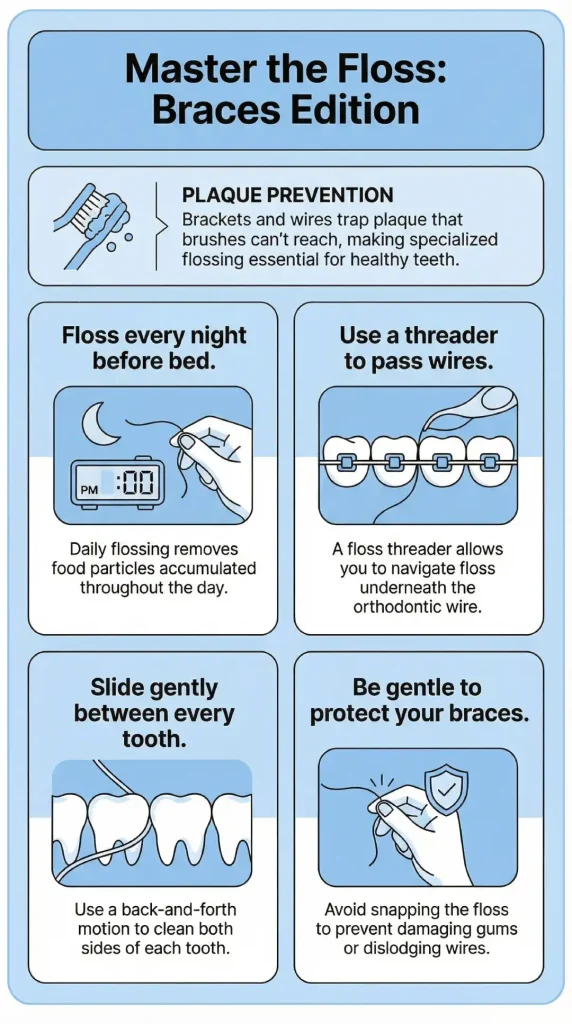
Even with braces, flossing should be done at least once a day, ideally at night before you go to bed, to remove the plaque and food particles that may have accumulated during the day.
Using a Floss Threader
One of the best tools for flossing with braces is a floss threader. A floss threader allows you to pass floss underneath the wire, which is essential for cleaning between your teeth while wearing braces. Here’s how to use it:
- Thread the Floss: Start by threading the floss through the threader. Position the threader under the wire, gently pulling it through to the other side.
- Floss Between Teeth: Once the floss is under the wire, gently slide it between your teeth, using a back-and-forth motion to clean both sides of each tooth.
- Be Gentle: When flossing, be gentle to avoid damaging your gums or braces. Avoid snapping the floss, as this can hurt your gums or dislodge the wires.
Using Interdental Brushes
In addition to floss threaders, interdental brushes are another excellent tool for cleaning between your teeth and around the braces. These small, cone-shaped brushes are designed to fit between your teeth and under your wires to remove plaque and food particles effectively. Interdental brushes are available in various sizes to accommodate different gaps between your teeth.
To use an interdental brush:
- Insert the brush between the teeth and gently move it back and forth to clean the spaces between your teeth and brackets.
- Make sure to clean both the front and back of each tooth and the areas around the brackets.
Water Flossers: An Easy Alternative
For those who find traditional flossing difficult, water flossers are a great alternative. Water flossers use a stream of pulsating water to remove food particles and plaque between your teeth and around your braces. These devices can be particularly helpful for people with braces, as they are gentle on the gums and can clean areas that are tough to reach with string floss.
Water flossers are easy to use, just aim the nozzle at your gum line and between your teeth, and let the water do the work. It’s recommended to use a water flosser after brushing for an extra layer of cleaning and bacteria removal.
The Right Brushing Techniques for Braces
Cleaning your teeth properly while wearing braces requires more than just brushing after meals. The braces themselves create multiple surfaces where plaque and food can accumulate, so it’s important to use the correct brushing technique and tools. A thorough brushing routine can help you avoid potential issues like staining, gum disease, and cavities during your treatment.
Brushing Steps for a Thorough Clean
- Start with Water: Before you begin brushing, rinse your mouth with water to loosen any food particles stuck in your braces.
- Angle the Toothbrush Correctly: Hold your toothbrush at a 45-degree angle to your gum line to ensure you clean both your teeth and gums effectively. This angle allows you to target the plaque that builds up at the gum line, where gum disease can begin.
- Brush Around the Brackets: Focus on brushing around each bracket. Gently brush the top and bottom of the bracket, as food particles and plaque tend to build up in these areas. Make sure to brush above and below the wire.
- Circular Motions: Use gentle circular motions to remove plaque from each tooth’s surface. Don’t use harsh scrubbing motions, as this can damage both your gums and braces.
- Brush All Tooth Surfaces: Don’t forget to brush the chewing surfaces of your teeth, the inside surfaces, and the back teeth. Plaque can hide in these areas, leading to tooth decay if not cleaned properly.
Timing Your Brushing
You should brush your teeth for at least 2-3 minutes to make sure you clean every surface of every tooth. If you’re brushing after meals, try to brush immediately to prevent food from sitting on your teeth for too long.
Mouthwash: An Extra Step for Clean Teeth
Mouthwash is a great addition to your braces cleaning routine, but it should not replace brushing or flossing. It can provide an extra layer of protection against plaque and bacteria, leaving your mouth feeling fresh. There are different types of mouthwash to choose from, each serving a different purpose.
Types of Mouthwash for Braces
Fluoride Mouthwash
- A fluoride mouthwash is a great choice for braces wearers because it helps to strengthen their enamel and prevent cavities. Since braces create areas where plaque can build up, fluoride mouthwash offers additional protection against decay. Using fluoride-rich products is a key part in preventing cavities while your enamel is under extra pressure from the brackets.
Antibacterial Mouthwash
- Antibacterial mouthwash helps kill harmful bacteria that cause plaque, gum disease, and bad breath. It’s a good idea to use this type of mouthwash after brushing and flossing to ensure that your mouth stays as clean as possible throughout the day.
How to Use Mouthwash Effectively
After you’ve finished brushing and flossing, use mouthwash to rinse your mouth thoroughly. Swish the mouthwash around your mouth for 30 seconds, making sure it reaches all areas around the brackets and wires. Avoid eating or drinking for at least 30 minutes after using mouthwash to allow the fluoride to work and provide full protection to your teeth.
Regular Dental Visits and Professional Cleanings
While brushing and flossing at home are essential, regular visits to your dentist and orthodontist are equally important to maintain optimal oral health during braces treatment.
Why Professional Cleanings Matter
During your dental checkups, your dentist will professionally clean your teeth, removing any tartar buildup that can’t be removed with regular brushing and flossing. Regular cleanings will help keep your teeth and gums healthy and prevent issues like gum disease and cavities. It’s recommended to schedule cleanings at least twice a year, even while wearing braces.
Orthodontic Checkups
You should also visit your orthodontist every 4-6 weeks to ensure that your braces are progressing as expected. Regular checkups allow the orthodontist to make adjustments to your braces and ensure they are working effectively to straighten your teeth. These visits also provide an opportunity for your orthodontist to check for any potential issues like wire breakage or bracket loosening.
Troubleshooting Common Bracing Problems
Wearing braces comes with its share of challenges, and while good oral hygiene habits can help you maintain a healthy mouth, issues may arise. Fortunately, many common braces problems can be addressed with a few easy steps.
Gum Irritation and Bleeding
It’s not uncommon for your gums to feel irritated or even bleed when you first get braces or after an adjustment. This is usually due to the additional pressure placed on your gums as the braces begin to align your teeth. Gum bleeding can also occur if plaque has built up along the gum line, particularly if you haven’t been brushing or flossing thoroughly.
To address gum irritation and bleeding, start by brushing gently along the gum line with a soft-bristle toothbrush. Be careful not to brush too aggressively, as this can cause more damage to the gums. It’s also essential to floss daily, especially between the brackets, where food and plaque tend to get trapped. If your gums are still irritated, you can try rinsing with a saltwater solution, which helps reduce inflammation and promotes healing. Simply dissolve half a teaspoon of salt in a cup of warm water and swish it around your mouth for about 30 seconds.
In some cases, if gum bleeding or irritation persists, it may be a sign of gum disease or another issue. If this happens, schedule a visit with your orthodontist or dentist to get checked out and receive professional treatment.
Food Getting Stuck in Braces
Braces create numerous tight spots around the brackets and wires, which makes it easy for food to get stuck in hard-to-reach areas. While this may seem like an unavoidable problem, there are several solutions to keep your braces clean and prevent food from lingering.
First, always floss after every meal to remove any food particles from between your teeth and around the brackets. Using a floss threader or interdental brushes can make this process easier by allowing you to clean between the teeth and under the wires more effectively. In addition, consider using a water flosser, which can help flush out food and bacteria from areas that are difficult to reach with traditional floss.
Another good practice is to brush immediately after meals to ensure food doesn’t sit in your braces for too long. If you’re unable to brush right away, rinse your mouth with water to remove particles, or carry a small travel toothbrush with you for on-the-go cleaning.
Pain or Discomfort from Braces
After your braces are first placed or following adjustments, it’s common to experience some discomfort as your teeth begin to shift. This pain usually goes away within a few days, but in the meantime, there are ways to manage it.
To alleviate pain, start by taking over-the-counter pain relievers like ibuprofen or acetaminophen, following the recommended dosage on the package. Additionally, a cold compress applied to the outside of your mouth can help reduce swelling and provide relief from soreness. If the discomfort is particularly intense, it’s best to avoid hard or sticky foods that could aggravate the pain.
Another effective way to relieve pain caused by braces is by applying orthodontic wax to any sharp brackets or wires that are irritating your gums or the inside of your mouth. Simply roll a small piece of wax and place it over the problem area. This provides a protective barrier and can make a significant difference in reducing discomfort.
If the pain persists for more than a few days or you experience sharp, localized pain, it’s a good idea to visit your orthodontist. They will check your braces to ensure they are correctly adjusted and make any necessary repairs.
Loose or Broken Braces
At some point during your orthodontic treatment, you may encounter issues like loose brackets or broken wires. This can happen due to trauma (like biting into something hard) or wear and tear over time. It’s important to address any damage promptly to prevent your treatment from being delayed.
If a bracket becomes loose, try to keep it in place until your orthodontist can fix it. If the bracket is still attached to the wire, it might be possible to leave it as is, but you should contact your orthodontist to schedule a repair. If a wire becomes loose or pokes out of the bracket, use a pair of sterilized tweezers to move the wire back into place if you can do so safely. If that’s not possible, use orthodontic wax to cover the sharp end of the wire until you can get to your orthodontist.
While waiting for your appointment, try to avoid hard foods that could cause further damage to the brackets or wires. If your braces are causing you significant discomfort, your orthodontist may be able to replace the broken part during a short visit.
Pain from Braces Adjustments
Every few weeks, your orthodontist will make adjustments to your braces to help align your teeth. These adjustments can cause mild discomfort as your teeth shift and get used to their new positions. This pain usually subsides within a few days after the adjustment.
To help manage this discomfort, you can take over-the-counter pain relievers, apply a cold compress to the outside of your mouth, and avoid eating hard or sticky foods. If you’re still in pain after a few days, reach out to your orthodontist. They may be able to make adjustments to your braces to relieve the pressure and make you more comfortable.
Common Problems with Braces and How to Avoid Them
The key to preventing common braces problems is consistency and the right care. Regular brushing, flossing, and maintenance, along with visits to your orthodontist, are essential to ensure your treatment is progressing smoothly. Avoiding hard, sticky, and sugary foods can also help prevent damage to your braces and keep your mouth free of harmful bacteria.
Diet and Oral Hygiene: What to Eat and What to Avoid
Your diet plays a significant role in maintaining oral health while wearing braces. While braces don’t restrict you from eating most foods, certain types of food can damage your braces, cause food to get stuck, or promote plaque buildup, which can lead to cavities and gum disease.
Foods to Avoid with Braces
Sticky foods like caramel, gummy bears, and chewing gum can get stuck in your braces and are difficult to remove. These foods can also promote plaque buildup and increase your risk of cavities. Hard foods like nuts, popcorn, and ice can damage your braces or even break the brackets, leading to delays in your treatment.
Sugary foods and drinks, including sodas, candy, and sweetened coffee, should also be avoided or consumed sparingly. These foods contribute to plaque buildup and increase the chances of developing cavities.
Foods That Are Safe to Eat
On the other hand, you can enjoy a variety of foods that are braces-friendly. Soft fruits like bananas, berries, and peaches are safe to eat and can provide the nutrients you need. Cooked vegetables like carrots, spinach, and zucchini are great options, as they are soft enough to eat without causing damage to your braces. Dairy products like cheese and yogurt are also good choices, as they promote strong teeth and healthy gums.
Drinking plenty of water throughout the day will help rinse food particles from your braces and keep your mouth hydrated, which is important for preventing bacteria from building up.
Common Braces Cleaning Questions
How often should I replace my toothbrush with braces?
You will need to change your brush much more often, usually every 4 to 6 weeks. The metal brackets act like sandpaper on the bristles, causing them to fray and wear out faster than they would on smooth teeth.
Why do my gums bleed when I clean my braces?
Bleeding is usually a sign of gingivitis (gum inflammation). It means plaque has been sitting at the gum line. The solution is actually to brush and floss more thoroughly in that area, not to avoid it.
Can I use whitening toothpaste with braces?
It is best to wait. Whitening toothpaste only whitens the parts of the tooth it touches. If you use it with braces, you might end up with reverse tanning spots, darker squares on your teeth where the brackets used to be.
Is an electric toothbrush safe for my wires?
Yes, absolutely. Modern electric brushes are very safe and highly recommended for orthodontic patients because they do the hard work of breaking up biofilm for you.
Professional Care at Burwood Diamond Dental
Even with a perfect home routine, you still need professional help to keep your mouth in top condition. During your regular adjustment appointments at our Burwood clinic, our team checks the health of your enamel and the firmness of your gums. We can see areas that you might be consistently missing and show you how to adjust your technique. These hygiene checks are a core part of your orthodontic journey, ensuring that your health stays on track with your alignment.
Professional Scaling with Braces
Many people think they can skip their 6-monthly professional cleans while they have braces, but the opposite is true. Our hygienists have specialized tools to clean around your wires and remove the hardened tartar that your toothbrush cannot touch. Keeping up with your professional cleans prevents permanent staining and keeps your gums healthy, which actually helps your teeth move faster. We work alongside your orthodontic plan to make sure your smile is as clean as it is straight.
Final Thought: The Reward of a Healthy, Straight Smile
The effort you put into cleaning your teeth today will pay off the moment your braces are removed. There is nothing quite like the feeling of seeing a perfectly aligned, bright, and healthy smile in the mirror for the first time. By mastering these brushing and flossing techniques and staying disciplined with your tools, you are ensuring that your investment in braces is a total success. At Burwood Diamond Dental, we are here to support you every step of the way, from your first wire to your final retainer.