Tooth pain can be worrying, especially when it starts suddenly, keeps getting worse, or comes with swelling around the gum, jaw, cheek, or face. Many people try to wait it out because they hope the pain will settle, but some dental infections need quick care before they become more painful or harder to treat. One …


Tooth pain can be worrying, especially when it starts suddenly, keeps getting worse, or comes with swelling around the gum, jaw, cheek, or face. Many people try to wait it out because they hope the pain will settle, but some dental infections need quick care before they become more painful or harder to treat. One of the most important problems to recognise early is a tooth abscess. Knowing the main tooth abscess signs can help you understand when toothache is no longer just toothache, when swelling or a bad taste may point to infection, and when it is time to contact a dentist for proper care. A dental abscess may begin with a deep cavity, cracked tooth, gum disease, trauma, or infection around the tooth root. It may cause severe toothache, gum swelling, pus, bad breath, fever, or facial swelling. At Burwood Diamond Dental, patients with tooth pain, suspected dental infection, swollen gums, or dental emergencies can contact the clinic for advice and an appointment.
What Is a Tooth Abscess?
A tooth abscess is a pocket of pus caused by a bacterial infection. It can form near the root of a tooth, inside the gum, or in the tissues that support the tooth. The infection often starts when bacteria enter through tooth decay, a deep cavity, a cracked tooth, a chipped tooth, gum disease, or a previous dental problem. Once bacteria reach the dental pulp or the tissues around the tooth root, the body reacts by sending immune cells to fight the infection. This creates pus, swelling, pressure, and pain.
A tooth abscess is also called a dental abscess or an abscessed tooth. Some people use the term gum abscess when the swelling or pus appears in the gum. These terms are closely related, but the exact type of abscess depends on where the infection starts. A periapical abscess usually begins inside the tooth and affects the tooth root. A periodontal abscess usually starts in the gum and supporting bone. A gingival abscess may be more limited to the gum tissue. A dentist can confirm the type after examining the tooth, gum, surrounding tissues, and sometimes taking dental X-rays.
Tooth Abscess vs Dental Abscess vs Gum Abscess
A tooth abscess usually means the infection is linked with a tooth or tooth root. A dental abscess is a wider term that can include infections around the teeth or gums. A gum abscess is usually used when the swelling or pus is mainly in the gum area. For a patient, the names are less important than the signs. Severe tooth pain, gum swelling, pus, bad taste, facial swelling, fever, or pain when biting should be checked because all of these may point to infection.
This difference matters because treatment depends on the source of infection. If the abscess begins inside the tooth, root canal treatment may be needed to remove the infected dental pulp and save the tooth. If the tooth is badly damaged, tooth extraction may be needed. If the infection is mainly in the gum and supporting tissues, cleaning around the gum and draining the pus may be part of care. This is why a dental appointment is important. Painkillers may reduce discomfort for a short time, but they do not remove the source of the infection.
Why Tooth Abscess Signs Should Not Be Ignored
Tooth abscess signs should not be ignored because dental infections can worsen if the cause is left untreated. A small gum bump, mild swelling, or occasional tooth pain may seem manageable at first, but infection can spread from the tooth root into the jaw, face, neck, throat, or other areas in serious cases. The aim of early dental care is to find the source, control the infection, relieve pain, and protect the tooth where possible.
Ignoring symptoms can also make treatment more difficult. A tooth that could have been saved with root canal treatment may become too damaged if infection continues. Gum infection can affect the surrounding bone and nearby teeth. Swelling can become more painful and may affect eating, speaking, sleeping, and daily life. If you are in Burwood and have tooth pain, swollen gums, or possible infection, booking a general dental check-up or contacting the clinic for emergency advice can help you get a clearer answer before the condition becomes more serious.
Common Tooth Abscess Signs You Should Not Ignore
Tooth abscess signs can vary from person to person. Some people have severe toothache and swelling right away, while others first notice a small gum bump, bad taste, or pain when chewing. The signs may also depend on whether the infection is inside the tooth, around the root, in the gum, or near a wisdom tooth. The most useful approach is to look at the full pattern of symptoms rather than one sign alone.
A tooth abscess often causes symptoms because infection creates pressure, inflammation, and pus. Pain may be constant or may come and go. Swelling may be small at first and then increase. A bad taste may appear if the abscess drains. Fever or swollen lymph nodes may show that your body is responding to infection. Below are the most important signs to recognise.
Severe or Throbbing Tooth Pain
Severe toothache is one of the most common tooth abscess signs. The pain may feel deep inside the tooth or gum, and it may be sharp, throbbing, shooting, or constant. Some people describe it as a pulsing pain that matches their heartbeat. It may become worse at night, when lying down, or when pressure builds around the infected area. The pain may also spread into the jaw, ear, neck, cheek, or side of the face, which can make it hard to tell exactly which tooth is causing the problem.
This type of pain is different from short, mild sensitivity. If pain is strong, keeps returning, or does not settle with normal care, it should be checked by a dentist. Severe or persistent tooth pain can happen when bacteria have reached the dental pulp or the tissues around the tooth root. At that stage, the tooth may need professional treatment rather than waiting for the pain to pass.
Pain When Biting or Chewing
Pain when biting or chewing can be another warning sign. The affected tooth may feel sore when you eat, touch it, or press your teeth together. Some people feel a sharp pain only when they bite down, while others feel a deep pressure that lingers after chewing. This can happen because the tissues around the tooth root are inflamed, swollen, or infected. Even normal chewing force can irritate the area and trigger pain.
Bite sensitivity should not be ignored if it appears with swelling, bad taste, gum redness, or a throbbing toothache. It can suggest that the infection is affecting the ligament or bone around the tooth. It can also happen with cracked teeth, deep cavities, loose fillings, or gum disease, all of which may allow bacteria to reach deeper tissues. A dentist can test the tooth, check the bite, examine the gum, and take X-rays if needed to find the source. If the tooth can be saved, root canal treatment may be one option depending on the condition of the tooth.
Sensitivity to Hot, Cold, or Sweet Foods
Tooth sensitivity can happen for many reasons, but sensitivity linked with a tooth abscess may feel stronger, last longer, or appear with other infection signs. You may feel pain after drinking hot tea or coffee, eating ice cream, drinking cold water, or eating sweet foods. The sensitivity may start as a short zing and then become a deeper ache. If the dental pulp is inflamed or infected, temperature changes can irritate the nerve inside the tooth.
Sensitivity alone does not always mean abscess, but sensitivity plus persistent toothache, gum swelling, chewing pain, bad breath, or a bad taste needs attention. A deep cavity, cracked tooth, or damaged filling can expose the inner tooth layers and allow bacteria to move deeper. Early treatment may prevent the infection from spreading further. If a patient in Burwood notices sensitivity that is getting worse or is limited to one painful tooth, a dental check-up can help confirm whether the cause is decay, a crack, gum recession, infection, or another dental issue.
Swollen, Red, or Tender Gums
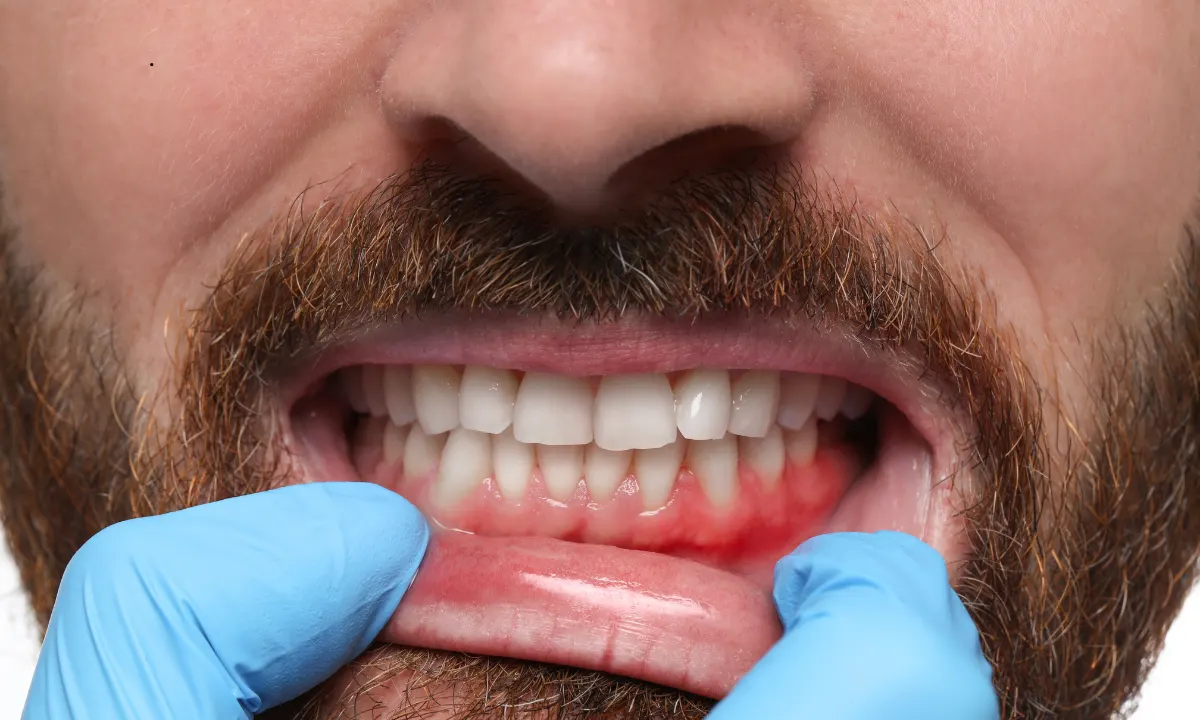
Swollen gums near one tooth can be a clear sign of local infection. The gum may look red, shiny, raised, or irritated. It may feel warm, sore, tender, or painful when touched. Sometimes the swelling is small and easy to miss. In other cases, the gum swelling becomes large enough to affect chewing or brushing. Gum swelling around a tooth may suggest a gum abscess, periodontal abscess, or infection draining from the tooth root.
Gum swelling becomes more concerning when it appears with severe tooth pain, pus, bad taste, loose teeth, or facial swelling. It may also happen if food gets trapped under the gum, if gum disease creates deep pockets, or if an impacted wisdom tooth is infected. Gentle brushing is still important, but the area should be assessed by a dental professional.
Pimple on the Gum, Gum Boil, or Pus Drainage
A small pimple-like bump on the gum can be a major tooth abscess sign. Dentists may caall this a gum boil, sinus tract, or parulis. It can appear as a red, yellow, or white bump near the affected tooth. Sometimes it is painful, and sometimes it is not. The bump may release pus or fluid, especially when pressure builds. This pus can taste salty, bitter, metallic, or foul. Some people notice sudden relief after fluid drains, but that does not mean the infection is gone.
A gum boil often means the body has created a drainage path for infection. The pressure may reduce for a short time, but bacteria can remain inside the tooth, gum, or jawbone. This is why popping, squeezing, or trying to drain the area at home is not safe. It can irritate the tissue and may spread bacteria. A dentist needs to find the source of the pus and treat it properly. Depending on the case, treatment may involve drainage, root canal treatment, gum cleaning, antibiotics in selected cases, or tooth extraction if the tooth cannot be saved.
Bad Breath or Bitter, Salty, or Foul Taste
Bad breath or a bad taste in the mouth can happen when pus drains from an abscess. The taste may be bitter, salty, sour, metallic, or foul. Some people notice it after biting down, touching the gum, or waking up. Others notice a sudden rush of bad-tasting fluid followed by temporary pain relief. This may happen if the abscess ruptures or drains through the gum.
Bad taste is easy to dismiss, especially if there is no severe pain at the same time. However, bad taste with gum swelling, tooth tenderness, facial swelling, or a pimple on the gum should be checked. Mouthwash may mask the smell for a short time, but it does not remove an infection inside the tooth or gum. If the cause is a dental abscess, professional treatment is needed to remove the source and stop the infection from returning.
Facial, Cheek, Jaw, or Neck Swelling
Facial swelling is one of the more serious tooth abscess signs. Swelling may begin near the gum or jaw and then spread to the cheek, face, or neck. The skin may feel tight, warm, or tender. You may notice one side of the face looks fuller than the other. Jaw swelling can make chewing painful, and neck swelling can feel uncomfortable or worrying. Swelling linked with dental infection should be assessed quickly because it may suggest that infection is spreading beyond the tooth.
Facial swelling with fever, difficulty swallowing, difficulty breathing, confusion, or rapidly increasing pain needs urgent medical attention. If swelling is mild but clearly linked with tooth pain or gum infection, you should still contact a dentist as soon as possible.
Fever, Chills, or Swollen Lymph Nodes
Fever, chills, and swollen lymph nodes may appear when the body is fighting infection. Lymph nodes under the jaw or in the neck can become tender or swollen. You may feel tired, weak, hot, cold, or generally unwell. These symptoms are important because they may mean the problem is no longer limited to a simple toothache.
A fever with facial swelling or dental pain should be taken seriously. It does not always mean a severe complication, but it does mean the body is reacting to infection. If you cannot reach a dentist and symptoms are severe, or if you have trouble swallowing or breathing, urgent medical help may be needed. For less severe but still concerning symptoms, contacting a dentist quickly can help stop the infection before it becomes more difficult to manage.
Loose Tooth or Tooth That Feels Raised
A tooth abscess can sometimes make the affected tooth feel loose, tender, or slightly raised. This may happen when infection and pressure affect the tissues supporting the tooth. The tooth may feel different when you bite, as if it touches before the other teeth. Some people also feel that the tooth is being pushed outward or upward. If the supporting bone or gum is affected, the tooth may become wobbly.
A loose tooth in an adult should always be checked, especially if it comes with pain, swelling, gum boil, or bad taste. The cause may be gum disease, trauma, infection, or damage around the tooth root. Early dental assessment can help identify whether the tooth can be stabilised or treated. Delaying care may increase the risk of tooth loss or more involved treatment later.
Can You Have a Tooth Abscess Without Pain?
Yes, it is possible to have a tooth abscess without strong pain. This surprises many people because they expect an abscess to always cause severe toothache. In some cases, the tooth nerve may be badly damaged or dead, which can reduce pain even though infection remains. In other cases, the abscess may drain through a small gum opening, lowering pressure and giving temporary relief. The absence of pain does not always mean the absence of infection.
A painless or low-pain abscess can still show signs such as a gum boil, bad taste, pus drainage, mild swelling, loose tooth, discoloured tooth, or pressure when biting. Some people notice a recurring bump on the gum that comes and goes. Others notice salty or foul-tasting fluid but do not feel much pain. This can lead to delay, which gives the infection more time to affect the tooth root, gum, jawbone, or nearby tissues.
Why Pain May Stop Even If Infection Remains
Pain may reduce when the abscess drains or when the nerve inside the tooth is no longer healthy. If the nerve dies, the tooth may stop sending strong pain signals, but bacteria can still be active inside the root canal system or around the root tip. This is one reason a tooth can seem “better” for a while and then flare up again later with swelling, bad taste, or renewed pain.
This pattern is common enough that it should be explained clearly to patients. Pain relief after a rush of foul-tasting fluid may mean the abscess has ruptured or drained, but it does not mean the infection has been removed. The source may still need professional dental treatment. A dentist may need to clean the infection through root canal treatment, drain the abscess, treat the gum, or remove the tooth if it cannot be restored.
Types of Dental Abscess and Where Symptoms Appear
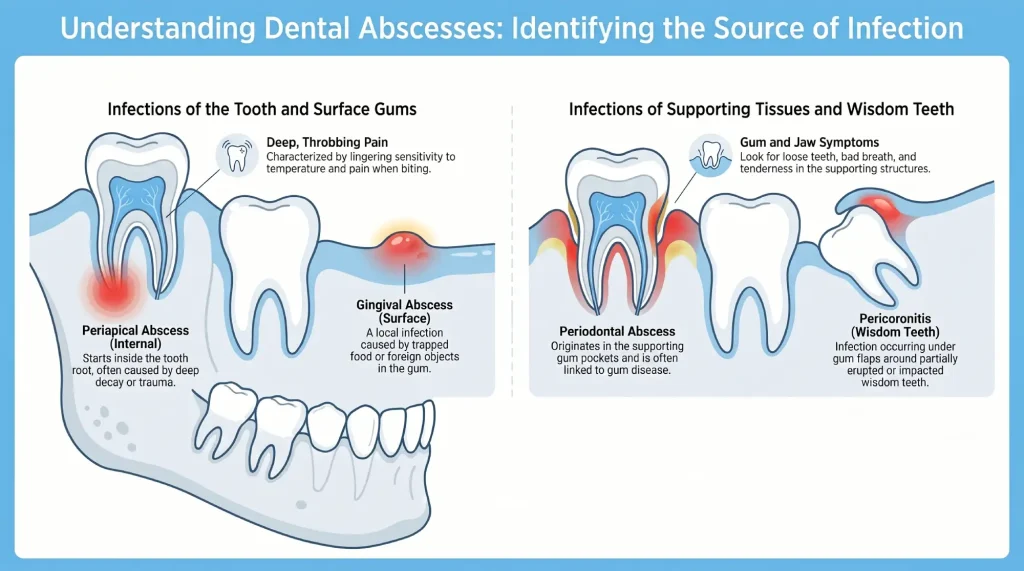
There are different types of dental abscesses, and each one can cause slightly different signs depending on where the infection begins. Understanding the type can help explain why one patient has deep tooth pain while another has gum swelling, bad taste, or pain around a wisdom tooth. However, patients do not need to self-diagnose the type. A dentist can identify the source by examining the tooth, gum, bite, surrounding tissues, and X-rays if needed.
The main types include periapical abscess, periodontal abscess, gingival abscess, and infection around a partially erupted wisdom tooth, often called pericoronitis. These types can overlap in symptoms because they all involve bacterial infection, inflammation, and possible pus buildup. The difference is mainly the starting point.
Periapical Abscess
A periapical abscess usually starts inside the tooth and forms around the tooth root or root tip. This often happens when bacteria reach the dental pulp through untreated tooth decay, a deep cavity, cracked tooth, chipped tooth, trauma, or previous dental work. The dental pulp contains nerves and blood vessels, so infection in this area can cause deep, throbbing tooth pain and sensitivity.
Signs of a periapical abscess may include severe toothache, pain when biting, lingering hot or cold sensitivity, tenderness around the tooth root, swelling near the gum, bad taste, or a pimple on the gum. Treatment may involve root canal treatment if the tooth can be saved. During root canal treatment, the infected pulp is removed, the inside of the tooth is cleaned and sealed, and the tooth may later need a filling or crown for protection.
Periodontal Abscess
A periodontal abscess starts in the gum and supporting tissues around the tooth. It is often linked with gum disease, deep gum pockets, plaque buildup, or trapped food and bacteria under the gum. Unlike a periapical abscess, which begins inside the tooth, a periodontal abscess begins around the structures that support the tooth. This can make the gum feel swollen, tender, and painful.
Signs may include gum swelling, bleeding gums, bad breath, loose tooth, pain when chewing, pus near the gumline, and tenderness around the affected area. A periodontal abscess may need drainage, gum cleaning, and treatment for the underlying gum disease. If gum disease is not managed, the infection can return and may affect the bone support around the tooth. This is why regular dental check-ups and professional cleans are important for preventing gum-related infections.
Gingival Abscess
A gingival abscess is usually limited to the gum tissue and may happen when something irritates or injures the gum. A piece of food, popcorn husk, fish bone, or small foreign object trapped in the gum can allow bacteria to collect and create a small local infection. The gum may look red, swollen, or raised, and it may be painful when touched.
A gingival abscess may look less serious than other dental abscess types, but it still needs proper care if swelling, pain, or pus is present. A dentist can check whether the problem is limited to the gum or connected to a deeper tooth or periodontal infection. Treatment may involve cleaning the area, removing the irritant, draining pus if needed, and improving oral hygiene around the site.
Wisdom Tooth Abscess or Pericoronitis
Wisdom teeth can cause abscess-like problems when they are partially erupted, impacted, or difficult to clean. A flap of gum tissue can partly cover the tooth, creating a space where food and bacteria collect. This can lead to pericoronitis, gum swelling, bad taste, jaw pain, and difficulty opening the mouth. It often affects the back of the mouth around third molars.
Signs may include pain behind the last molar, swollen gum over the wisdom tooth, bad breath, unpleasant taste, pus, jaw stiffness, swollen lymph nodes, or pain spreading to the ear or throat. If symptoms are mild, a dentist may clean the area and advise on home care. If infection returns or the tooth is impacted, wisdom tooth removal may be discussed. The best next step depends on the tooth position, gum condition, X-ray findings, and infection severity.
Who Is More at Risk of a Tooth Abscess?
Anyone can develop a tooth abscess, but some people have a higher risk because of oral hygiene habits, diet, dry mouth, gum disease, dental trauma, or medical factors. Risk does not mean blame. Many dental problems develop slowly and may not cause obvious symptoms until infection appears. Understanding risk factors helps patients prevent abscesses and seek care earlier.
The main risk factors are linked with bacteria, plaque buildup, tooth decay, gum disease, and reduced ability to fight infection. Regular dental care can help identify risks before they become painful. For Burwood families, students, workers, and older adults, routine check-ups are an important part of preventing dental emergencies.
Poor Oral Hygiene
Poor oral hygiene can allow plaque bacteria to build up on teeth and gums. If plaque is not removed by brushing and flossing, it can lead to cavities, gum inflammation, tartar buildup, and gum disease. Over time, bacteria may reach deeper tooth structures or gum pockets and cause infection.
Brushing twice daily with fluoride toothpaste and cleaning between the teeth daily can reduce this risk. However, home care cannot remove hardened tartar once it forms. Professional dental cleanings are useful because they remove buildup from areas that are hard to clean at home. If a patient often misses brushing, avoids flossing, or has bleeding gums, they may be at higher risk of dental infection.
High-Sugar Diet or Frequent Snacking
A diet high in sugar or frequent snacking can increase tooth decay risk. Bacteria in plaque use sugars from foods and drinks to produce acids that attack tooth enamel. Sweets, soft drinks, sports drinks, sweet coffee, biscuits, and frequent snacks can keep the mouth acidic for longer periods. This creates a better environment for cavities to develop.
Cavities are a major pathway to tooth abscess. Reducing the frequency of sugary foods and drinks can help protect the teeth. It is not only the amount of sugar that matters, but how often teeth are exposed to it. Drinking water, choosing tooth-friendly snacks, and keeping regular dental checks can help lower risk.
Smoking, Vaping, or Alcohol Use
Smoking can affect gum health, healing, saliva, and oral tissues. It may also hide signs of gum disease because smokers can have less gum bleeding even when gum problems are present. Vaping may also affect oral dryness and gum health for some people. Alcohol can contribute to dry mouth and may increase oral health risk when combined with poor hygiene or high sugar intake.
Patients who smoke or vape should still feel comfortable discussing oral health with their dentist. The goal is to identify risks and protect the teeth and gums, not to judge. Regular gum checks and professional cleaning can be especially useful for people with higher gum disease risk.
Weakened Immune System or Medical Conditions
People with weakened immunity may have a higher risk of infection or may need faster care when infection develops. This can include people with certain medical conditions, people taking medications that lower immunity, or people recovering from serious illness. Diabetes can also affect gum health and healing, especially if blood sugar is not well controlled.
If you have a medical condition and notice tooth abscess signs, it is important to tell your dentist. This helps the dental team make safer decisions about treatment, medication, referrals, or urgency. It may also affect whether antibiotics are needed along with dental treatment.
Tooth Grinding, Poorly Fitting Dentures, or Dental Trauma
Tooth grinding and clenching can put pressure on teeth and increase the risk of cracks, fractures, and worn enamel. A cracked tooth can become sensitive and may allow bacteria to enter deeper layers. Poorly fitting dentures can irritate the gums and create sore areas that may become inflamed. Dental trauma from sports, accidents, or biting hard foods can also damage teeth.
If you grind your teeth, wake with jaw soreness, or notice worn edges, a dentist may recommend protective options such as a night guard. If dentures rub, loosen, or cause sore spots, they should be adjusted. Small problems can become bigger if they create repeated irritation or expose teeth and gums to bacteria.
How to Help Prevent a Tooth Abscess
Preventing a tooth abscess starts with reducing the risk of tooth decay, gum disease, cracks, and untreated dental problems. Since many abscesses begin when bacteria enter through cavities, gum pockets, or damaged teeth, daily oral hygiene and regular dental visits are key. Prevention is often simpler, less painful, and less costly than emergency care.
Good prevention does not mean dental problems will never happen. Teeth can crack, old fillings can fail, dry mouth can increase decay risk, and gum disease can develop slowly. The aim is to lower risk and catch problems early. For Burwood patients, routine dental check-ups and professional cleans can help identify decay, gum inflammation, and weak restorations before they become abscess-related emergencies.
Brush Twice Daily With Fluoride Toothpaste
Brushing twice daily with fluoride toothpaste helps remove plaque and protect enamel. Plaque contains bacteria that can produce acids and cause tooth decay. If decay becomes deep enough, bacteria may reach the dental pulp and cause infection. Brushing for about two minutes and reaching all surfaces of the teeth helps reduce this risk.
Technique matters. A soft toothbrush is usually best for cleaning without damaging the gums. Brushing too hard can irritate gums and wear enamel near the gumline. If you are unsure whether your brushing technique is effective, ask your dentist or hygienist during a check-up. Small changes in daily care can make a strong difference over time.
Clean Between Teeth Daily
Cleaning between teeth is important because a toothbrush cannot reach every tight space. Food and plaque can sit between teeth and near the gumline, increasing the risk of cavities and gum disease. Floss, interdental brushes, or a water flosser may be useful depending on tooth spacing, gum condition, and personal comfort.
Daily interdental cleaning is especially important for people with crowns, bridges, crowded teeth, braces, aligners, gum pockets, or previous dental work. These areas can trap plaque more easily. If flossing causes bleeding, it may be a sign of gum inflammation, and a dental check-up can help identify the cause.
Limit Sugary Foods, Sodas, and Frequent Snacks
Sugar frequency is a major factor in tooth decay. Every time sugary foods or drinks are consumed, plaque bacteria can produce acids that attack enamel. Frequent sipping on soft drinks, sweet coffee, sports drinks, or juice can keep teeth under acid attack for long periods. Sticky sweets and refined carbohydrates can also feed bacteria.
You do not have to remove every sweet food from your life, but reducing frequency helps. Drinking water, keeping sugary foods with meals instead of constant snacking, and choosing tooth-friendly snacks can reduce decay risk. Lower decay risk means lower risk of bacteria reaching the tooth pulp and causing an abscess.
Replace Your Toothbrush Regularly
A worn toothbrush does not clean as well as it should. Bristles that are bent, frayed, or flattened may miss plaque around the gumline and between teeth. Replacing your toothbrush or electric brush head regularly helps maintain better cleaning. Many people change it about every three months or sooner if the bristles wear out.
It is also sensible to replace your toothbrush after illness or if it looks dirty or damaged. A clean, effective brush is a simple part of prevention. It will not prevent every dental problem on its own, but it supports the daily plaque control that protects teeth and gums.
Book Regular Dental Checkups and Professional Cleanings
Regular dental check-ups allow a dentist to find early cavities, cracks, gum disease, damaged fillings, and other problems before they become painful. Professional cleaning removes tartar that cannot be removed at home with brushing or flossing. Tartar buildup can irritate gums and contribute to gum disease, which may increase the risk of periodontal abscess.
Treat Cavities, Cracks, Gum Disease, and Loose Teeth Early
Small dental issues can become abscess risks if left untreated. A small cavity can become a deep cavity. A small crack can extend. Mild gum disease can create deeper pockets. A loose filling can allow bacteria underneath. Treating these problems early can reduce the chance of bacterial infection reaching the pulp, root, gum, or jawbone.
If you notice a chipped tooth, pain when biting, bleeding gums, food trapping, loose tooth, or sensitivity that keeps returning, do not wait for severe pain. Early dental care may mean a simpler filling, gum cleaning, crown, or preventive treatment rather than emergency abscess care later.
Final Takeaway
Tooth abscess signs should be taken seriously because they often point to bacterial infection and pus buildup around a tooth, gum, or tooth root. The most common signs include severe toothache, throbbing pain, pain when biting, hot or cold sensitivity, swollen gums, a gum boil, pus drainage, bad breath, bitter or salty taste, facial swelling, fever, chills, and swollen lymph nodes. More serious warning signs include spreading swelling, difficulty swallowing, difficulty breathing, confusion, or rapidly worsening symptoms.
If you are in Burwood and notice possible tooth abscess signs, contact Burwood Diamond Dental for a dental assessment. Early care may help relieve pain, control infection, and protect the tooth where possible. If symptoms are severe or affect breathing or swallowing, seek immediate medical care.